
Idea 1
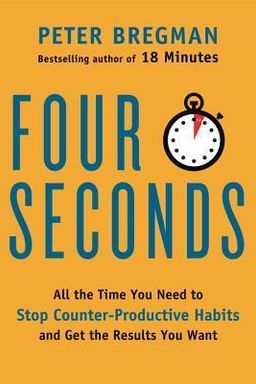
Four Seconds: The Art of Intentional Pause and Smart Action
How many of your daily reactions end up backfiring—leaving you stressed, misunderstood, or disconnected from the people around you? In Four Seconds, Peter Bregman argues that most of life's unnecessary struggles come from our knee-jerk reactions—instant responses driven by emotion rather than intention. Bregman contends that if you can pause—literally for just the four seconds it takes to take one breath—you can change everything. That brief moment lets you shift from impulse to awareness, from reactivity to choice.
Through a blend of personal stories, management insights, and simple psychological techniques, Bregman shows why those few seconds are the secret to being more productive, more connected, and ultimately more fulfilled. He divides the book into three parts: changing your mental defaults, strengthening your relationships, and optimizing your work habits. In essence, he offers a modern manual for acting from inner calm and clarity rather than habit and haste.
The Four-Second Pause: From Impulse to Insight
Bregman begins with a deceptively simple idea: one breath—four seconds—is the space you need to counter the destructive pull of emotion. He illustrates this with an ordinary but charged moment: running late to dinner with his wife Eleanor. Instead of acknowledging her frustration, he instinctively justified himself, explaining why he was late. The result? An argument. But if he had paused those four seconds before speaking, he could have recognized that she didn’t want excuses—she wanted empathy. Those few seconds would have transformed the evening.
That principle underpins the whole book: in virtually every stressful situation, the most productive move is not to act faster but to pause, notice, and choose. Whether in marriage, parenting, or business leadership, four seconds create the opportunity to shift from instinctive to intentional behavior. This pause isn’t passive; it’s active awareness. (Note: This echoes Viktor Frankl’s famous line that “between stimulus and response there is a space.”)
Changing Mental Defaults: From Reaction to Reflection
The first part of the book focuses on reclaiming your mind from autopilot. We’re constantly hijacked by instinctive responses—overworking when we feel behind, chasing perfection when we feel insecure, or distracting ourselves when we feel bored. Bregman calls these “self-defeating mental habits.” He proposes that by simply slowing down—through meditation, ritual, reframing goals, or resetting after emotional turbulence—you can rewire your behavior. When he describes meditating each morning, he jokes that peace lasts only four seconds—until distractions flood his mind. But those seconds are proof that focus is a skill that can be regained, one breath at a time.
Bregman draws on behavioral research (notably Walter Mischel’s “marshmallow test”) to show that resisting impulse predicts success in every field—from relationships to leadership. Learning to master that impulse is, in his words, “the single most important skill for our growth.”
Reconnecting with Others: Leading Through Empathy
In part two, Bregman turns to relationships—arguing that connection, not control, is the real measure of leadership. Every interpersonal conflict, he says, is either an opportunity or a test of compassion. He uses vivid examples: a misunderstanding about packing shampoo with his wife Eleanor; his daughter’s tearful breakdown over a lantern; and his reaction to angry colleagues or neighbors. In each scenario, the key insight is to listen for the unspoken—to respond to the feeling beneath the words rather than the surface demand. Four seconds can shift defensiveness into curiosity, irritation into empathy, isolation into closeness.
Leadership, he notes, is like marriage: it requires patience, humility, and the ability to see beyond your perspective. The pause makes that possible. When you meet people where they are—acknowledging fear, frustration, or fatigue—you create the psychological safety that underlies teamwork, innovation, and trust. This applies equally in boardrooms and families.
Optimizing Work Habits: Doing Less, Achieving More
The book’s final section zooms out from personal and relational habits to organizational effectiveness. Bregman challenges common corporate myths: that more goals equal more results, that perfection improves performance, and that busyness equals productivity. Instead, he urges readers to focus on fewer priorities, to allow for failure, and to measure success by learning and contribution. He draws on examples from CEOs who took the blame rather than assigning it, employees who offered help instead of complaining, and teams who achieved breakthroughs when they abandoned rigid processes. Each illustrates that pause before action—reflect before reacting—is not just emotional intelligence but strategic advantage.
Why This Matters Now
Bregman’s message resonates in our hyperactive digital age, where constant notifications, status checks, and performance pressure keep us reactive. His antidote is radical in its simplicity: take one breath before responding—to an email, a colleague, a crisis, a child. Four seconds can mean the difference between exploding and engaging, between alienating and connecting, between a poor decision and a wise one. Far from being soft advice, it’s a powerful form of leadership rooted in self-mastery.
“Four seconds—one breath—is all it takes to stop yourself from a counter-productive knee-jerk reaction and replace it with a smarter one.”
By combining neuroscience, storytelling, and pragmatic leadership advice, Bregman presents a book that’s both philosophical and actionable—a survival guide for thoughtful living in times of overload. Whether you’re calming an upset spouse, leading a team, or just trying not to scream at your email inbox, his message is clear: pause, breathe, and course-correct. The rest follows naturally.