
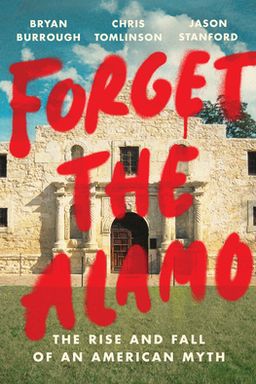
Forget the Alamo cover

Forget the Alamo

by Bryan Burrough, Chris Tomlinson and Jason Stanford

Forget the Alamo exposes the truth behind the legendary battle, dismantling the heroic myth that has overshadowed the darker realities of slavery and opportunism. Through a critical lens, it reexamines the cultural and political narratives that have shaped American history.

The Alamo as Argument and Memory

Why does the Alamo still provoke conflict nearly two centuries after its fall? It’s because, as this book argues, the Alamo is both monument and argument—an ever-evolving struggle over what Texas stands for and who gets to define its meaning. The authors trace how a simple battle site became a symbol layered with economic ambition, racial exclusion, mythmaking, and political manipulation.

Myth and Meaning

You’re invited to treat the Alamo not as stone and legend but as a contested space. Traditionalists cherish it as sacred ground, celebrating heroic martyrdom and Anglo triumph. Revisionists, by contrast, read the same story through darker threads—slavery, imperial ambition, and marginalized voices. Each camp tells not only what happened in 1836 but what Texas should remember about itself. John Steinbeck’s phrase “Texas is a state of mind” becomes a guiding idea: memory itself is political territory.

Origins in Cotton and Slavery

Much of the legend hides its economic source. The book reveals that Texas’s revolt was fueled by planters seeking fertile land for cotton and the labor of enslaved people. Figures like Stephen F. Austin negotiated explicitly to import slavery into Mexican territory, describing “negros as necessary to make money.” Mexico’s attempts to curtail that system through laws like the 1830 immigration ban threatened the settlers’ entire economy, making “freedom” a euphemism for the right to exploit forced labor. When you look through that lens, the Alamo becomes less a cry for liberty and more a fight for property rights.

From Grievances to Revolt

Violence brewed long before the siege. Smoldering tensions—pirate trade, Comanche raids, and Mexican centralization—drove settlers to choose gunfire over diplomacy. Local incidents like the Anahuac arrests and the Gonzales “Come and Take It” clash transformed civic protest into rebellion. The irony is that Tejanos and Anglos originally shared federalist goals, but the collapse of negotiation and Santa Anna’s authoritarian turn brought war. By the autumn of 1835, the march toward San Antonio was unstoppable.

Myth After Death

Once the Alamo fell, the myth rose. Survivors like Susanna Dickinson and the enslaved man Joe carried the story to Sam Houston, who quickly weaponized it for propaganda. Newspapers exaggerated heroism, turning “Remember the Alamo” into a national battle cry and converting defeat into moral triumph. Through writers like Amelia Williams and Reuben Potter, early historians fixed the legend in textbooks and school lessons. What you learn here is how immediacy and propaganda fuse into historical durability—the myth hardens faster than truth can catch up.

The Long Arc of Memory

From the Daughters of the Republic of Texas to Walt Disney and John Wayne, each generation retools the Alamo for its emotional needs. Films, political speeches, and civic rituals replay the same pattern: Anglo heroism at center stage, Tejano and Mexican complexity pushed aside. As cultural revisionism grew—from Rodolfo Acuña’s Occupied America to Chicano art exhibitions—the shrine was recast as a symbol of exclusion. The authors follow this tension into the present day, showing how museum proposals, curriculum fights, and preservation controversies still echo that unresolved duel of stories.

Takeaway

The Alamo is not static heritage—it’s active rhetoric. Its stones bear centuries of contested memory about race, economy, and belonging. Understanding that dynamic lets you read Texas not as finished history, but as an ongoing argument about who the past serves and who gets left invisible.


Economy, Slavery, and Revolution

The book insists you follow the money. Cotton and slavery shaped the land, politics, and rebellion. Anglo immigrants entered Mexico’s Texas with one mission: grow cotton cheaply under slave labor. Mexico’s antislavery stance meant these settlers were defending the right to continue that system. This lens changes everything about how you interpret “freedom.”

Cotton’s Global Context

Eli Whitney’s gin and British textile demand created a global hunger for cotton. Every inch westward offered planters new fields. Stephen F. Austin’s colonization plan explicitly tied land grants to cotton culture, with enslaved people as the key labor source. The economic chain—from mills in Manchester to plantations along the Brazos—made slavery economically necessary. When Mexico tried to restrict it, Anglo settlers perceived existential danger.

Legal Fictions and Mexican Resistance

To skirt Mexican law, Texans created fake indentures—contracts binding enslaved people for “ninety-nine years” to minimal pay. Guerrero’s emancipation decree of 1829 and later centralist efforts to tax cotton heightened tensions. To these settlers, losing “property” meant losing the foundation of their wealth. (Note: Historians like Andrew Torget and Andrés Tijerina have illuminated this economic structure, grounding mythic liberty in hard economics.)

Freedom Reconceived

When Texans shouted liberty, they often meant financial autonomy—the right to own others and export cotton untaxed. This dissonance between public words and private motives underpins the book’s revisionist argument. The Alamo defenders may have believed in self-rule, but the system they fought for depended upon bondage. Accepting that complexity is essential to honest historical memory.

Key Lesson

Economic motives often masquerade as ideals. If you remember that “property” largely meant human beings, the Texas Revolt shifts from romance to reckoning.


From Skirmish to Siege

Political failure, frontier violence, and cultural arrogance compounded until the Alamo burned into legend. This section traces how lawlessness morphed into organized revolt and how human decisions—not destiny—pulled Mexico and Texas into open war.

The Road to Confrontation

Early uprisings like Gutiérrez-Magee’s expedition in 1813 and Arredondo’s reprisals left Texas scarred. Banditry and pirate trading undermined authority. When Mexico’s internal politics swung between federalist and centralist systems, settlers turned angry. Arrests at Anahuac, cannon seizures at Gonzales, and Travis’s hotheaded activism ignited an informal militia culture. Federal negotiation gave way to frontier defiance.

The Siege and Fall

By February 1836, Santa Anna’s army surrounded San Antonio with thousands of troops. Inside were fewer than 200 defenders: Travis, Bowie, and Crockett among them. The compound was poorly fortified, leadership divided, and supplies thin. The authors show how chaos and confusion dominated the final assault, contradicting neat Hollywood heroism. Many defenders tried escaping and were killed outside; others died in close combat. Whether Crockett fought to the end or was executed remains unresolved, underscoring how myth fills archival gaps.

What Survives is Story

The raw event was grisly and complex. Mexican reports emphasize discipline and heavy casualties; Texian memory remembers nobility and sacrifice. That divergence birthed legend. In truth, the Alamo was a failure militarily but succeeded symbolically—it galvanized troops, donors, and spirit for San Jacinto. The reality of siege turned quickly to purpose-built myth.


Building Legend and Institutional Memory

What happens after a tragedy? People construct meaning. The Alamo’s fall turned swiftly into national narrative through propaganda, press, and preservation. This key idea examines how institutions, art, and politics built collective memory that endures far beyond 1836.

Propaganda and Press

Sam Houston saw opportunity where others saw loss. Survivors’ accounts became tools for mobilization. The Telegraph and Texas Register dramatized the story, and by the time volunteers charged at San Jacinto, “Remember the Alamo” was a moral imperative. Journalists and early historians then froze the myth in amber—turning specific people into archetypes of Anglo virtue.

Preservation and Womanhood

Two preservationists—Adina De Zavala and Clara Driscoll—embodied competing visions: historical fidelity versus shrine-making. Their feud birthed modern custodianship under the Daughters of the Republic of Texas. Through monuments like the Cenotaph and centennial commemorations, the Anglo-hero narrative dominated public space for decades. It shows you how gendered activism (schoolteachers, clubwomen) shaped civic myth as much as generals did.

Film, Politics, and Expansion

As memory entered mass media, distortion magnified. D. W. Griffith’s racist Martyrs of the Alamo, Disney’s Davy Crockett, and John Wayne’s cinematic epic turned history into cultural export. Presidents Kennedy and Johnson weaponized the imagery—Kennedy for diplomacy, Johnson for Vietnam rhetoric. By mid-century, the Alamo was not just Texas—it was America’s template for courage and sacrifice, reused for every new war or moral crusade.

Core Message

Memory isn’t passive. It is curated, sold, and staged. Whether by filmmakers, preservationists, or presidents, the Alamo’s history became a moral instrument rather than a factual record.


Rise of Revisionism and the Crockett Debate

Between the 1960s and 1990s, new voices began rewriting the Alamo. Chicano scholars, artists, and historians combined cultural critique with forensic inquiry, challenging myths once immune to scrutiny. Revisionism redrew the boundaries of who belonged in the story.

Cultural and Scholarly Revolutions

Rodolfo Acuña and Carey McWilliams framed the Alamo narrative as racial ideology—arguing it justified prejudice toward Mexicans. Art collectives like Con Safo responded visually, while historians revisited primary sources. Jeff Long and Randolph Davis articulated a textured, anti-mythic history. Each work dismantled one layer of heroic simplification and replaced it with complexity.

The Crockett Controversy

De la Peña’s manuscript, translated by Carmen Perry, claimed Crockett surrendered, not died fighting. Publication triggered outrage, media frenzy, and institutional defense by the Daughters of the Republic. More scholars like Dan Kilgore corroborated Mexican testimonies, deepening turmoil. You learn here that even questioning one detail of a hero’s death can expose how legend protects identity—a perfect test case for myth versus evidence.

Public Memory Meets Academia

Revisionism fractured into cultural and documentary schools, both met with hostility but opened space for wider public conversation. Once professors, journalists, and artists joined the dialogue, the Alamo became academic battleground and cultural mirror. These debates proved how race, patriotism, and scholarship collide when history challenges belonging.


Power, Preservation, and Political Battles

The fight to control the Alamo’s story eventually turned literal—state oversight, protest, and legislation. Preservation, funding, and cultural representation collided in 21st-century political war. This section explores how mismanagement, whistleblowing, and redevelopment transformed stewardship into spectacle.

The Daughters Under Fire

By 2009, poor maintenance and insular leadership of the Daughters of the Republic of Texas drew whistleblowers like Sarah Reveley and Erin Bowman. Their investigation, amplified by local journalists, exposed neglected budgets and dubious spending. State Senator Leticia Van de Putte’s bill shifted control to the General Land Office. Political theater followed—hearings, threats, and legislative showdowns—but accountability finally arrived. (Note: The episode echoes national patterns of reform in heritage institutions where volunteerism meets professional standards.)

The Reimagination Project

Under George P. Bush’s tenure, a $450 million master plan sought to modernize the site—a glass wall, relocated Cenotaph, and new museum funded partly by Phil Collins’s artifact donation. Backlash was immediate: conservatives saw desecration, Tejanos and Native Americans saw erasure of their history. Protests with armed groups erupted, showing how physical monuments symbolize identity itself.

Authenticity and the Phil Collins Gift

Collins’s collection promised prestige but risked embarrassment. Investigators found weak provenance for many items—labels built on storytelling, not science. Experts warned that public trust and scholarship must precede display. The controversy illustrates how nostalgia and celebrity can overpower curatorial rigor.

Curriculum and Cultural Claims

Even classroom edits—changing “heroic” or naming Tejanos—ignite viral outrage. Governor Abbott’s intervention in the 2018 standards debate shows how pedagogical language becomes cultural defense. Meanwhile, Tejanos, Coahuiltecan descendants, and civil rights advocates assert layered identities within the site: mission, battlefield, cemetery, and lunch-counter. Each claim seeks dignity within shared memory.

Final Reflection

Preserving the Alamo now means confronting plural histories, not enforcing a single myth. Its debates—about funding, artifacts, and wording—reveal how deeply identity and policy intertwine.

Dig Deeper

Get personalized prompts to apply these lessons to your life and deepen your understanding.

Go Deeper

Get the Full Experience

Download Insight Books for AI-powered reflections, quizzes, and more.