
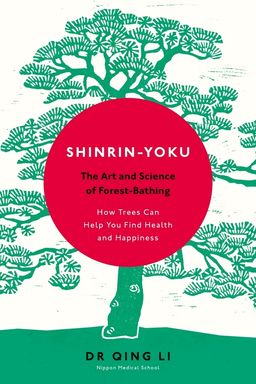
Forest Bathing cover

Forest Bathing

by Qing Li

Forest Bathing by Qing Li explores the Japanese practice of shinrin-yoku, combining cultural insights and scientific research to reveal nature''s profound health benefits. Learn how to harness these benefits with practical steps for engaging with nature, even in urban settings.

Forest Bathing: Reconnecting Mind, Body, and Nature

When was the last time you stopped to listen to the rustle of leaves or inhaled the calming scent of pine? In Forest Bathing, Dr. Qing Li, a physician and researcher at Nippon Medical School in Tokyo, argues that our disconnection from nature has left us overstressed, unhealthy, and ungrounded—and that healing lies, quite literally, among the trees. His book explores a Japanese practice known as shinrin-yoku, or “forest bathing,” which invites us to slow down and absorb the forest atmosphere through all five senses.

Li contends that this is much more than a poetic idea—it’s a scientifically backed therapy that can reduce stress, improve mood, and strengthen immunity. The forest, he explains, acts as both sanctuary and doctor: its aromas, sounds, and sights directly affect human physiology. Through decades of research, he’s demonstrated measurable benefits like lowered cortisol, improved sleep, and even increased natural killer cell activity, suggesting potential anti-cancer effects. In this way, forest bathing bridges the wisdom of ancient Japanese reverence for nature with modern medical evidence.

Why Nature Matters More Than Ever

The modern world keeps us indoors, surrounded by screens, artificial light, and digital noise. According to Li, the average person spends over 90% of their time indoors, and our growing urban lifestyles have led to what he calls an “epidemic of disconnection.” Stress-related diseases—hypertension, depression, and immune disorders—are soaring. The World Health Organization even labels stress the “health epidemic of the 21st century.” Li argues that forest bathing is an antidote, one that can restore physical and emotional balance without medication or technology.

A Blend of Science and Spirituality

Japan’s forest tradition draws from Shinto and Zen Buddhism, where nature is infused with spirit and divinity. For centuries, Japanese culture has embodied practices of natural intimacy—tea ceremonies, ikebana flower arrangements, and architecture that blends inside with outside. Li frames forest bathing as both spiritual practice and medical science—a way to access what biologist E.O. Wilson calls biophilia, our innate human connection to the living world.

Through field experiments conducted in places like the Akasawa Forest and the cedar-cloaked Yakushima Island, Li documents the measurable physiological shifts that accompany the tranquility we feel in nature: slower heart rates, improved mood profiles, and even boosted biomarkers of immune health. These effects show that our intuition about “feeling better in nature” has a scientific foundation.

A Global Invitation

Li doesn’t limit his vision to Japan. Around the world, he says, we can all benefit from rewilding our routines. Forest bathing doesn’t require remote wilderness—city parks, backyards, and even indoor plants can offer microdoses of nature. Subsequent chapters guide readers in practical steps: slowing down, engaging the senses, using essential oils, and even “bringing the forest indoors.” You’ll learn how trees like hinoki and cedar emit healing phytoncides; how to listen deeply to natural silence; how fractal visual patterns in leaves calm the mind; and why walking barefoot reconnects you electrically to the Earth’s energy.

Ultimately, Forest Bathing is both prescription and philosophy. It’s a call to reclaim our human birthright as beings of the natural world. The forest, Li reminds us, doesn’t demand understanding or accomplishment—it simply requires presence. As he puts it, when you open your senses to the trees, you “cross the bridge to happiness.”

Key Message

Forest bathing teaches us that healing is not something we must seek far away—it’s something the natural world is always offering. By reconnecting to the rhythms of trees and water, we remember what it means to be human: calm, whole, and alive.


From a Feeling to a Science

For millennia, people have known instinctively that being among trees feels restorative. Yet it wasn’t until the 1980s that scientists like Dr. Qing Li began proving it. In the early days of Japan’s shinrin-yoku program, officials hoped that inviting citizens into forests would reduce stress and inspire conservation. But Li and his colleagues turned that intuition into measurable science, studying exactly how forests influence the body and mind.

The Birth of Forest Medicine

The first official forest-bathing experiments took place in Akasawa Forest, a fragrant cypress woodland known for its pristine rivers and sacred timber. Researchers designed trails and monitored participants’ physiology while they moved slowly through the forest. Li’s own pivotal 2004–2006 studies measured hormonal, cardiovascular, and immune responses of Tokyo professionals taking multi-day “forest therapy” trips. Results were astonishing: stress hormones like cortisol plummeted, heart rate and blood pressure stabilized, and self-reported anxiety and fatigue dropped dramatically.

Nature’s Chemical Conversation

Li’s research revealed a fascinating factor behind these changes: phytoncides—aromatic compounds released by trees to defend against insects and bacteria. When humans inhale these terpenes, such as alpha-pinene and D-limonene, our immune systems respond positively. Natural killer (NK) cells—first-line defenders against viruses and cancer—show increased activity and longevity, effects lasting up to a month after a weekend in the woods. Diffusing essential oils from hinoki or cedar trees in a laboratory produced similar results, suggesting that even “mini forest baths” can enhance health.

Mood, Sleep, and Cognition

Li used psychological tools like the Profile of Mood States (POMS) test to quantify mental benefits. Participants reported less anger, confusion, and depression, and higher vitality after just two hours in the forest. Sleeping patterns improved too—office workers slept longer and more deeply during forest trips compared to nights in Tokyo. Other studies have confirmed these results, finding that views of nature and exposure to greenery enhance creativity, memory, and compassion. One University of Michigan study found that people remembered 20% more information after a walk among trees than after a city stroll.

Beyond the Lab

Li’s findings helped establish forest medicine as a recognized field. Today, Japan lists over sixty certified “forest therapy bases,” complete with physicians and guided trails designed to optimize exposure to clean air, natural sounds, and phytoncides. This research has inspired international movements in South Korea, Finland, and the United States, where doctors now prescribe “nature walks” as therapy for stress and chronic illness. Li’s message is clear: the forest is not just beautiful—it’s vital medicine that modern society can no longer live without.

Scientific Takeaway

A few hours in the forest doesn’t just lift your mood—it changes your biology. Lower cortisol, stronger immunity, and better sleep show that trees quite literally help us heal.


How to Practise Shinrin-Yoku

Practicing forest bathing is not about hiking or counting steps—it’s about slowing down and being fully present. Dr. Li describes it as “bathing in the forest atmosphere,” immersing your senses in the subtle details of nature. You don’t need special skills, only a willingness to unplug. In fact, his first instruction is simple: leave your phone and camera behind.

Engage All Five Senses

Li’s method involves deliberately awakening each sense. You listen to birdsong, the rush of water, and the wind among leaves. You notice the shifting greens and komorebi—sunlight filtering through branches. You smell phytoncides; you taste the freshness of the air; and you touch tree bark, soil, or water. When all five senses are engaged, Li says, a sixth sense emerges: a subtle calm or joy, the feeling of belonging to the natural world.

Finding Your Forest

You can practice anywhere—from Japan’s Akasawa Forest to New York’s Central Park. What matters most is that you feel comfortable and safe. Many Japanese therapy forests offer guided walks, yoga, or even hot-spring soaks afterward, but Li emphasizes self-guided simplicity: wander slowly, rest when tired, drink water or tea, and choose a spot that “fills your heart with joy.” Two hours is effective; four is ideal.

City Forests and Daily Practice

Even city dwellers can benefit. Li reminds us that Tokyo, despite its crowds, is full of green pockets like Shinjuku Gyoen and Rikugien Gardens. Urban trees reduce pollution, absorb noise, and restore mental energy. He cites studies showing that workers with a view of greenery report higher job satisfaction and fewer sick days. Exposure to natural sounds—even recordings of waterfalls or bird calls—triggers relaxation responses measured in the brain.

Practical Exercises

  • Listen: Sit quietly and notice layers of sound—water, wind, insects—to find “cognitive quiet.”
  • See: Observe fractal patterns in leaves or clouds; studies show they reduce stress by up to 60%.
  • Smell: Breathe in the forest fragrance—hinoki’s lemony sweetness, cedar’s warmth, or the earthy geosmin of soil.
  • Touch: Lie on the grass, dip your hands in a stream, or walk barefoot to “ground” your body’s energy.
  • Taste: End your walk with forest tea brewed from safe local leaves or simply enjoy the “taste” of mountain air.

Practical Wisdom

Forest bathing is an invitation to slow down, open your senses, and meet nature as a living companion—not a background to your busy life.


Bringing the Forest Indoors

Li knows that not everyone can escape to mountain forests. So he shows how to bring their healing essence home. Indoor greenery, forest scents, and natural light can mimic the restorative effects of nature. This concept—turning homes and offices into “mini-forests”—aligns with the Japanese aesthetic of shizen, or naturalness, and echoes NASA research on plants that purify indoor air.

Plants as Healers

Houseplants provide both beauty and biology. NASA’s studies identified top air-purifying species such as peace lilies, bamboo palms, and spider plants, which remove toxins and replenish oxygen. Some plants even release oxygen at night—perfect for the bedroom. Their presence reduces headaches, anxiety, and fatigue while increasing concentration. On a psychological level, they reawaken our connection to the rhythm of life.

Essential Oils and Aromatherapy

Li recommends diffusing coniferous essential oils—hinoki, cedar, pine, or cypress—to replicate forest air indoors. His clinical experiments showed that inhaling these scents lowers stress hormones and raises immune function. Practical versions include oil diffusers, reed diffusers, or even cedarwood sachets for closets. The scent of the Japanese hinoki tree, in particular, evokes tranquility and is often used in temples, homes, and even hot baths.

Forest-Based Self-Care

The forest also inspires natural remedies. Li points out that many modern medicines trace their origins to trees—aspirin from willow bark is one famous example. He suggests simple home uses for tree oils: pine or Douglas fir for muscle pain, spruce for colds, tea tree for disinfecting, and fir needle for respiratory health. Even cleaning with these oils can fill your home with natural freshness while reducing synthetic chemicals.

Green Workspaces and Micro-Breaks

At work, small exposures to greenery can transform productivity. Research shows that employees who view nature or listen to forest sounds experience less stress and greater focus. Li calls this the “green micro-break” effect—just 40 seconds of looking at trees or pictures of foliage can reset attention and improve mood. Adding a plant, diffuser, or natural soundscape to your desk, he says, is modern forest bathing in miniature.

Modern Takeaway

Even if you live surrounded by glass and concrete, you can still breathe with the forest. Every leaf, scent, and patch of sunlight is an invitation to reconnect.


Thinking About the Future

In the final section, Li looks ahead. Forest bathing isn’t just personal therapy—it’s a blueprint for planetary health. Forests cover nearly a third of the Earth’s land, yet we lose millions of acres yearly. Every tree cut reduces biodiversity, air quality, and our collective well-being. As Li warns, “When trees die, people die.” Our survival depends on restoring this ancient relationship.

Healing Ourselves, Healing the Planet

Li argues that by reconnecting emotionally to forests, we become motivated to protect them. Nature therapy, he suggests, can spark conservation through gratitude and empathy rather than guilt. He highlights global initiatives—from Japan’s sixty-two certified forest-therapy bases to South Korea’s government-funded healing forests and the U.S. ParkRx program, where doctors prescribe time outdoors instead of medication.

Reimagining Cities as Forests

Urban forests play a crucial role in the future of public health. Tokyo’s “Green City” initiative, inspired by its post-war reforestation projects, aims to plant one million street trees. Cities like Singapore, Vancouver, and Frankfurt are following suit, proving that urbanization doesn’t have to mean sterility. Studies even show that ten more trees on a city block can make residents feel as good as being seven years younger or earning $10,000 more per year.

Raising a Forest Generation

Li reflects on children’s “nature deficit disorder,” a term coined by Richard Louv to describe the costs of screen-centered childhoods. He celebrates outdoor education and Japan’s mori-no-ie forest schools, where children learn resilience and creativity through play in nature. These young forest adventurers, he believes, will become future guardians of Earth. Research shows that children who bond with nature grow into adults who care deeply for the environment.

Li’s closing message is hopeful: by healing our relationship with forests, we heal the bond between humanity and the biosphere itself. Forest bathing, then, becomes a form of ecological mindfulness—a daily practice that sustains both personal and planetary life.

Call to Action

Reconnect with nature not only for yourself but for the Earth. Every mindful step among trees is a promise—to live in balance, gratitude, and love with the living world.

Dig Deeper

Get personalized prompts to apply these lessons to your life and deepen your understanding.

Go Deeper

Get the Full Experience

Download Insight Books for AI-powered reflections, quizzes, and more.