
Idea 1
Leadership, Modern Conservatism, and the Moral Core of Power
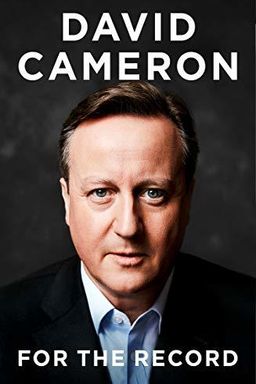
How do you lead a country in crisis and still reform politics, society, and yourself? In For the Record, David Cameron argues that modern leadership requires moral steadiness, coalition-building, and adaptability. You see a politician shaped by privilege and pain—whose early family ethic ('do the right thing') and personal tragedy (his son Ivan’s illness and death) form the moral foundation of his decisions in government. The book reveals not just political tactics but a philosophy: that duty and morality must guide policy even under partisan pressure.
From Berkshire Beginnings to Westminster Apprentice
Cameron’s formative years combine character lessons and elite grooming. His father Ian’s resilience and a family ethos of giving back, plus the humbling experience of being caught in a drug incident at Eton, set the moral framework. Oxford sharpened his intellect under Vernon Bogdanor; the Conservative Research Department (CRD) provided his apprenticeship in policy and power. Spad years during the ERM crisis taught him how economics and politics fuse under pressure—a skill that later guided his fiscal discipline in government.
Modernising Conservatism: The Big Society Idea
From opposition onwards, Cameron’s project was to modernise Conservatism—making it compassionate, centrist and culturally relevant. With allies like George Osborne, Michael Gove and Steve Hilton, he pushed social innovation: the Big Society, National Citizen Service, localism, and voluntary empowerment. He argued that society, not just the state, was the agent of reform (Samantha Cameron’s framing—“It’s not that there isn’t such a thing as society; it’s just not the same thing as the state”—became the moral shorthand). By revamping candidates through the A-List and reforming tone and imagery, he steered the party towards inclusivity and twenty-first-century social realism.
Coalition and Crisis: Choosing Stability Over Self
Entering 10 Downing Street after the 2010 hung Parliament, Cameron faced a fiscal cliff. He chose a coalition with the Liberal Democrats over a minority government, not for expedience but stability. Negotiations at 70 Whitehall, AV referendum offers, and goodwill gestures to Nick Clegg’s team reflected his father’s maxim: when unsure, do the right thing. This coalition—the UK’s first peacetime partnership in 150 years—became a crucible for pragmatic ethics and shared responsibility amid the fallout of the financial crisis.
A Philosophy of Progressive Conservatism
Beyond crisis management lay ideology. Progressive Conservatism sought social progress by conservative means—competition, accountability, localism. Cameron’s reforms in education (Free Schools, Pupil Premium), welfare (Universal Credit), digital government (gov.uk and the Nudge Unit), and green industry (Green Investment Bank, offshore wind) reflected this creed. His social reforms—including equal marriage—fused personal liberty with conservative morality. He believed institutions like marriage and the family should evolve, not vanish, as society modernises. His motto: preserve values, adapt forms.
Moral Tests: War, Grief and Governance
Ivan’s illness taught compassion; Afghanistan and Libya demanded moral courage. Cameron’s leadership under war—the formation of the Military Covenant, the 2014 Afghanistan exit, and interventions in Libya and Syria—show the collision of ethics and realism. His care for veterans mirrored his private caregiving lessons: duty to those who suffer because of government decisions. (Note: like Eisenhower’s farewell or Churchill’s wartime stoicism, Cameron translates empathy into policy duty.) He viewed humanitarian intervention as moral necessity, even as Libya’s postwar chaos exposed its limits.
Economic Repair and Reform as Moral Duty
“We plant trees for our grandchildren,” Cameron quoted Thatcher when justifying austerity. His partnership with Osborne launched fiscal repair through the Office for Budget Responsibility, welfare caps, housing reform, and enterprise incentives. The focus was intergenerational fairness—don’t defer pain to the future. This fiscal discipline combined monetary activism (Bank of England’s role) with targeted social fairness (protecting pensions, NHS budgets). Austerity was not ideology but stewardship in crisis.
Global Diplomacy and Commercial Statecraft
Cameron’s diplomacy blended personal rapport and commercial vision. From Barack Obama’s blunt humor to disciplined partnerships with Merkel, Sarkozy, and Gulf leaders, he built a network focused on trade, defence and reform. “Commercial diplomacy” became his mantra—turn embassies into business engines. The G8, NATO, and European summits reflected a pragmatic multilateralism: moral principle on human rights matched by national economic interest.
Crisis Response and National Identity
Riots, the “pasty tax,” and G4S failures tested operational leadership, while the 2012 Olympics and Jubilee renewed national pride. Cameron’s mantra—clarity, command, communication—guided response: COBR meetings, rapid police scaling, and transparent admissions. London 2012 transformed Britain’s self-image, combining inclusivity, technological innovation, and civic spirit into what Cameron calls “soft power by spectacle.” The Paralympics, Games Makers, and the GREAT campaign give substance to his vision that identity and policy are intertwined.
Europe and the Limits of Control
The EU narrative forms Cameron’s tragic arc—an effort to reconcile national democracy with European unity. His 2013 Bloomberg speech promised reform and referendum; renegotiations secured opt-outs and fairness clauses but failed to match public emotion on immigration. The refugee crisis images (Alan Kurdi, Calais) refueled nationalist fear. His referendum campaign collapsed under media distortion and elite division—Gove and Johnson’s defections, “£350m to the NHS” slogans, and the Jo Cox tragedy made rational argument futile. His resignation, calm and brief, embodies the book’s moral refrain: accept democratic verdicts with dignity.
The Moral Thread that Ties It All
If you read the entire story as one moral case study, Cameron’s principle surfaces repeatedly: leadership means doing what you believe is right—whether coalition over partisanship, caregiving over self-promotion, austerity over applause, or resignation over denial. His “progressive conservatism” is less ideology than moral anthropology: people flourish when duty, community and opportunity align. The book closes, implicitly, with the lesson that politics is not just about surviving scandal or winning power, but about sustaining decency when both fortune and opinion turn against you.