
Idea 1
Foolproofing and the Paradox of Safety
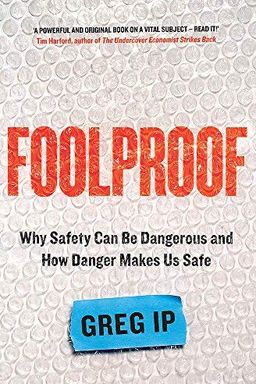
How can you make the world safe without making it more fragile? In Foolproof, Greg Ip tackles that deceptively simple question through history, psychology, and economics. He argues that human progress rests on two opposing instincts: the engineer’s faith in design—that we can eliminate risk through rules and technology—and the ecologist’s realism—that every act of stabilization changes behavior in ways that breed hidden danger. Safety itself, Ip warns, is destabilizing.
His central paradox runs through everything from financial crises to wildfires, flood control, and antibiotics. The book follows a clear arc: how short-term protection (against fires, crashes, recessions) sets up long-term vulnerability, and how human psychology and incentives amplify the cycle. Ip’s message is not fatalistic; it’s practical. Foolproofing is impossible, but resilience is manageable—if you know how systems adapt to safety.
The engineer’s tradition and its promise
Engineers—from Theodore Roosevelt’s Forest Service to Franklin Roosevelt’s New Deal to Alan Greenspan’s Federal Reserve—represent the belief that risk can be minimized with knowledge. They suppress fires, smooth business cycles, contain floods, and regulate banks. This philosophy produced enormous welfare gains: longer lives, safer industries, and fewer panics. In aviation, it gave you the world’s most reliable mode of transport; in medicine, antibiotics that transformed survival.
Yet this same creed creates feedback loops. By making systems more predictable and secure, engineers invite adaptation that upends those safeguards—a pattern later echoed in the financial stability paradox of Hyman Minsky (“stability is destabilizing”).
The ecological critique and adaptive risk
Ecologists like Friedrich Hayek and Gilbert White emphasize what systems theorists call complex adaptive responses. When you suppress variation—fires, floods, small recessions—you constrain learning and allow fuel, property, and debt to pile up unseen. Eventually, one shock exceeds the limits, producing disaster. White’s observation that “flood losses are acts of man” captures how engineered safety changes incentives: levees attract development; suppression builds tinder; monetary safety nets stretch borrowing.
Where engineers say “control,” ecologists say “feedback.” Resilience, not stability, should be the goal: systems must absorb shocks instead of denying them.
From psychology to finance: why safety backfires
Ip uses behavioral economics to explain why protection rewires choice. The Peltzman effect shows drivers taking more risks when seatbelts make them feel secure. Football helmets reduce head fractures but increase concussions when players use them as weapons. Anti-lock brakes help control skids but encourage speeding. In finance, bailouts and deposit insurance perform the same function: the perception of safety lowers vigilance, inviting leverage and speculation.
This behavioral adaptation runs deeper than mere incentive. Kahneman and Tversky’s certainty bias—your preference for the guaranteed—means you flee uncertainty instantly when “safe” conditions disappear. That’s what drives financial runs or panic buying after scares like E. coli or Alar. Risk perception, not statistics, determines behavior in crisis.
The policy dilemma: preventing crisis vs. breeding moral hazard
Central bankers like Volcker and Greenspan faced this dilemma acutely. Rescue the system and you ensure confidence; rescue it repeatedly, and you erode discipline. The 1984 Continental Illinois bailout created “too big to fail.” The 2008 Bear Stearns rescue set expectations; the refusal to save Lehman triggered panic. Moral hazard and confidence became opposing forces: protect too much and risk-taking flourishes, protect too little and fear freezes lending.
This interaction shapes everything from flood relief (which encourages rebuilding in floodplains) to antibiotics (which treat immediate illness but breed resistant bacteria). Policy is trapped between short-term success and long-term fragility.
Ip’s resolution: resilience over perfection
Greg Ip isn’t anti-engineering; he’s anti-complacency. Foolproofing fails because systems and humans adapt to stability. His remedy focuses on three enduring principles: space (design buffers such as floodways or capital cushions), capital (financial reserves that absorb losses without contagion), and memory (institutional learning from past failures). He ends by showing that you cannot legislate away risk—you can only structure it so that small failures teach rather than destroy.
Core lesson
Safety isn’t free—it changes how people behave. A resilient society accepts manageable losses so the system doesn’t collapse under the illusion of foolproof stability.
Across forests, floodplains, economies, and hospitals, the pattern repeats. You prevent small fires and create megafires; you calm markets and breed bubbles; you cure infections and breed resistance. Foolproof’s ultimate insight is timeless: sustainable safety lies in letting a little danger in.