
Idea 1
Living Wisely Under Uncertainty
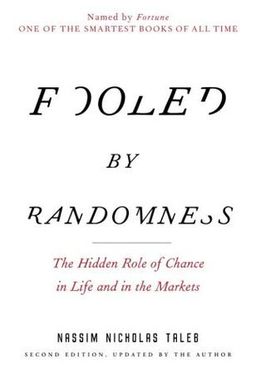
How can you live intelligently in a world governed by chance? Nassim Nicholas Taleb’s book explores this question through a fusion of philosophy, statistical reasoning, and street-level finance. His central message is that humans are systematically fooled by randomness: we mistake luck for skill, confuse frequency with probability, and build fragile lives and institutions on illusory patterns. Yet, rather than despair, Taleb urges you to cultivate humility, robustness, and elegance in the face of uncertainty.
The core paradox: predictable in hindsight, unpredictable beforehand
Taleb begins with Solon’s warning to Croesus: don’t judge a man happy until his life is over. This moral—simple yet radical—exposes the problem of induction. What we observe is one history among countless possible paths. The apparent stability of success or wealth is an illusion, because unseen variations and rare events lurk in the background. Taleb’s traders, from Nero Tulip to John, embody this tension. Nero survives because he limits downside and treats markets as a game of survival; John, leveraged and flamboyant, collapses under the weight of a single rare event. Solon’s lesson is timeless: never take current fortune as evidence of permanence.
Why we misread randomness
Humans are deeply probability-blind. Kahneman and Tversky’s behavioral research shows how our fast, intuitive minds (System 1) dominate slow reasoning (System 2). You rely on vivid stories rather than statistical thinking—what Taleb calls narrative and emotional heuristics. Because the brain evolved to respond to concrete stories and immediate emotions, you overweight recent experiences and visible success. Traders feel like geniuses when markets rise and like victims when they fall, even though both results may stem from randomness. This psychological blindness magnifies the illusion of control.
The architecture of illusion
Taleb layers several illusions that sustain modern hubris: survivorship bias (you see only winners), data mining (you find patterns where none exist), and the inverse skills problem (you reward apparent heroes whose performance may stem from luck). The more participants you have—traders, funds, entrepreneurs—the more extreme outliers will arise by chance. The press turns these outliers into patterns, ignoring the vast graveyard of failures. Likewise, institutions elevate leaders whose success cannot be meaningfully separated from circumstances. When luck compounds visibility and ego, society creates fragile idols of apparent competence.
A practical worldview: robustness over prediction
Instead of forecasting, Taleb proposes designing systems that survive error. Borrowing from Karl Popper’s philosophy of falsification, he recommends living experimentally: formulate hypotheses and structure your life so that when you are wrong, you survive. You cannot eliminate uncertainty, but you can expose fragile beliefs to tests and cap your potential loss. Monte Carlo simulations play a metaphorical role here: they teach you to imagine alternative histories—to ask not only what happened, but what could have happened. The smarter investor is not the one predicting the next move but the one who builds a portfolio that stays intact under countless adverse paths.
Asymmetry, humility, and the art of living
Taleb’s philosophy converges on a lifestyle rather than a formula. It blends Stoic composure and probabilistic humility. True wisdom, he argues, lies in asymmetry: take small, known losses in exchange for exposure to large, unpredictable gains. Favor convexity—situations where upside outweighs downside—and avoid strategies that depend on continual stability. Live like Nero the conservative trader or Jean‑Patrice who loves uncertainty without being destroyed by it. Limit information intake, avoid short-term emotional noise, and respect randomness as a creative, not purely destructive, force. (Note: This anticipates the later “antifragile” concept he develops in his subsequent works.)
In sum, Taleb reframes life as a probabilistic art. You can’t predict specific events, but you can prepare for their impact. By thinking in distributions rather than certainties, by respecting the unseen paths erased by luck, and by choosing dignity over illusion, you stop being a dupe of randomness—and begin living intelligently amid chaos.