
Idea 1
You Are an Ecosystem: The Hidden World Within
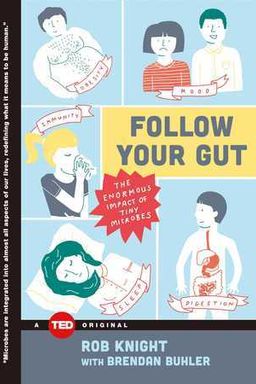
Have you ever stopped to think that you might not be as singular as you seem? That your body—the skin, the gut, the very cells that make you—is really just a bustling city of microbes working together to keep you alive? In Follow Your Gut: The Enormous Impact of Tiny Microbes, microbiologist Rob Knight argues that to understand health, disease, and even personality, you must first confront a startling truth: you are mostly not you. You’re an ecosystem, composed of trillions of microscopic organisms that shape your digestion, your immunity, and even your behavior.
Knight contends that this microscopic world—the microbiome—is the hidden half of what makes us human. He invites readers to reconsider long-held assumptions about cleanliness, disease, and individuality. Until recently, we thought microbes were villains—germs to eradicate. Knight reveals they are equally heroes, partners, architects of our health. With the rise of advanced DNA sequencing, scientists can finally peer into this microbial universe, mapping not just what lives there but how those organisms influence every dimension of our biology.
A New View of Humanity
Knight opens with a humbling idea: humans are collections of roughly ten trillion human cells—and about ten times that number of microbial cells. So, genetically speaking, we’re nearly 99 percent microbe. These microbes outnumber us, and their genes vastly outpower ours. Like Darwin’s and Copernicus’s revolutions, this discovery dethrones human exceptionalism once again. We are not the sole rulers of our own bodies—more like landlords managing a teeming population of microbial tenants.
The microbiome exists everywhere in us: your eyes, ears, skin, and especially your gut—each hosting different communities with specific jobs. Through this lens, human biology looks less like a tidy system and more like an ecosystem, with diverse niches interdependent on one another. The microbes in your mouth differ from those on your forehead, your intestines, or your toes. Scientists now call this the body microbial—a living landscape where bacterial life helps digest food, ward off disease, regulate hormones, and even influence moods.
Technology Unlocking a Hidden Universe
The revolution in genome sequencing made these discoveries possible. Using next-generation sequencing, scientists like Knight can analyze microbial DNA in minutes. The Human Microbiome Project, backed by the National Institutes of Health, mapped trillions of bytes of microbial genetic material. The result: a clearer map of who we really are and the communities within us. The cost of this mapping has dropped from millions of dollars to around a hundred dollars—a breakthrough that might soon let your doctor order a “microbiome check-up” alongside blood tests.
The knowledge doesn’t just satisfy curiosity—it promises new treatments. Microbial imbalances are linked to obesity, arthritis, depression, autism, and even heart disease. Each discovery reframes disease not as purely human malfunction, but ecological disturbance inside our bodies. When the balance of friendly microorganisms is disrupted—by poor diet, antibiotics, or stressful living—our inner environment goes awry.
Why This Matters to You
For anyone who’s ever struggled with chronic health issues, weight, stress, or allergies, Knight’s book is an invitation to rethink the fight against bacteria. Instead of waging war on all microbes, we must learn to cultivate the right ones. It’s not about being sterile—it’s about being symbiotic. Understanding your microbiome might reveal why antibiotics wreak havoc on your digestion, why you feel calmer after gardening (soil microbes communicate with your immune system), or why your upbringing—urban versus rural—shapes your lifelong resistance to allergies.
“We are ecosystems, not individuals.”
Knight’s central message: health is not an isolated pursuit, but a balance among countless microbial collaborators. Every meal, antibiotic, and lifestyle choice you make sends ripples through the populations within your belly. The microbes, in turn, shape your body’s chemistry and even your emotional state.
What You’ll Learn from This Book
Over the course of Follow Your Gut, Knight traces where our microbes come from—starting at birth—and how they evolve through diet, environment, and aging. He explores what goes wrong when microbial harmony collapses (as in inflammatory bowel disease or autism), how microbes may influence mood and cognition through the gut-brain axis, and what we can do to hack our microbiomes using probiotics, prebiotics, and even fecal transplants. He also warns about the microbial collateral damage of antibiotic overuse, and he sketches a future where medicine designs microbial therapies as precisely as vaccines.
The big takeaway is this: our microbes are redefining what it means to be human. Every sip, bite, handshake, and breath adds or subtracts species from your inner zoo. The anatomy of your individuality—your health, your moods, your resilience—doesn’t end at your skin but is shaped by a global ecosystem that starts right inside your gut. Knight’s book makes science feel intimate, funny, and unsettling in the best way: it’s as if you’ve discovered you’ve been living with billions of roommates, and they’ve been quietly shaping your destiny all along.