
Idea 1
Follow-Up: The Hidden Power That Wins Sales
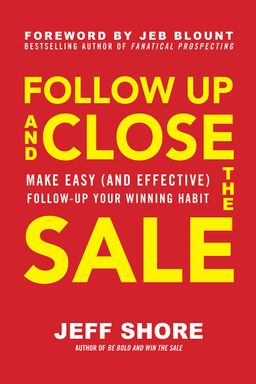
Have you ever lost a sale you thought was guaranteed? You had a great conversation, nailed the presentation, and even pictured the commission—then silence. Jeff Shore’s Follow Up and Close the Sale reveals that what separates average salespeople from top performers isn’t talent, charisma, or luck—it’s the habit of consistent, thoughtful follow-up. Shore argues that most sales fall apart not because of poor pitches but because of neglected relationships. The sale doesn’t end when a customer says no; it begins when you decide whether to follow up.
Shore contends that follow-up is not just a technique, but a mindset of service. He urges salespeople to shift from chasing transactions to serving people. Too often, follow-up feels uncomfortable: it triggers all kinds of inner resistance—fear of rejection, telephobia, procrastination. But Shore insists that discomfort is your greatest ally because change and growth happen only outside your comfort zone. The book combines psychology, behavioral research, and decades of real-world sales experience to show how emotional engagement, speed, and personalization transform follow-up from tedious duty into your most powerful sales weapon.
The Crisis of Non-Follow-Up
Shore opens with blunt honesty: salespeople don’t follow up. He cites that 44% give up after one attempt, 80% of calls go to voicemail, and 90% of those are never returned. Yet half of sales happen after the fifth contact. In other words, quitting early means losing the majority of possible deals. In a world drowning in distractions, prospects forget you in hours; without follow-up, you’re erased from their memory. The book’s mission is to show you how to become unforgettable.
Sales as Service, Not Persuasion
The central argument is clear: effective follow-up is service-driven. You’re not pestering people—you’re helping them solve problems they still have. Shore’s guiding question echoes Martin Luther King Jr.: “What are you doing for others?” Follow-up is how you prove you care. Caring isn’t words (“We value our customers”); it’s action. You show care by keeping in touch, answering questions, eliminating confusion, and helping clients re-engage with the emotions that fuel their buying decisions. In the author’s words, people don’t buy because you chase them; they buy because you care more than anyone else.
Emotional Altitude: Why Buyers Need You
Shore borrows from neuroscience and psychology to explain a critical concept—Emotional Altitude (EA). Research shows that 85% of buying decisions are emotional. When buyers are excited about possibilities, their EA is high. But emotional altitude plummets fast after a sales presentation. If you wait days to reconnect, the emotional moment—and your opportunity—vanishes. Follow-up isn’t just a courtesy; it’s the key to sustaining emotional engagement. You must re-trigger positive emotion before reason and distractions take over. As Shore puts it, “Buyers think with logic but decide with emotion.”
That’s why the book teaches methods to maintain Emotional Altitude through quick follow-ups (within four hours), personalized touches, and value-added communication. You don’t just chase leads—you keep their emotional momentum alive. (Similar principles appear in Daniel Pink’s To Sell Is Human, which highlights serving rather than selling as the new core of persuasion.)
The Journey from Resistance to Mastery
Shore roots his ideas in his own discomforts—especially telephobia. Early in his career, he avoided calls until the market collapse forced him to learn follow-up discipline. He discovered that inner resistance—the voice urging delay, distraction, and comfort—is the real enemy. Drawing on Steven Pressfield’s The War of Art and Viktor Frankl’s quote about choosing one’s attitude, Shore demonstrates that you can beat Resistance only by deciding in advance how you’ll respond when discomfort arises. Resistance demands avoidance; discipline demands action. The moment you choose action, discomfort loses its grip.
From Mindset to Strategy
The book unfolds in four parts—Mindset, Strategy, Execution, and Killin’ It (Shore’s term for mastery). Part I teaches mental reframing: fall in love with follow-up, see it as care in action. Part II builds strategy, such as timing (“four-hour rule”) and personalization (“make every customer feel important”). Part III dives into execution: how to use phone, email, text, and video with precision. And Part IV is about mastery—turning follow-up from a task into a habit that qualifies you for Shore’s elite “1 Percent Club.”
This structure reflects Shore’s background as both sales trainer and sales psychologist. He believes that follow-up reveals your professionalism and humanity simultaneously. By setting up systems, embracing speed, injecting personal care, and conquering fear, you transform routine check-ins into relationship milestones that lead to loyalty and repeat business.
Why This Matters Today
Shore’s core message is especially relevant in a post-digital world where buyers are flooded with automated messages and superficial outreach. Genuine follow-up—real attention, personal value, emotional connection—cuts through that noise. It’s both timeless and contrarian: success doesn’t belong to those who pitch better but to those who follow up faster, more personally, and more consistently. The future of sales, he writes, is real-time relational care, not delayed persuasion. As he often says, “You don’t just read this book—you make money from it.”