
Idea 1
Attention: The Hidden Driver of Excellence
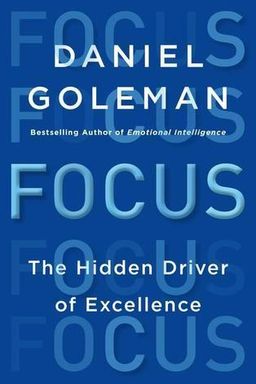
Have you ever wondered why some people seem fully engaged, deeply productive, and extraordinarily present, while others drift constantly from one distraction to another? In Focus: The Hidden Driver of Excellence, Daniel Goleman argues that the answer lies in one of humanity’s most overlooked capacities—attention. He claims that mastering how you focus is the foundation of not only peak performance but also emotional balance, empathy, self-awareness, and even ethical leadership.
Goleman contends that attention works like a mental muscle. When you use it well, it strengthens across every domain of life; when neglected, it weakens, leaving you vulnerable to distraction, stress, and shallow thinking. This book explores attention in its multiple forms—from laser-sharp concentration to open awareness—and reveals how cultivating focus improves not just personal success but collective intelligence and social harmony.
Why Attention Matters
In our age of constant interruptions, abundant screens, and infinite notifications, Goleman argues that attention has become impoverished. He illustrates this through vivid anecdotes—like the mother on a ferry ignoring her child while scrolling through her iPad, or a van full of sorority sisters isolated by their glowing phones. These scenes capture what Goleman calls the “endangered human moment”: the vanishing experience of true human connection amidst digital distraction.
He cites research showing that attention directly determines performance quality. Strong, sustained attention makes learning, memory, and creativity possible. By contrast, divided focus weakens comprehension and depth. Nobel laureate Herbert Simon predicted decades ago that a wealth of information would create a poverty of attention—a prophecy that feels truer than ever today.
The Triple Focus
Goleman organizes his thinking around what he calls the three domains of attention: inner focus, other focus, and outer focus. Inner focus is the awareness of your own thoughts, emotions, and values—the foundation of self-awareness and self-control. Other focus enables empathy and smooth interactions with people. Outer focus widens your lens to include larger systems, like organizations, economies, or the planet itself. A well-lived life, he insists, requires all three.
Goleman calls attention “the subtle faculty,” comparing it to muscles that strengthen with use and atrophy with neglect. Modern neuroscience confirms this metaphor: attention networks in the brain can be trained through practice, mindfulness, and disciplined engagement. These “focus workouts” can be as simple as calming your breath, returning your mind from distraction, or practicing sustained concentration on a difficult task.
The Cost of Distraction
Beyond productivity, Goleman highlights the emotional toll of digital life. The constant pull of devices erodes self-control and empathy; adults multitask themselves into fragmented attention, while children fail to develop the neurological wiring for reading emotion and sustaining focus. He shares stories of teachers who can no longer engage students with long texts, and workers who feel anxious if they haven’t checked their phones in minutes. This decline in attention, Goleman warns, isn’t just about lost efficiency—it’s about lost humanity.
From Neuroscience to Leadership
The book builds from individual psychology to collective and global contexts. Part I explains how different types of attention—focused, selective, and open—operate in the brain. Later sections connect these findings to emotional intelligence, empathy, and leadership. High-performing leaders, Goleman found, excel because they can balance the triple focus: they understand their own values (inner focus), connect with people (other focus), and see how their organization fits within societal and ecological systems (outer focus). Leaders without this balance become rudderless, clueless, or blindsided.
Goleman synthesizes his decades of research on emotional intelligence with cutting-edge neuroscience to show that the quality of attention shapes every aspect of success. A focused mind fosters wise choices, steadies emotions, and strengthens relationships. An unfocused one breeds impulsiveness, disconnection, and tunnel vision.
Key takeaway
Attention is not a trivial skill but the hidden thread connecting excellence, empathy, and ethics. In a distracted world, learning to direct your attention is both a competitive advantage and a moral act. Mastering focus means mastering yourself—and ultimately, how you engage with humanity and the planet you inhabit.