
Idea 1
Thriving in Constant Change: The Art of Living in Flux
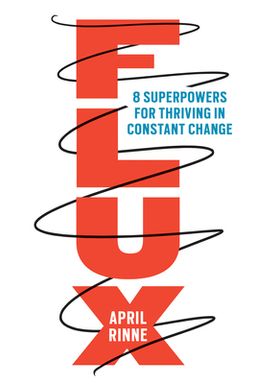
When was the last time change threw your life off balance? In Flux: 8 Superpowers for Thriving in Constant Change, futurist April Rinne argues that learning to navigate uncertainty isn’t just a modern skill—it’s a survival trait for the 21st century. Rinne contends that change will never slow down, and our old ways of coping—control, prediction, and resistance—no longer serve us. To flourish, she says, we must develop a new way of thinking she calls a Flux Mindset: the ability to stay grounded yet flexible, calm yet curious, as the world constantly shifts beneath our feet.
The book is part personal memoir, part guidebook, and part roadmap for reorienting your relationship to change. Drawing from her extraordinary story—losing both parents at age twenty, building a global career, and helping organizations adapt to disruption—Rinne introduces readers to eight practical “Flux Superpowers.” Each one helps you break free from outdated scripts about control, success, and stability, teaching you to thrive rather than merely survive.
The World in Flux
Rinne begins by acknowledging the global chaos most of us live in: a world upended by pandemics, social unrest, climate crises, and technological acceleration. Yet rather than trying to find a way back to “normal,” she insists that perpetual change is the new normal. The faster the world moves, the more we need to slow our mental pace and reframe uncertainty as an opportunity for learning, creativity, and connection. “Change is inevitable,” she reminds us, “but growth is optional.”
In sharing her own grief story—the sudden death of both parents while she was in college—Rinne creates a visceral connection to loss and reinvention. That experience became her first education in flux, forcing her to write a new personal script at age twenty. Over time, she realized that what she had learned through tragedy was exactly what the world now needs to learn collectively: how to let go, trust, and adapt.
From the Old Script to a New One
Every society, she argues, hands its people an “old script.” This script tells you to work hard, climb the ladder, control your destiny, and equate success with accumulation—of money, credentials, and followers. It’s an industrial-era instruction manual in a post-industrial world. The problem? The pace and scale of change have rendered that script obsolete. “It’s fit for a world that no longer exists,” she says. And old scripts die hard—they linger in our minds, institutions, and expectations, shaping how we respond to everything from job loss to global upheaval.
The antidote is to write your own “new script”: one grounded in timeless human values—curiosity, compassion, and trust—but flexible enough to evolve. This new script is unique to each person; no one can write it for you. It liberates you from needing certainty. It lets you hold the future gently instead of gripping it with anxiety. Rinne introduces the Theory of Flux as a practical model for doing this: (1) Open a Flux Mindset, (2) Unlock the eight Flux Superpowers, and (3) Apply them to write your New Script.
Opening a Flux Mindset
A Flux Mindset is built on three pillars: clarity of values, comfort with paradox, and seeing uncertainty from a place of hope rather than fear. Borrowing ideas from neurobiology and growth mindset psychology (as developed by Carol Dweck), Rinne explains that we’re biologically wired to resist change. Our sympathetic nervous system interprets uncertainty as threat, triggering “fight, flight, or freeze.” But when you ground yourself in your values—your North Star—you recalibrate the body and mind to perceive the unknown as potential, not peril.
“Think of a Flux Mindset as your compass for change,” Rinne writes. “It’s your North Star, your surfboard, and terra firma all at once.”
To find your “flux baseline,” Rinne suggests reflection questions like: What gives you meaning? Whom do you trust when everything changes? What would make you, you, if you lost your job, health, or home? The goal isn’t to define your mindset perfectly but to observe your reactions to change and start reshaping them through practice.
The Eight Flux Superpowers
The heart of the book lies in eight transformative habits that overturn the old script: Run Slower, See What’s Invisible, Get Lost, Start with Trust, Know Your Enough, Create Your Portfolio Career, Be All the More Human, and Let Go of the Future. Each one is paradoxical—it flips conventional wisdom on its head. For instance, slowing down in a fast world makes you more effective, not less. Trusting others first actually builds security. Letting go of the future cultivates optimism. Alone, these superpowers are powerful adjustments; together, they form a holistic system of resilience and adaptation.
Rinne likens them to a “bento box for the mind.” You can practice one skill at a time or weave them together into a nourishing meal of mindset resilience. The key is that each reinforces the others—the more you slow down, the easier it becomes to trust or let go.
Why Flux Matters
Flux isn’t just a personal philosophy; it’s a societal necessity. Today’s hyperconnected, unpredictable world demands flexibility in organizations, economies, and leadership. Yet most of us were educated—and rewarded—for linear thinking and control. “The future isn’t more certainty,” Rinne warns. “It’s more uncertainty.” By learning to dance with change, we not only protect our mental well-being but also amplify collective creativity and connection. Flux offers a language for this new reality—one that blends ancient wisdom, brain science, and modern strategy into a vision of hope. It’s a call to stop managing change and start harmonizing with it, together.