
Idea 1
The Science of Never Forgetting a Language
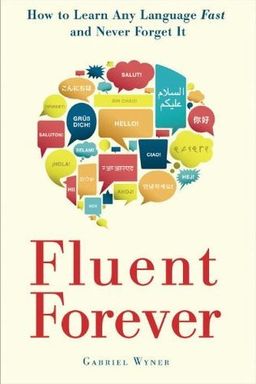
Have you ever spent months learning a new language only to forget most of it within weeks? In Fluent Forever: How to Learn Any Language Fast and Never Forget It, Gabriel Wyner argues that fluency isn’t about innate talent or endless memorization—it’s about understanding how memory actually works. By aligning language study with the brain’s learning systems, you can master any language efficiently and retain it for life. Wyner, a former opera singer turned language hacker, discovered that with the right approach, even adults can achieve native-like pronunciation and fluency faster than traditional methods ever promised.
Wyner contends that the traditional model—rote drilling, repetitive translation, and grammar-heavy courses—is not only outdated but counterproductive. Our brains aren’t built to memorize word lists or conjugation tables in isolation; they’re built to form rich, connected memories using meaning, sound, and emotion. Understanding this, Wyner designs a language-learning system based on pronunciation mastery, meaningful association, and spaced repetition—leading to what he calls “the end of forgetting.”
A New Way to Approach Fluency
At the heart of Wyner’s approach are three revolutionary insights: first, learn pronunciation before vocabulary; second, eliminate translation to think directly in the target language; and third, use spaced repetition systems (SRS) to implant knowledge into long-term memory. These three principles, when combined, transform how you learn and retain languages. Instead of memorizing endless rules, you play with sounds and connect real images and experiences to new words. The result isn’t just fluency—it’s confidence, enjoyment, and mastery that lasts.
The book dives deep into the cognitive mechanics behind how we remember—or forget—information. Wyner’s analogies are vivid: language learning is like fencing, where you practice drills until they become reflex; or like playing a video game, where every word conquered unlocks the next level of understanding. By treating language learning as both science and art, he creates a system that feels playful but is grounded in decades of neuroscience research.
Why This System Matters
Unlike most learning manuals, Fluent Forever doesn’t propose shortcuts or gimmicks. It teaches you how to build a mental structure strong enough to support lifelong fluency. The book explains why immersion works—because it forces the brain to constantly recall and use language—but also shows that you can recreate immersion at home using well-structured, personalized study techniques. Tools like Google Images for visual context, Forvo for pronunciation, and Anki for repetition turn language study into small, meaningful, daily experiences that compound quickly into fluency.
Wyner’s approach resonates because it not only accelerates progress but makes learning feel human. You’re engaging curiosity, emotion, and creativity—the same forces that helped you master your first language as a child. And because the method is fully adaptable, it works whether you’re learning Spanish for travel, Japanese for work, or Icelandic just for fun. At its core, this book redefines what it means to truly “know” a language: not memorized tests of grammar, but the ability to express your thoughts automatically and effortlessly.
In this summary, you’ll explore how memory functions like a living network, how sounds and images rewire your brain, and how to use tools and stories to make language stick forever. You’ll uncover five principles to prevent forgetting, learn the art of pronunciation training, and see how to build vocabulary and grammar from life itself. Finally, you’ll learn how to transform study into play—a joyful, creative process that makes any language a part of who you are.