
Idea 1
Creating Flow: The Architecture of Optimal Experience
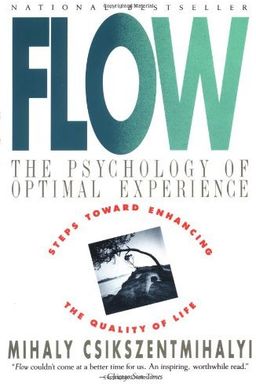
How can you turn ordinary moments into deep joy and fulfillment? In Flow: The Psychology of Optimal Experience, Mihaly Csikszentmihalyi argues that happiness is not something that happens to you—it is the result of how you direct consciousness. He defines flow as the state in which attention is so ordered that you become fully absorbed in what you're doing, losing self-consciousness and experiencing intrinsic satisfaction. The book explores how you can cultivate this state deliberately, shaping attention to create meaning and inner harmony.
The nature of consciousness and attention
Csikszentmihalyi begins by explaining how consciousness operates as a limited information-processing system. You can only focus on a small slice of sensory, emotional, and mental input at a time. Each moment's quality depends on how you direct attention—what he calls psychic energy. When you spend that energy on challenges that engage your skills, you create order and satisfaction. When attention scatters due to worry, boredom, or distraction, psychic entropy sets in, leaving you anxious or dull.
The self grows through this dynamic control of attention. It is both the director and the product of your experiences. Each episode of focused engagement builds complexity—greater differentiation and integration of your abilities and identity. This framework parallels Viktor Frankl’s emphasis on meaning and Maslow’s theory of self-actualization but with practical cognitive tools: you can learn to control the quality of experience directly through attentional discipline.
What flow feels like
When in flow, you lose awareness of self and time. Actions merge with awareness, feedback is immediate, and the experience is autotelic—done for its own sake. A sailor sensing the perfect harmony of wind and wave, a painter absorbed in color tension, or a father enraptured by his child’s smile—all describe similar dissolution of barriers and effortless control. Csikszentmihalyi’s field studies—from rock climbers to Navajo herders—show strikingly consistent descriptions across cultures and professions.
Flow changes you. Each episode strengthens competence and contributes to a more complex self. You do not simply feel good; you become better. The experience transforms mundane life activities into arenas of mastery—Rico Medellin turned factory soldering into a personal performance challenge, illustrating how flow can enrich even routine work.
The conditions that generate flow
Flow emerges when several ingredients align: challenges balance your skills, goals are clear, feedback is immediate, concentration is deep, you feel control, self-consciousness fades, and time distorts. Tasks that are too easy cause boredom; those too hard cause anxiety. Finding the narrow channel between the two is key. This dynamic applies not only in sports or arts but also in relationships, parenting, or intellectual activities. Surgeons, singers, chess players, and climbers describe similar cognitive contours of deep engagement.
Among these, autotelic orientation—doing an activity for its own intrinsic enjoyment—is central. Someone who plays tennis not for trophies but for the rhythm of rallies, or who studies math for the elegance of logic, experiences genuine flow. This autotelic attitude is learnable and forms the core of Csikszentmihalyi’s blueprint for the good life.
Why modern life hinders flow
Modern culture often disrupts flow by providing excess comfort and distraction. Traditional societies used religion and rituals to create ordered meaning, but many modern shields have lost coherence. Anomie (absence of norms) and alienation (forced meaningless labor) scatter attention and rob people of satisfying engagement. Csikszentmihalyi presents striking examples: the Ik of Uganda, whose cultural breakdown led to cruelty; modern consumer societies where passive entertainment substitutes for true involvement. Without challenge or feedback, leisure degenerates into psychic entropy.
Yet cultures can also nurture flow. The Shushwap Indians periodically moved villages to restore novelty; Japan’s Isé Shrine is rebuilt every 20 years to keep skills alive. The lesson: sustainable order must combine predictability and innovation—the same balance flow requires individually.
From moments to life patterns
Flow is not restricted to peak experiences. You can cultivate it in work, family, learning, solitude, and even crisis. Autotelic personalities—people who can find meaningful engagement anywhere—organize life so that attention serves growth rather than anxiety. Such people channel adversity into new goals, as in Lucio’s paraplegic transformation or Pilar’s musical mastery despite blindness.
Csikszentmihalyi’s central argument is both empirical and moral: happiness depends more on the organization of your consciousness than on external rewards. You have limited psychic energy; how you invest it determines the quality of your days. By mastering attention, balancing challenge and skill, and pursuing personally meaningful goals, you can construct a life where enjoyment is a byproduct of engagement—in short, where flow becomes your way of being.