
Idea 1
Flourishing: The New Psychology of Well‑Being
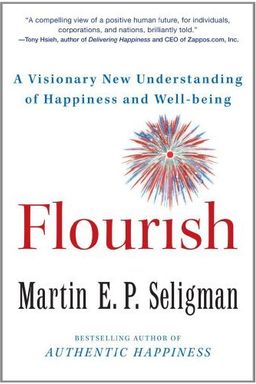
What would it take for you—not just to feel better—but to truly flourish? In Flourish, Martin Seligman redefines what psychology should aim for: not merely relieving misery but building the enabling conditions for lasting well‑being. He argues that traditional psychology obsessed over disease and deficiency for much of the twentieth century, resulting in treatments that palliate symptoms but rarely produce thriving. Positive psychology emerges as his antidote—a science of strengths, meaning, and resilience capable of lifting individuals, institutions, and even nations beyond mere happiness toward sustainable flourishing.
Seligman replaces the vague pursuit of happiness with a multifaceted model called PERMA: Positive emotion, Engagement, Relationships, Meaning, and Accomplishment. Each element is pursued for its own sake, each can be measured independently, and each contributes to the overall construct of well‑being. This paradigm shift invites a broader dashboard—like weather rather than temperature—where the goal is understanding and cultivating multiple dimensions of flourishing.
From Treating Illness to Building Well‑Being
Much of psychiatry and psychotherapy, Seligman notes, stops at symptom relief. Drugs and talk therapies often reduce misery but fail to build strengths. You can remove the weeds, yet still have no rose garden. True prosperity demands another stage: enabling conditions. Positive psychology trains people to function well even under sadness—developing coping, gratitude, and strength use that sustain growth. This shift moves therapy from palliation to cure, aiming not just for less depression but for greater joy, engagement, and meaning.
The Empirical Core of Happiness
Positive psychology’s credibility rests on rigorous science. Through randomized controlled trials at Penn, Seligman’s team validated exercises that reliably increase well‑being. The What‑Went‑Well task trains your attention toward positives; the Gratitude Visit deepens emotional connection; the Signature Strengths exercise helps you deploy personal virtues—like curiosity or kindness—creatively. These tools, tested under placebo controls, show measurable reductions in depression and sustained gains in happiness when practiced consistently. Clinical extensions such as Positive Psychotherapy (PPT) fuse these exercises with standard therapeutic empathy, achieving promising remission rates in early studies.
Education and Institutions as Engines of Flourishing
Seligman’s vision scales upward. Positive education, piloted in schools like Geelong Grammar in Australia and Strath Haven High in Pennsylvania, teaches resilience, gratitude, and optimism alongside academics. Research from the Penn Resiliency Program (PRP) and positive‑curriculum experiments show lower adolescent depression and improved performance. Meanwhile, large systems like the U.S. Army’s Comprehensive Soldier Fitness bring these methods to millions—using tools like the Global Assessment Tool (GAT) and Master Resilience Training (MRT) to measure and improve emotional, social, family, and spiritual fitness. These real‑world experiments demonstrate that well‑being can be taught, tracked, and scaled.
The Biology and Economics of Flourishing
Seligman links optimism and positive emotion not only to mental health but to physical health. Studies from Sheldon Cohen’s viral challenges show that higher positive affect lowers the incidence of colds through reduced interleukin‑6 inflammation; cardiovascular cohorts demonstrate that optimism predicts lower disease and mortality rates. The Robert Wood Johnson–funded Positive Health initiative reframes medicine: instead of studying risk factors, research what subjective, biological, and functional assets extend life and decrease health‑care cost. Fitness, rather than fatness, emerges as one such asset—Steve Blair’s data proves that even overweight but physically active people live longer than sedentary thin ones.
A Global Mission for Human Flourishing
At the societal level, Seligman joins economists like Ed Diener to advocate for measuring well‑being alongside GDP. Economic growth without psychological growth breeds empty prosperity. The New Prosperity agenda targets 51% of the world flourishing by 2051 through PERMA‑based education, workplace reform, and technology‑driven interventions such as positive computing. His Master of Applied Positive Psychology (MAPP) program trains professionals to apply scientific rigor in real contexts—from schools to corporations—creating a cadre committed to scaling evidence‑based happiness.
Core insight
Flourishing is measurable, teachable, and achievable. PERMA gives you the framework, positive interventions supply the tools, and social systems provide scale. Psychology’s future, Seligman insists, lies not in studying what is wrong but in building what makes life worth living.
In sum, Seligman transforms positive psychology from mere mood management into a blueprint for lasting human progress—one that integrates mind, body, and society. You discover how gratitude shapes emotion, how resilience shields soldiers and students, how optimism protects the heart, and how policy can promote national flourishing. This is not just happiness science—it is a vision for cultivating the best within people and communities worldwide.