
Idea 1
The Lifelong Calling of True Nursing
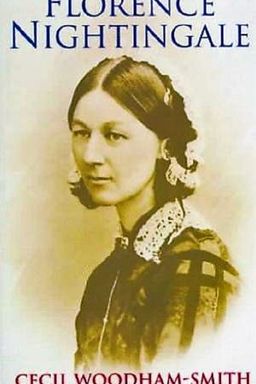
What does it really mean to dedicate your life to service—especially the kind that requires both your hands and your heart every single day? In Florence Nightingale to Her Nurses, Florence Nightingale argues that nursing is not simply a profession but a sacred vocation—a lifelong moral and spiritual calling that demands humility, discipline, and self-renewal. Through a series of heartfelt letters written between 1872 and 1888 to the probationer-nurses of her school at St. Thomas’ Hospital in London, Nightingale challenges her readers to see nursing as a divine ministry, a test of character, and a continual pursuit of moral and professional perfection.
For Nightingale, nursing was never static. To stop learning meant to go backwards. To nurse poorly was not merely an error—it was a moral failure with life-and-death consequences. From her vantage point as both reformer and teacher, she urged every nurse to train her hands, her head, and her heart equally, holding herself to the same standard of obedience, gentleness, and self-command as the Christ she sought to follow. But Nightingale’s letters go far beyond instructions to her nurses; they reveal a philosophy of life centered on disciplined compassion, one that intertwines faith, reason, and social responsibility.
A Moral and Professional Revolution
In 1872, formal nursing education was still in its infancy. Many nurses were untrained, illiterate, or morally suspect—a public image Nightingale fought hard to change. She saw proper training as a way to elevate nursing into a profession, but also as a pathway to spiritual purification. Her School at St. Thomas’ Hospital became both a professional institution and a moral community. Each letter served as both a commencement address and a sermon, blending the practical—keeping wards clean, recording temperature charts—with the spiritual—praying before work, forgiving slights, and avoiding jealousy.
To Nightingale, skill without virtue produced a “mechanical nurse,” efficient but soulless. Virtue without diligence made a sentimental amateur. Only the union of rigorous training and moral refinement could yield what she called a “Trained Nurse”—a phrase that for her meant a woman disciplined by both character and practice.
The Nurse as a Christian Worker
Nightingale’s writings are deeply infused with Christian theology, but not in sectarian form. She saw nursing work itself as a form of worship—the daily tending of bodies as a mirror of God’s care for souls. A nurse “preached the gospel,” she said, not merely through words, but through silent example. Her duty was to embody Christ’s compassion in the ward: obedient, diligent, never idle or self-seeking. This was moral leadership by quiet influence—what she called “authority without appearing to exercise it.”
Her letters are filled with metaphors drawn from Scripture: nurses as “soldiers of God,” ward sisters as “shepherds,” and patients as “our neighbours” in whom Christ is present. But she also spoke in the language of self-examination and progress, like the moral philosophers of her age. Each nurse must ask daily: “Am I His, or am I not?” The heart of the nursing vocation was not power but purity, not recognition but service. Through this spiritual framing, Nightingale made the daily grind of nursing—the repetitive, humble care of wounds and souls—into a form of heroism equal to battle.
The Culture of Continuous Improvement
The idea that nurses must always progress is one of her most insistent refrains. She criticized complacency—nurses who thought themselves “skilled” or “finished” after one year of training. Even in her old age, she said that if her health allowed, she would gladly “begin all over again,” for the work of learning is infinite. This conviction resonates with modern notions of lifelong education and professional reflection (later echoed by thinkers like Donald Schön in The Reflective Practitioner).
Nightingale pressed her nurses to cultivate both observation and virtuous self-discipline. The smallest neglect—a dirty fingernail, a slamming door, an unwashed hand—could turn the scale “from life to death.” Moral decay, she warned, began in tiny daily habits: gossip, vanity, resentment, disobedience. A nurse was spiritually responsible for every gesture and attitude as much as for her professional skill. To stay “clean in hands and in heart” was to practice holiness itself.
Why These Ideas Matter
In today’s healthcare context—where burnout, bureaucracy, and depersonalization abound—Nightingale’s philosophy feels both inspiring and demanding. Her call to combine scientific precision with moral depth anticipates today’s holistic nursing models that see body, mind, and spirit as one ecosystem. Her lessons on humility, intelligent obedience, and self-governance echo in leadership training across industries. And her belief that “to be useful is the only true nobleness” reminds anyone in service professions that character, not credentials alone, earns trust.
Throughout this summary, you’ll discover how Nightingale builds her philosophy across themes of continual improvement, moral discipline, humble leadership, obedience, order, and enduring selflessness. You’ll also meet the nurses she celebrated—like Agnes Jones and Martha Rice—whose lives embodied these virtues in action. Altogether, these letters form one of the earliest and most profound handbooks on ethical professional practice, written by a woman who saw service as the highest form of intellect and love.