
Idea 1
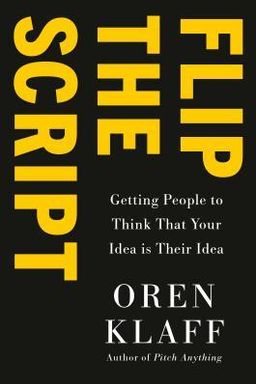
Flip the Script: Creating Inception Instead of Persuasion
Have you ever tried to convince someone—and the harder you pushed, the faster they pulled away? In Flip the Script, Oren Klaff invites you to rethink persuasion itself. He argues that in today’s buyer-empowered world, traditional sales and negotiation methods have become obsolete because they rely on pressure. Klaff contends that if you want people to agree with you, buy from you, or invest in your ideas, you must make them feel it was their own idea all along. That is the essence of what he calls Inception.
Klaff builds his case on a blend of evolutionary psychology, neuroscience, and decades of deal-making experience. He views persuasion as a process of guiding the buyer’s brain through pre-wired circuits—threat, reward, and fairness—rather than battering it with logic or emotional appeals. His approach replaces pressure with autonomy, making others feel like the decision is theirs. Once they arrive at their own conclusion, they defend it fiercely because we instinctively trust ideas born in our own minds.
Why Selling No Longer Works
Klaff begins by describing the death of the old sales script—the charm, the pitch, the trial close. Modern buyers, flooded with data and options, instinctively resist manipulation. The moment they sense pressure or “closing tactics,” they disengage. We now live in a time when products are bought, not sold. Buyers fact-check in real time and believe their own reasoning more than anyone else’s. If you can’t make them discover your idea themselves, your pitch dies.
So instead of convincing people, Klaff shows how to help them convince themselves. His method draws attention away from the seller’s desire and focuses on shaping how the buyer sees, frames, and experiences your idea. This shift—from persuasion to Inception—allows professionals to win deals, raise capital, and negotiate terms without pressuring or chasing anyone.
The Six-Part Framework
The book unfolds across eight vivid stories that illustrate a six-step playbook:
- Status Alignment: Show that you are the buyer’s equal, not a desperate outsider. Create respect by speaking the language and values of their world.
- Certainty: Use the Flash Roll—a staccato display of mastery—to make the buyer feel you’re unquestionably competent.
- Pre-Wired Ideas: Present your message through the brain’s hardwired receptors for threat, reward, and fairness (Why should I care? What’s in it for me? Why you?).
- Plain Vanilla: Frame your idea as normal with one fresh twist. Too much novelty scares people; the familiar comforts them.
- Leveraging Pessimism: Let buyers explore the negatives safely within boundaries you define, through what Klaff calls an invisible fence and a Buyer’s Formula.
- Being Compelling: Ground your confidence in values, not enthusiasm. The most magnetic people are steady, principled, and calm—they stick to their guns.
Together, these steps allow you to “flip the script”—to turn selling into guiding, argument into discovery, and control into influence. Rather than pushing for a yes, you build a frame where the buyer inevitably proposes the very idea you wanted all along.
Why This Matters to You
From investors to job interviews to everyday persuasion, the methods in Flip the Script are designed for anyone who needs others to buy in emotionally and intellectually. They remind you that trust doesn’t come from pressure—it comes from credibility, clarity, and autonomy. When you stop asking and start guiding, decisions happen naturally. And as Klaff shows through stories of selling to oligarchs in Moscow, pitching billionaires in Silicon Valley, or saving a $40 million real estate deal in Hawaii, this approach doesn’t just make people say yes—it makes them own their yes.
Core Insight
When people reach conclusions through their own reasoning, they stop resisting. The genius of Klaff’s method is using status, certainty, and narrative structure to make others reach yours—and believe it’s theirs.