
Idea 1
The Case for a Flexible Working Revolution
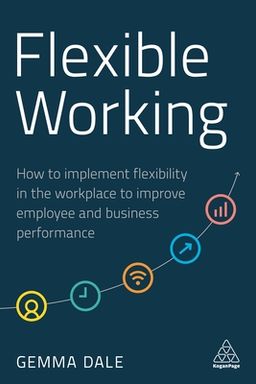
Have you ever wondered why so many of us still commute to offices every day, working 9 to 5, even though our laptops and Wi-Fi could connect us anywhere? In Flexible Working: How to Implement Flexibility in the Workplace to Improve Employee and Business Performance, Gemma Dale argues that our model of work is long overdue for reinvention. She contends that flexible working is not just a perk for parents—it’s the future of work itself, and a vital strategy for inclusion, productivity, and sustainability.
Dale makes a bold case that the traditional ‘default model’—fixed hours, fixed locations, face-to-face oversight—was born during the Industrial Revolution and optimized for machines, not minds. In a world of knowledge work and digital tools, sticking to that old model limits both people and performance. Her book outlines why flexible working must become a cultural norm rather than a marginal benefit, how organizations can make it happen, and what pitfalls to avoid along the way.
Why Work Needs Reinvention
Dale paints a vivid contrast between 19th-century factories and 21st-century organizations. While the Industrial Revolution made sense of regimented hours and clock-watching, most modern jobs rely on cognitive skills, creativity, and collaboration that don’t happen neatly between 9 and 5. Yet workplaces have clung to this default because of inertia, habit, and managers’ need for control. The book challenges readers to confront an uncomfortable question: if work were invented today, would we design it this way?
She also highlights how the pandemic accelerated a mass experiment in flexible working, revealing its potential for many—and its uneven distribution of benefits. While millions proved they could work effectively from home, others, particularly frontline workers, showed that flexibility can’t be one-size-fits-all. The challenge now, Dale asserts, is to ensure flexibility is available fairly and sustainably across industries and roles.
The Broader Vision: Beyond Policy to Culture
Flexible working, Dale insists, goes deeper than HR policies. It’s a mindset shift from control to trust, from time spent to results achieved. “Flexibility,” she writes, “is not about working less—it’s about working differently.” Many organizations mistake compliance with the law (honoring right-to-request policies) for true flexibility, but Dale pushes for something bolder: making flexibility a cultural default. In this world, an employee doesn’t have to ‘earn’ the right to adjust their hours; instead, managers start from the assumption that flexibility benefits everyone.
She describes this as a move from “command and control” to “adult‑to‑adult” relationships, where employees are trusted to manage how, when, and where they achieve outcomes. This may sound idealistic, but Dale backs it up with research and corporate case studies—from BT’s decades-long homeworking program to Zurich Insurance’s embrace of “FlexWork,” where over 70% of employees choose flexible patterns.
What Flexible Working Really Means
Unlike some popular interpretations, “flexible working” in this book isn’t limited to part-time hours or remote work. It includes nine-day fortnights, compressed hours, self-rostering for shift workers, phased retirement for older employees, and job shares at senior levels. In Dale’s view, flexible work exists on three dimensions: when work is done (time flexibility), where it is done (location flexibility), and how it is accomplished (task or method flexibility). By broadening this definition, Dale frees flexibility from its narrow association with parenthood and places it at the center of modern working life.
“Flexible working is not a favor to employees. It’s a strategic imperative for organizations that want to thrive in a changing world.”
The Structure of the Revolution
The book unfolds in two major parts. Part One builds the case for flexibility: exploring benefits to productivity, wellbeing, and talent attraction; acknowledging challenges such as stigma, managerial resistance, and inconsistent implementation; and examining global trends in technology and demographics that make flexibility inevitable. Part Two is a detailed practical guide, showing how leaders and HR professionals can move from ideas to action—through data-driven strategies, effective communication, manager training, and tools for policy design.
Why It Matters Now
For Dale, flexible working isn’t just smart management—it’s social justice. By challenging rigid schedules and presenteeist cultures, flexibility opens the door for parents, carers, older workers, and people with disabilities to participate fully in the workforce. It supports gender equality, reduces the environmental impact of commuting, and helps organizations tap into broader talent pools. But to realize those benefits, employers must dismantle persistent myths about productivity, commitment, and fairness.
In essence, Flexible Working is both a manifesto and a manual. It argues that the 9-to‑5 model is an outdated relic, and that the future belongs to organizations willing to trade control for trust. By combining research, case studies, and hands‑on guidance, Dale gives you the blueprint for building workplaces where flexibility is not a concession—but a culture of possibility.