
Idea 1
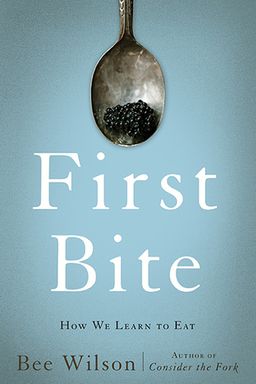
How We Learn to Eat
Most of what you believe about taste, hunger, and preference is wrong—or at least incomplete. Bee Wilson’s book reveals that eating is not an instinctive act, but a cultural and learned one. Apart from an innate liking for sweetness and a wariness of bitterness, humans are born as blank palates, shaped by exposure, repetition, and shared experiences. What feels like "your taste" is mostly an accumulation of habits and social contexts built over time. Wilson argues that the crucial insight of modern food science is not that biology dictates appetite, but that biology interacts with learning, memory, and environment to produce it.
The omnivore’s challenge
Humans are omnivores, capable of eating almost anything, which gives us astonishing adaptability but also a problem: how do we decide what is safe and pleasurable? That decision is learned, not encoded. Everything from sushi to peanut butter is a learned taste, built through early trials and social modeling. Wilson revisits Dr. Clara Davis’s infant feeding study in the 1920s, showing how babies free to choose among healthy foods thrived despite very different preferences—evidence that environmental choice architecture matters more than genetic programming.
Early taste education
The book’s scientific foundation rests on the work of researchers like Julie Mennella, Gary Beauchamp, and Lucy Cooke, who proved that flavor learning begins in the womb and continues through breastfeeding, early solids, and the preschool years. Flavors in amniotic fluid and breast milk—garlic, carrot, vanilla—prime infants to accept those foods later. Introduce varied, real-food flavors early, Wilson advises, and you’ll build a durable foundation for diversity. Delay exposure, and neophobia takes root instead. (Note: this echoes Alison Gopnik’s broader concept of infancy as a sensitive window for flexibility and exploration.)
Memory and social identity
Eating is not just sensory; it is mnemonic. The scents and flavors of childhood embed deeply in memory networks overlapping with emotion and identity. As neurologist Gordon Shepherd notes, olfactory memories are designed “not to forget.” This explains why losing smell—through trauma or illness—can feel like losing part of the self, as in Wilson’s moving accounts of anosmic patients. Food memories also connect communally: wartime captives remembering feasts, family tables encoding love and belonging. To change what you crave, you must build new memories strong enough to compete with the old ones.
Culture, power, and fairness
Wilson weaves social themes throughout: how gender expectations shape serving sizes; how siblings copy, compete, or rebel at the table; and how industrial marketing teaches children to love sweetness and brand mascots more than nourishment. Boys praised for hearty appetites and girls taught restraint create lifelong inequalities in health. Similarly, grandparents who grew up amid scarcity may overfeed out of love, unaware of the modern risks. By explaining these behavioral loops, Wilson reframes eating as social rather than moral.
From science to solution
Beyond diagnosis, Wilson is hopeful. You can reeducate your palate and retrain your children’s by changing environments, timing, and tone. Sensory education programs like Finland’s Sapere project show that children who touch, smell, and describe vegetables grow more adventurous. Family-based therapies and careful taste exposures help even clinical cases of selective eating or anorexia recover. Whether you are a parent, teacher, or policymaker, the implication is the same: eating is teachable, and new habits take root when flavor, familiarity, and positive emotion converge.
Core principle
You were not born knowing what to eat; you learned it. By changing what, how, and with whom you learn, you can change the future of your diet—and, collectively, of food culture itself.
Across its chapters, Wilson situates appetite inside a network of biology, memory, and society. Hunger is both hormonal and emotional, and pleasure is both individual and cultural. The good news is that because your preferences are learned, they can also be relearned. Eating better, she concludes, is less a matter of restraint than of education.