
Idea 1
The Ideology Behind Capitalism’s Crises
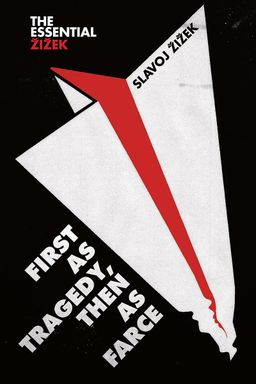
How can you tell when a system believes in itself—when its followers not only act according to its rules but trust its promises? In First as Tragedy, Then as Farce, Slavoj Žižek invites you to look beneath the reassuring surface of liberal capitalism to grasp the deeper ideological forces that shape not only markets but our very sense of freedom. He argues that the 2008 financial meltdown and the events of the early twenty-first century were not accidents or unforeseeable shocks—they were ideological expressions of capitalism’s contradictions, playing out precisely as Marx predicted: first as tragedy, then repeated as farce.
Žižek contends that after 9/11 and the 2008 crisis, the West’s belief systems have turned cynical. We still behave as if liberal democracy and market capitalism are the best possible worlds—but we no longer truly believe in them. Instead, we maintain the system through irony, distance, and ritual, pretending that we are free while the mechanisms of domination become more complex and less visible. In this farce, ideology no longer functions through conviction but through participation: people who claim not to believe in capitalism nevertheless continue to obey its routines, buy its products, and invest in its hopes.
Liberal Capitalism’s Self-Deception
Žižek opens with President George W. Bush’s twin speeches—after 9/11 and after the financial collapse of 2008—and shows how both use the same language of emergency: a threat to the American way of life that necessitates suspending core values in order to save them. Like Marx’s analysis of historical repetition, Žižek suggests that capitalist ideology endlessly reenacts its crises as stages in a theatrical cycle. The tragedy of faith and revolution is followed by the farce of pragmatic repair. We save the free market with massive state bailouts, practice socialism for the rich, and call it capitalism. We install walls, police borders, and claim these barriers preserve openness. In these contradictions, ideology sustains itself by denying that it’s ideological at all.
The Persistence of Belief Without Conviction
Marx’s phrase that people “only imagine they believe” haunts Žižek’s analysis. Today, we think we’re cynical, ironic, and disillusioned—but we believe more deeply than ever because we act as if belief doesn’t matter. We buy organic coffee, post on social media, and protest political corruption, yet assume nothing can fundamentally change. Žižek compares this to Kierkegaard’s notion that we “believe that we believe”; modern subjects perform belief without conviction, sustaining the system unconsciously. The most troubling insight is that capitalism does not need genuine believers—only participants who keep the machinery moving even while mocking it.
Why Ideology Matters More Than Economics
For Žižek, the financial meltdown revealed not just economic failure but ideological collapse. The same experts who demanded state deregulation now begged for government intervention to rescue the markets. He calls this “capitalist socialism”: a system that socializes losses while privatizing profits, where the bailout serves as a superstitious gesture—a symbolic “doing something” when no one understands how to stop the chaos. He contrasts this frantic activity with the need to pause, reflect, and truly think. Perhaps, Žižek suggests, the problem is not that we talk too much and act too little, but rather that we act too quickly to avoid thinking at all.
The Need to “Begin From the Beginning”
As the book moves deeper, Žižek recalls Lenin’s paradoxical advice during the revolutionary retreat of 1922: when you fail, you must still start over “from the beginning.” He applies this to the Left today, arguing that communism as an Idea—what Alain Badiou calls the “communist hypothesis”—must be reinvented from zero. It’s not enough to repair capitalism’s injustices with new social policies; we must confront the entire logic that produces crises in the first place. Žižek insists that genuine emancipation means redefining universal equality for the present era, where technology, ecology, and social fragmentation have expanded both freedom and exclusion.
Why This Argument Matters
Žižek writes for anyone who feels trapped between despair and complicity—those who sense that something is wrong yet cannot imagine a coherent alternative. He claims that the greatest victory of capitalism is its ability to make itself appear as the only possible reality. By tracing how ideology sustains this illusion, Žižek reopens the question: can we still think and act in truly revolutionary terms? Through cultural critique, philosophy, and political urgency, First as Tragedy, Then as Farce calls for renewed faith—not in market utopias but in our capacity to envision collective transformation when belief itself seems impossible.