
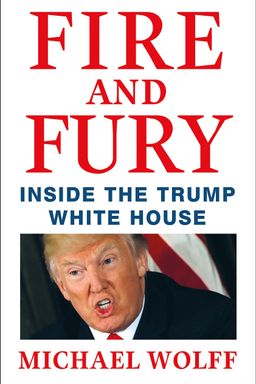
Fire and Fury cover

Fire and Fury

by Michael Wolff

Fire and Fury offers an explosive inside look at the early days of the Trump administration, detailing the chaotic atmosphere of a team unprepared for governance. Michael Wolff provides an unparalleled view into the conflicts and decisions that defined a presidency marked by controversy and intrigue.

Chaos as Governing Principle

If you want to understand the early Trump White House, you must start with the idea that chaos was not an accident—it was the method. Michael Wolff’s book portrays a presidency where disruption is both the governing tactic and the political brand. The administration’s organizing principle isn’t ideology or process; it’s performance. Donald Trump’s impulses, Steve Bannon’s revolutionary instincts, and Jared and Ivanka Kushner’s moderating ambitions produce a high-velocity system. Every choice—from executive orders to personnel fights—serves the singular goal of keeping attention fixed on the president.

The structure of power

You see three competing power centers: Bannon’s nationalist insurgency, Jarvanka’s establishment outreach, and Reince Priebus’s traditional Republican bureaucracy. These groups create a triangular struggle for proximity to Trump, whose leadership style rewards whoever speaks to him last. Because Trump governs by attention rather than agenda, the person who can flatter him, make him feel heard, or present an emotionally charged visual moment wins the day. (Think of Ivanka and Dina Powell’s use of Syrian chemical attack photos to prompt missile strikes.)

The personality at the center

Trump’s leadership is built on improvisation and spectacle. He rarely reads or prepares; instead, he performs. He is propelled by applause and wounded by criticism. Wolff describes him as a salesman-president—someone who absorbs ideas through conversation rather than briefings and who recycles his favorite grievances until they dominate the news cycle. This creates an environment where loyalty matters more than competence. Family members and flatterers occupy disproportionate roles because they feed the president’s craving for affirmation and access.

The Bannon doctrine

In contrast, Steve Bannon enters as a strategist of chaos by conviction. A former naval officer and media entrepreneur, he believes that conflict accelerates cultural transformation. His worldview rests on three pillars: economic nationalism, sovereignty, and the deconstruction of the administrative state. He encourages shock actions like the travel ban to provoke backlash, arguing that outrage reveals enemies. This approach turns confrontation into power—it’s politics as perpetual siege. You can trace his hand in every headline-producing executive order that bypasses agency coordination, a tactic that achieves clarity for supporters and turmoil for institutions.

Media as battlefield

The presidency’s obsession with media defines its rhythm. Every staffer becomes part of a narrative factory. Bannon weaponizes Breitbart and talk radio; Kushner cultivates Rupert Murdoch and Morning Joe; Conway coins “alternative facts.” These tactics transform factual disputes into theatrical one-liners. The White House isn’t just fighting the press—it’s living through the press. Success is measured by the volume of coverage, not policy completion. Staffers scramble to manufacture moments—photo ops, speeches, tweets—that distract from crises and preserve dominance of the news cycle.

The consequences of improvisation

Because Trump governs through impulse and media framing, crises explode without warning. The Russia investigation begins as rumor and metastasizes after Trump fires James Comey, triggering Robert Mueller’s appointment. What starts as political miscalculation becomes a legal war. The administration tries to establish a “firewall” to contain risk—a separate legal and communications team—but the tactic collapses under infighting and leaks. By this point, governance is secondary to survival. The White House operates more like a family business under siege than an institution of state.

The book’s wider claim

Wolff’s main argument is that the Trump presidency reveals what happens when celebrity logic colonizes political institutions. Attention becomes currency; flattery becomes diplomacy; and loyalty replaces bureaucracy. Everyone—from generals to media consultants—tries to harness Trump’s moods, and every faction battles to define what “winning” means. The result is an administration that performs governance on television while fighting constant internal wars. Chaos, in Wolff’s telling, isn’t failure—it’s the governing philosophy itself.


Bannon and the War for Ideological Control

Steve Bannon represents the revolutionary wing of the administration, determined to transform nationalism into institutional power. His central conviction is that America’s elites betrayed the working class through globalism, trade deals, and cultural homogenization. He sees himself as the leader of a populist uprising to reclaim the nation’s soul and dismantle the bureaucratic machinery that sustains establishment control.

Origins and worldview

Bannon’s biography explains his outsider intensity: naval officer, Goldman Sachs banker, film producer, conservative activist. He fuses business acumen with ideological aggression. By the time he enters the White House, he’s armed with Breitbart’s media influence and the Mercers’ financial backing. He operates less as adviser and more as strategist-in-chief—driven by ideas about cultural warfare and “deconstruction of the administrative state.”

Tactics and influence

Bannon treats chaos as leverage. He pushes for aggressive executive orders, fast actions, and divisive rhetoric. His logic: disruption produces attention; attention cements identity. During the travel-ban episode, Bannon and Stephen Miller engineer a rushed executive order that ignites protests and litigation. The spectacle is the goal—it polarizes the public and hardens support from Trump’s base. He often removes chairs from meetings to keep staff uncomfortable and filters every policy idea through ideological simplicity: borders, jobs, America first.

Conflict and downfall

Bannon’s rise provokes equally powerful resistance. Jared and Ivanka, representing moderation and brand management, see him as toxic and extremist. Their faction works to sideline him through better press, CEO connections, and Rupert Murdoch’s ear. Bannon retaliates with Breitbart leaks, turning internal conflicts into national stories. His removal from the White House doesn’t end the fight—it merely relocates it. He rebuilds a political arsenal outside, deploying Breitbart and populist networks to steer Republican alignments for future elections.

Enduring impact

Bannon’s presence ensures that the administration’s ideological thrust endures even after his exit. His method—weaponize media, force cultural clashes, and frame opposition as un-American—reshapes the tone of conservative politics. His legacy isn’t just policy; it’s the normalization of polarization as political capital. In Wolff’s narrative, Bannon emerges as both architect and saboteur: the man who gave Trump’s populism intellectual scaffolding, then watched his own machinery consume itself in factional warfare.


Trump’s Personality as Operating System

Donald Trump’s temperament is the invisible operating system of his presidency. Understanding his behavior explains the administration’s improvisation, fragmentation, and spectacle. Wolff illustrates a man governed less by logic than by instinct—someone who confuses leadership with entertainment. His decisions are personal, emotional, and driven by the desire for constant validation.

Instinct over intellect

Trump doesn’t read briefings or study history. He absorbs reality through conversation and television. Advisers who feed his ego control policy more effectively than those with institutional authority. Aides describe him repeating phrases about crowd size and media fairness long after issues have moved on. This fixation transforms governance into an echo chamber—policy becomes a reflection of what agitates or flatters him that morning.

The politics of flattery

Trump’s need for validation shapes his relationships. Rupert Murdoch’s praise delights him; negative press devastates him. Ivanka and Jared’s influence rests largely on their emotional proximity. Staffers compete to reassure him rather than reason with him. It’s why figures like Hope Hicks and Kellyanne Conway serve not as strategists but as emotional buffers—curating news, filtering texts, and soothing his mood swings.

Decision-making through theater

In public, Trump performs politics. Speeches, tweets, and gestures replace deliberation. The firing of James Comey exemplifies this pattern: a personal annoyance turned into a national debacle. Instead of institutional reasoning, he enacts a story—removing a villain. The act backfires, inviting the Mueller investigation and converting political pressure into legal exposure. Governance becomes episodic, guided by perception management rather than strategic direction.

Consequences

Because emotional satisfaction drives decision-making, policies requiring patience—like health care reform—collapse. Institutions lose coherence, and staff turnover accelerates. What remains is spectacle: a president whose performance sustains his image while hollowing organizational discipline. Wolff’s insight is psychological: Trump doesn’t seek mastery of statecraft; he seeks endless reaffirmation of victory.


Jarvanka and the Family Model of Power

Jared Kushner and Ivanka Trump operate as the family’s stabilizing axis—the moderates in a volatile administration. Their influence stems not from expertise but access. Wolff shows them as both political actors and brand managers, transforming familial trust into institutional authority.

Proximity equals power

In an environment where decisions are made emotionally, proximity matters more than credentials. Jared becomes a liaison to global elites and foreign leaders, while Ivanka cultivates soft policy fronts—women’s empowerment, tech innovation, family issues. Their real talent lies in translating establishment voices into digestible pitches for the president. They anchor moderation through relationships with Gary Cohn and Dina Powell, building bridges to Wall Street and global diplomacy.

Strategy of normalization

Jarvanka’s instinct is conciliatory. They stage resets—like the joint session speech engineered after the travel ban debacle—to project competence and calm. These moments win brief approval from press and donors, proving that appearance management can temporarily override dysfunction. Their goal is reputational: transform chaos into conventional power through style and tone.

Conflict with Bannon

Their elevation provokes Bannon’s wrath. He frames Jared as emblematic of elite betrayal and clashes over media control, ideology, and staff placement. Their warfare plays out through leaks—Jarvanka to Morning Joe and Murdoch; Bannon to Breitbart. The conflict isn’t just personal but philosophical: cosmopolitan pragmatism versus revolutionary nationalism.

Legacy of familial influence

By merging family with governance, the administration redefines power as intimacy. Decisions stem from dinner talk, not bureaucratic flow. Wolff’s portrayal of Jarvanka illustrates how nepotism becomes functional—paradoxically stabilizing and destabilizing at once. Their influence moderates extremes but also erodes institutional boundaries, turning the presidency into a family-centered enterprise.


Media and the Manufacture of Reality

Wolff’s portrait of the Trump era is also a study in media symbiosis—how the presidency both wages war on and feeds off journalists. The administration’s communications pattern is reactive theater. Every scandal becomes spectacle, every rebuttal becomes storyline. The White House turns conflict into narrative currency.

The war with mainstream media

From day one, Trump brands major outlets as enemies: CNN, The New York Times, The Washington Post. He insists coverage is rigged, creating an adversarial identity that strengthens base loyalty. Kellyanne Conway’s phrase “alternative facts” crystallizes the philosophy: rewrite reality to protect perception. This strategy substitutes factual verification with emotional conviction.

Parallel media ecosystems

Conservative media—Breitbart, Hannity, Fox—function as amplifiers and shields. Jarvanka’s camp uses friendly journalists to soften narratives; Bannon weaponizes Breitbart to launch internal attacks. These dueling ecosystems distort governance: policy and press coverage fuse into one feedback loop. When positive narratives fade, the president lurches into self-defense—press conferences, tweets, and staff purges.

Messaging collapses

Wolff shows a communications team in perpetual meltdown. Sean Spicer, Hope Hicks, Scaramucci—each symbolic of dysfunction. Hiring is personal, not procedural; mishaps are public. The Scaramucci episode—with its vulgar New Yorker rant and immediate dismissal—reveals how proximity and flattery override prudence. Leaks flood both friendly and hostile outlets, transforming internal feuds into national stories.

The governing effect

Media obsession consumes time and energy that should anchor policy. The administration becomes a brand maintenance machine. You don’t find sustained legislative vision—only daily battles to dominate headlines. Wolff’s key insight: whoever controls the narrative controls Trump’s mood, and thus, the government’s direction. Media, not bureaucracy, becomes the true instrument of power.


From Russia to Mueller: Self-Inflicted Crisis

The Russia saga in Wolff’s account evolves from rumor into existential threat. What starts as peripheral leaks and speculations about campaign contacts escalates into the Mueller investigation—a legal labyrinth largely triggered by Trump’s personal impulses.

From dossier to paranoia

The Steele dossier circulates privately among journalists and officials, alleging compromising ties. The intelligence community’s January 2017 assessment that Russia interfered in the election provokes Trump’s fury. Instead of strategic containment, he lashes out—tweeting accusations that Obama wiretapped Trump Tower, amplifying mistrust between the presidency and intelligence agencies.

The Flynn episode

Michael Flynn’s conversations with Russian ambassador Sergey Kislyak become the first real casualty. Denials unravel under leaks; Acting Attorney General Sally Yates warns of vulnerability; Flynn resigns. The pattern repeats: improvised responses, conflicting statements, and public contradictions. Chaos morphs into liability.

The Comey firing and Mueller ignition

Trump’s decision to fire FBI Director James Comey, fueled by animus and persuasion from Jarvanka, accelerates disaster. The move converts scrutiny into an obstruction inquiry. Rod Rosenstein appoints Robert Mueller, creating an independent locus of investigation. From that moment, the presidency becomes a legal enterprise. Every meeting—Don Jr.’s Trump Tower encounter, Kushner’s foreign ties, Manafort’s finances—enters Mueller’s orbit.

Collapse of the firewall

Attempts to isolate the legal risk fail. Bannon’s “firewall” plan, reliant on Marc Kasowitz and outside operatives, devolves into leaks and dysfunction. High-profile lawyers refuse representation. Family members draft statements that worsen exposure. Wolff’s message: the administration’s instinct for performance, not procedure, transforms defensible politics into prosecutable drama.


Foreign Policy as Theater

Foreign policy in Wolff’s account doesn’t follow doctrine—it follows mood, image, and relationships. Trump approaches the world as a series of scenes, where emotional cues and visual impact dictate reaction more than strategic reasoning.

Syria and emotional intervention

The Syrian chemical attack becomes the administration’s first major global test. Ivanka and Dina Powell present photo evidence that appeals to Trump’s empathy and ego. Bannon argues against intervention; generals argue for it. Trump responds to the images, authorizing missile strikes. Wolff reads this as pure theater—the humanitarian argument wins because it’s cinematic, not analytical.

Afghanistan and policy fatigue

In Afghanistan, military advisers like H.R. McMaster push for troop increases. Bannon counters with isolationism. Trump grows impatient with complex briefings, oscillating between camps. Policy becomes a reflection of annoyance rather than strategy—the president alternately curses generals and approves minimal actions to end debate.

Saudi Arabia and transactional diplomacy

Kushner’s outreach to Mohammed bin Salman (MBS) epitomizes transactional diplomacy: arms deals, lavish events, promises of investment. The Riyadh trip, designed as pageantry, celebrates deals rather than doctrine. Kushner’s closeness to MBS opens vulnerabilities—including entanglement in the Saudi-Qatar dispute. Foreign relations are less institutional negotiations than stage performances with financial subtext.

Pattern of emotional governance

Across foreign crises, emotional presentation beats policy logic. Visuals, mood, and relationships dictate outcomes. The presidency that governs through outrage at home extends the same impulsive theater abroad. Wolff invites you to see diplomacy not as doctrine but as showmanship—leaving institutions scrambling to translate feeling into action.

Dig Deeper

Get personalized prompts to apply these lessons to your life and deepen your understanding.

Go Deeper

Get the Full Experience

Download Insight Books for AI-powered reflections, quizzes, and more.