
Idea 1
Finishing Matters More Than Starting
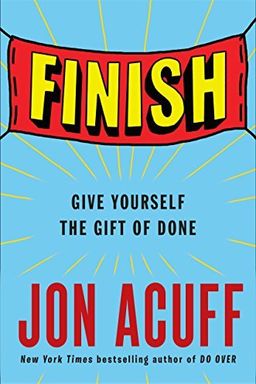
How many times have you started something—an exciting new diet, a book idea, a business venture—only to abandon it halfway through? In Finish: Give Yourself the Gift of Done, Jon Acuff argues that our biggest problem isn’t starting; it’s finishing. We live in a culture that glorifies beginnings. We love “Day One” energy, we crave “New Year, New You,” and we obsess over launching. But few of us talk about the painful, awkward, often messy middle—the part where perfectionism swoops in, sabotages our enthusiasm, and convinces us to quit.
Acuff’s main contention is refreshingly counterintuitive: success doesn’t come from grinding harder—it comes from freeing yourself from perfectionism. Through stories, humor, and research drawn from more than 850 participants in his “30 Days of Hustle” program, Acuff reveals that the key to finishing isn’t superhuman grit; it’s learning to work smarter, with compassion toward your imperfect self.
The Real Enemy: Perfectionism, Not Laziness
Acuff discovered that most people aren’t lazy—they’re paralyzed. Perfectionism whispers that if a goal can’t be done perfectly, it’s better not to try at all. It promises control and excellence, but in reality, perfectionism kills completion. That’s why 92% of New Year’s resolutions fail, and why people like Acuff himself keep half-finished projects—Moleskine notebooks, gym programs, even ChapStick tubes—scattered through their lives. Once our streak breaks, we abandon ship rather than push through imperfection.
The solution isn’t more hustle; it’s permission to be imperfect. Acuff identifies “the day after perfect” as the most dangerous day for any goal—the moment when our impossible streak shatters and we want to quit. Developing tolerance for imperfection, he argues, is the foundation for becoming a finisher. When you can keep going after your first mistake, you start to build the resilience that completion demands.
Why Finishing Feels So Elusive
To understand why we stall, Acuff conducted a collaboration with University of Memphis researcher Mike Peasley. The results stunned him. People didn’t fail because they lacked drive; they failed because their goals were unrealistic. Paradoxically, those who cut their goals in half—reducing scope, simplifying timelines, and redefining “winning”—performed 63% better and felt more motivated. Those who aimed smaller actually achieved more.
This insight demolishes one of personal development’s oldest myths: that “bigger is better.” As Acuff humorously points out, no one runs a marathon without first running a mile. Many failures happen not from lack of effort but from perfectionism pretending to be ambition.
The Counterintuitive Path to Completion
Across its eight chapters, Finish unpacks a series of rules-bending strategies to outsmart the perfectionist mind. You’ll learn to:
- Cut your goal in half—or double your timeline—to make success achievable.
- Choose what to bomb consciously—accept that you can’t do it all.
- Make your goals fun, because joy—not guilt—is a sustainable motivator.
- Abandon hiding places and “noble obstacles” that make progress look productive.
- Challenge your secret rules that make life unnecessarily hard.
- Use data to track—and celebrate—imperfect progress.
- And when you’re almost done, confront the final fears that keep you from crossing the finish line.
Acuff’s voice blends research with comic timing. He references psychology (Daniel Kahneman on the planning fallacy), athlete studies (Daniel Chambliss’s Mundanity of Excellence), and even The Wright Brothers by David McCullough to illustrate a universal truth: big dreams fail when perfection strangles progress. He grounds self-help theory in human absurdity—the messy middle of running late, forgetting workouts, and buying pallets of black beans from Costco because we overcommit.
Why This Book Matters
Finish matters because it reframes success as compassion-based perseverance. It’s not about lowering ambition but aligning it with reality. In a noisy culture preaching endless hustle, Acuff gives permission to pursue excellence without obsession. He urges readers to trade guilt for data, grandiosity for joy, and the illusion of control for honest momentum.
Ultimately, Acuff’s promise is deceptively simple: if you can silence your perfectionism just long enough to make imperfect, measurable progress—and if you can keep going the day after perfect—you’ll finish more than you ever thought possible. Starting may inspire you, but finishing will transform you.