
Idea 1
Forests as Living Networks
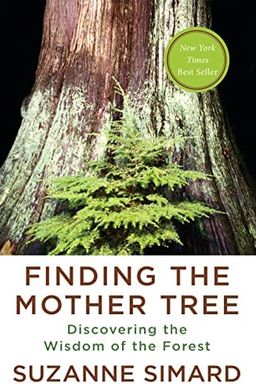
How can you see a forest not as a collection of competing trees but as a connected, communicating organism? In Finding the Mother Tree, Suzanne Simard argues that forests are living networks—interconnected systems where trees, fungi, and other organisms exchange carbon, nutrients, and even warning signals through mycorrhizal webs. Her research overturns the dominant narrative of competition and resource extraction, replacing it with a dynamic model of reciprocity, cooperation, and shared resilience.
Simard began as a forester in British Columbia, trying to explain why industrial plantations failed while natural stands thrived. Kneeling among subalpine firs, she noticed yellow fungal threads linking roots of different trees—what we now call the wood‑wide web. Her later isotope experiments proved that carbon moved between species through fungal highways. This changed ecology forever: forests were not silent or selfish—they were social, communicative, and interdependent.
From Fieldwork to Paradigm Shift
The first part of the book follows her development as a field scientist who learned by doing. She built replicated isotope labelling experiments—injecting birch with radioactive carbon‑14 and fir with a stable isotope of carbon‑13—to track how resources crossed fungal boundaries. Results showed directional carbon flow: shaded Douglas‑firs received sugars from sunny paper birches through shared mycorrhizal fungi. It meant that trees help one another, not randomly but conditionally, depending on stress and season.
This revelation upended decades of forestry policy focused on competition. The industrial goal of clearing broadleaf “weeds” like birch and alder to release conifers was biologically shortsighted. Simard’s evidence suggested that birch and alder are not competitors but partners that exchange nutrients, water, and information, stabilizing the entire community over time. She calls this symbiosis the hidden foundation of forest resilience.
The Human and Cultural Story
Simard’s science is inseparable from her personal and cultural journey. Raised in an interior logging family, she grew up among hand-fallers who respected trees as living beings. Later, she had to confront the institutional silviculture of “free‑to‑grow” regulations that required pesticide and herbicide use. Field experiments with colleagues like Robyn, Alan Vyse, and Don showed that these practices often backfired—destroying fungi, exposing seedlings to disease, and unintentionally harming both workers and ecosystems.
The human narratives—her brother Kelly’s death, her mentors’ encouragement, her near poisoning episodes—underscore the moral core of her work: doing science inside messy political and emotional realities. Her collaborations with Indigenous elders such as Mary Thomas and Heiltsuk partners Teresa Ryan and Allen Larocque expanded this moral circle further, reminding readers that Indigenous knowledge had long recognized forests as sentient, communicative, and relational systems.
From Science to Stewardship
As the story evolves, so does Simard’s thesis. Her follow-up studies reveal a deeper web of reciprocity: trees exchange carbon seasonally, hydraulic lift allows alder roots to feed water to pines, and mother trees act as network hubs nurturing offspring through stress. Later research with her students—Amanda Asay, Brian Pickles, Monika Gorzelak, and Yuan Yuan Song—proves how mother trees send carbon preferentially to their kin and transmit warning signals through networks, enabling whole communities to respond to pests and drought.
The culmination is the Mother Tree Project—a continental-scale restoration experiment that tests how keeping large elders within harvested stands supports resilience to climate change. Its guiding principle is plain: retain connection. What began as isotope science becomes a philosophy of care—toward soil, forest societies, and each other.
Core message
Forests are intelligent networks. They thrive through cooperation, communication, and diversity. To heal them—and ourselves—you must protect the relationships that hold them together.
Simard’s book ultimately teaches that the survival of forests depends not on domination but on understanding connectivity—the same lesson that applies to ecological restoration, cultural resilience, and personal healing. When you see a forest as a family rather than a factory, stewardship becomes an act of belonging.