
Idea 1
Mastering Financial Intelligence: Thinking Like an Entrepreneurial CFO
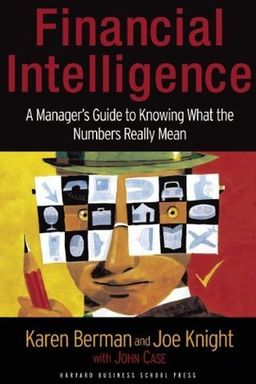
How can you make smarter business decisions if you don’t truly understand what your numbers are telling you? In Financial Intelligence for Entrepreneurs, Karen Berman and Joe Knight argue that every entrepreneur must learn to think like a Chief Financial Officer, not just a visionary founder. They contend that financial success isn’t about becoming an accountant—it’s about learning the language of business, understanding what your reports are really saying, and seeing the story behind the numbers.
At its heart, this book explores the art and science of finance. The authors reveal that financial statements—those intimidating columns of numbers—are not exact reflections of reality. Instead, they’re full of assumptions, estimates, and judgments. Knowing where these estimates live, spotting the biases behind them, and interpreting them intelligently allows you to run your company deliberately rather than by gut feel. As Warren Buffett once noted, “Cash is hard to fudge”—yet most entrepreneurs make critical decisions without really understanding their cash position.
Why Financial Intelligence Matters
Every business owner juggles competing priorities: paying employees, reinvesting in growth, and staying profitable. But many founders, like the Zingerman’s Deli owners Ari Weinzweig and Paul Saginaw (whom Berman and Knight profile), discover that sales growth doesn’t always mean business health. They ran a booming deli that was doubling sales yearly—yet had no cash. Their plight illustrates the book’s core message: profit does not equal cash, and knowing the difference can mean the distinction between thriving and going broke.
Financial intelligence, the authors argue, is not innate. It’s a learnable skill comprised of three capabilities: understanding financial statements, grasping the artful side of accounting, and being able to analyze ratios and trends to make data-driven decisions. This trio lets you see how each dollar flows through your company—from a sale to the income statement, to the balance sheet, to the cash flow statement. Entrepreneurs who master these links don’t just look at their checking accounts; they read their financials like x-rays, diagnosing where cash is building up, draining away, or creating leverage.
Finance as an Art—Not a Science
Berman and Knight insist that finance is more than math—it’s interpretation. Numbers in accounting depend on human choices: when to recognize revenue, how to depreciate equipment, or what counts as a one-time expense. They use examples like Waste Management’s depreciation scandal and Sunbeam’s bill-and-hold sales tactic to show how judgment can be used ethically or abusively. Seeing “the art” behind the statements turns you from a passive recipient of reports into an active interpreter. You learn to ask, “What assumptions are baked into this number? What might it hide?”
The Three Financial Statements Entrepreneurs Must Master
The book walks you through each major statement in clear language:
- The income statement reveals profitability by showing revenues, expenses, and profit—but it’s built on estimates like revenue recognition and matching principles.
- The balance sheet is a snapshot of what the company owns, owes, and is worth. Understanding it helps you see your true solvency and equity position.
- The cash flow statement exposes where your money really comes from and goes—from operations, investing, and financing—and serves as a reality check on profits.
Together, these statements tell interlocking parts of your company’s financial story. The authors make complex ideas approachable—explaining how profit is an estimate, not cash, and why the balance sheet always “balances.” As they note, even big corporations like IBM and Tyco have learned painful lessons when their income statements looked great while their cash flow cratered.
From Understanding to Action
Financial intelligence becomes powerful when you use it to drive decisions. You’ll learn to analyze ratios that reveal insight at a glance: liquidity (can we pay our bills?), efficiency (how well are we using assets?), leverage (how much risk are we taking on?), and profitability (are our margins improving?). You’ll study cash conversion cycles—how long it takes to turn purchases into cash—and methods like ROI and NPV that show whether a new investment adds real value.
Perhaps most importantly, Berman and Knight advocate financial transparency. Through open-book management, every employee learns how their work affects the bottom line. When people understand the numbers, they act like owners, aligning daily decisions—such as managing inventory or collecting payments—with the company’s overall success. (This echoes ideas in Jack Stack’s The Great Game of Business.)
Why This Matters
In an economy where small businesses power innovation, understanding finance is not optional. It’s the difference between steering your business strategically and flying blind. Berman and Knight’s approach replaces math anxiety with confidence, helping you see numbers not as barriers but as tools. By the end, you’ve learned to read your company’s financials like a fluent language—recognizing when trouble is coming eighteen months away, just as an experienced CFO would. For entrepreneurs, financial intelligence is both shield and sword: it protects you from risk and empowers you to seize opportunity when it appears.