
Idea 1
Financial Freedom as a Life Design
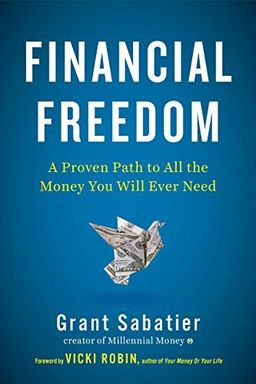
How can you design a life where money serves time rather than mastering it? In Financial Freedom, Grant Sabatier argues that wealth is not measured in possessions or even numbers, but in choices—the ability to decide what you do with your days. This philosophy reframes personal finance from a game of accumulation to one of autonomy: every dollar earned or invested buys back moments of your life. The core argument is simple yet radical—money’s ultimate purpose is freedom, not comfort.
Sabatier’s journey begins with $2.26 in his bank account, lying in his parents’ yard, realizing the value of time over cash. In five years he turned that moment of frustration into millionaire status through intense saving, hustling, and investing. The book’s framework compresses decades of conventional financial wisdom into a modern roadmap toward independence, especially for younger generations seeking early retirement or work-optional lives.
Money Buys Time, Not Stuff
The fundamental mental shift is seeing money as a currency for time and options. You trade hours to purchase eventual freedom. Traditional models tell you to save 10% for 40 years; this book tells you to maximize income early, save 50–80%, and invest the difference so compounding works for you rather than against you. This is why time trumps money: it’s finite, compounding power decreases if delayed, and your twenties and thirties are prime leverage years where each dollar invested can buy hours decades later.
(Note: This echoes ideas from Vicki Robin’s Your Money or Your Life, but modernized for side hustles, digital income, and aggressive investing.)
Define Your Version of Freedom
Freedom is personal. Sabatier introduces the concept of your “number”—the money you need to live indefinitely off investments. He uses the 25x rule from the Trinity Study: multiply annual expenses by 25 to find your financial independence target (e.g., $50k needs about $1.25M). That number is flexible and evolves with life stage, location, or passive income. Your “number” might represent debt elimination, two years of travel, or full independence. The key is clarity—you cannot reach a destination you never define.
Seven Levels of Financial Freedom
Sabatier organizes freedom into seven progressive stages: Clarity, Self-Sufficiency, Breathing Room, Stability, Flexibility, Financial Independence, and Abundant Wealth. Each milestone builds momentum—your first $1,000 proves saving works; your first six months’ expenses saved make life less fragile. The journey is not about leaping to millions but mastering the psychology of progress. Each level buys a new layer of peace and optionality.
The Enterprise and Compounding Mindset
Sabatier tells you to run your life like a small company: optimize income, control costs, and reinvest profits. Your best advantage comes not from cutting coffees but expanding earning potential. Increase income through your 9-to-5, side hustles, or investments, then compound gains through automatic saving and tax-advantaged accounts. He shows how people like Anita retired at 33 on $700k, Kristy and Bryce in their early thirties, all using high savings rates (70–85%) supported by multiple income streams.
Action, Measurement, and Momentum
Once your number is defined, calculate net worth—assets minus liabilities. Track progress frequently because awareness itself creates acceleration. Grant’s tool helps people check net worth daily and correct mistakes quickly. Then stack practical steps: calculate your number, grow income, optimize the big three expenses (housing, transport, food), invest early, and monitor fees and taxes relentlessly. Layer short-term wins—a first side hustle, small investment—with psychological reinforcement. Little milestones create habit momentum.
The Broader Arc
Across the book, every lesson points toward mastery of two assets: time and attention. The author merges finance and fulfillment—buying freedom means buying the ability to live deliberately. Final chapters remind you to sustain growth with habits: calculate monthly savings, rebalance quarterly, invest automatically, audit fees annually, and send reminders to your future self. Real examples—like Michelle reaching independence at 28 with $1.5M—prove that disciplined execution and mindset shifts are enough to transform decades of labor into early liberation.
Core Thought
Financial freedom is not an end-state of wealth; it’s the art of transforming money into time. You build it intentionally, one calculated, leveraged, and compounding step at a time.