
Idea 1
Money as Power and Personal Liberation
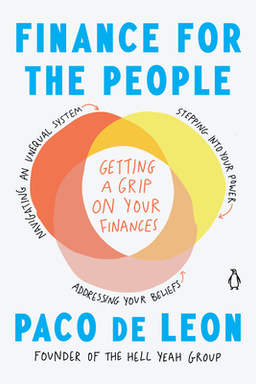
Why does money so often feel mysterious, uncomfortable, or even shameful? Paco de Leon’s Finance for the People begins with this provocative question—and her answer is disarmingly human. Money isn’t just math; it’s emotion, story, and power. She argues that to truly master money, you must first face what it represents inside you: power, control, fear, and self-worth. The book’s core argument is that becoming financially literate isn’t just about learning how budgets work—it’s about learning how you work.
De Leon contends that financial empowerment is a form of rebellion against a system designed to keep many people powerless. In her view, money is both a practical tool and a mirror—reflecting your beliefs, upbringing, and sometimes trauma. By working on your internal relationship with money, you begin to reclaim power that was taken, ignored, or outsourced to institutions and inequitable structures. The book blends behavioral economics, psychology, and real talk about systems of inequality to create what she calls a “skeleton key to a better relationship with money.”
Money as Emotional and Cultural Story
De Leon frames money as a deeply emotional tool. From her own story—starting as a broke financial planner who discovered that knowledge alone didn’t make people secure—she learned that most people’s money problems come from the gap between intention and behavior. Why do people say they want to save but never do? Why do they feel shame in talking about finances? Her answer: because money is tangled with identity. You can’t separate a spreadsheet from a sense of self.
Throughout the book, she explores how capitalism and consumer culture have manipulated our emotions through marketing—what she calls a “perfect formula for human weirdness.” Drawing on Freud and his nephew Edward Bernays, she explains how desire itself was engineered to make people spend, turning money into an emotional proxy for belonging and worth. By recognizing these manipulations, you free yourself from their grip.
Empowerment Through Structure and Reflection
While most finance books focus on numbers, Finance for the People gives you both practical tools and inner inquiry. De Leon introduces structural methods like her “Pyramid of Financial Awesomeness” and the concept of weekly finance time—a ritual where you sit down once a week just to care about your money. These actions build trust in yourself, transforming money management from guilt into growth. She borrows from James Clear’s idea of motion versus action: learning about money (motion) matters less than doing the damn thing (action).
To make self-reflection accessible, every chapter includes “Do the Work” exercises that act like therapy for your wallet. She encourages journaling about childhood memories of scarcity and shame (“Who did you have to be to be loved in your family?”), showing that healing your relationship with money also heals your relationship with yourself. This tightrope between psychology and spreadsheets forms the book’s heartbeat.
Freedom Through Acceptance and Agency
The author emphasizes realism over idealism. Life is, as she vividly puts it, “a shit show.” From pandemics to wage gaps, she acknowledges that systemic inequality shapes our opportunities. Yet within these constraints, you can still act. She teaches the “circles of control and concern” (adapted from Stephen Covey) to help you focus on what you can control—your spending, saving, and awareness—and detach from what you cannot (the economy, politicians, or celebrity wealth). This mindset reframes powerlessness into agency.
Ultimately, De Leon’s philosophy is radical optimism anchored by accountability. She’s not promising quick fixes or early retirement hacks; instead, she invites you to approach money the way you’d approach any deep relationship—with honesty, compassion, and courage. When you stop seeing money as a monster and start seeing it as a mirror, you reclaim control over your choices. The point isn’t just to get rich—it’s to get free. In that sense, Finance for the People is a blueprint for financial self-liberation that begins with awareness, grows into discipline, and matures into empowerment.