
Idea 1
Fighting Well: The Real Secret to Lasting Love
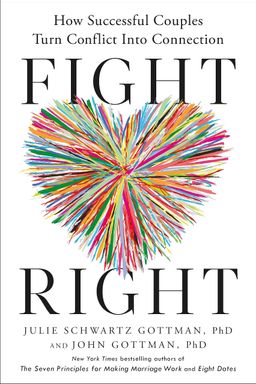
Every couple fights—but what separates the masters of love from the disasters is how they handle it. John and Julie Gottman’s decades of research in their famed Love Lab reveal that conflict is not a sign of incompatibility; it is the royal road to understanding. The book reframes fighting not as a failure but as the beating heart of connection. When you learn to fight well—to embrace tension as data about what matters to each of you—you turn inevitable friction into growth.
Conflict as a map to intimacy
We often treat conflict as something to avoid, but intimacy itself guarantees friction. When two people blend lives, values, and needs, you’re bound to disagree. The Gottmans show how even trivial fights (like one couple’s argument over a puppy) mirror deep core themes—freedom versus connection, security versus spontaneity. Seeing these deeper patterns transforms fights into opportunities to learn who your partner is becoming. Instead of fearing arguments, you start asking: what need is my partner protecting here?
The Love Lab discoveries
Decades of observing couples—wired to sensors that track heart rate, tone, and micro-expressions—revealed consistent predictors of success or failure. Key among them: couples who maintain a 5:1 ratio of positive to negative interactions during fights thrive. It is not the absence of disagreement that matters but the presence of mutual goodwill, curiosity, and what the Gottmans call repair attempts. Another central insight is that 69 percent of fights are 'perpetual'—rooted in personality or life values, never fully solvable. Happy couples don’t fix those; they learn to dialogue about them with humor and respect.
Why the first three minutes decide your fate
Perhaps the most astonishing finding: 97 percent of the time, the way a conflict begins predicts how it ends. The first three minutes—your tone, words, and emotional stance—set the trajectory. A harsh start-up (“You never listen!”) triggers defensiveness and stonewalling, while a softened version (“I feel unheard when we plan weekends; can we try again?”) preserves safety. The Gottmans found they could forecast divorce risk with 90 percent accuracy just from those opening minutes. Practicing softened start-ups is thus one of the most transformative relational skills you can learn.
Healing with self-awareness and self-soothing
You cannot fight well if you’re physiologically overwhelmed. Flooding—when your body surges with stress hormones—shifts you into fight, flight, or freeze. During flooding, you literally lose access to empathy and logic. The antidote is regulation: pause the conversation, take at least twenty minutes to calm your body, and then return. This pattern—pause, self-soothe, return—is not avoidance; it’s the physical foundation of effective repair. (Neuroscience confirms that the body needs roughly twenty minutes for stress chemicals to dissipate.)
What really makes love last
Small daily behaviors, not grand gestures, build lasting connection. These so-called bids for attention—“Look at this meme,” “Smell this coffee”—accumulate into a shared emotional bank account. When you regularly turn toward your partner’s bids, you store goodwill that cushions future fights. Conversely, ignoring or dismissing those moments drains trust. The couples who survive and thrive turn toward each other nearly 86 percent of the time; distressed couples manage roughly one-third of that.
The architecture of repair and renewal
Good fighting is a cycle of rupture and repair. First, you start softly. Then you pause when flooded. You offer and accept small repair attempts—a gentle joke, a reassuring touch, or “Let me try again.” You listen for the dream within the conflict—that deeper wish beneath the surface argument. Finally, you compromise creatively using the 'Bagel Method': protect your core needs (the hole) while flexing on everything else (the dough). Through this rhythm, even gridlocked topics become pathways to intimacy.
Conflict is not a sign of failure—it’s love’s laboratory.
When you fight productively, you’re not breaking your relationship—you’re building its resilience. Each disagreement is a chance to map each other’s inner world and to strengthen the fragile bridge between two evolving selves.
Ultimately, the book teaches one radical truth: you don’t need to stop fighting—you need to learn to fight better. By transforming conflict into conversation, anger into approach, and difference into discovery, you unlock the secret to enduring love that deepens through every storm.