
Idea 1
Conversations as the Core of Success
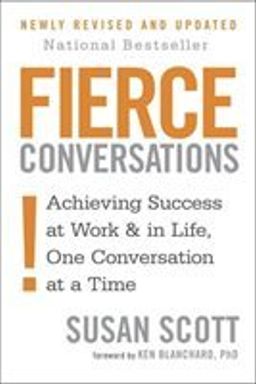
How do you transform your career, relationships, and leadership without waiting for permission or decades of habit change? In Fierce Conversations, Susan Scott argues that every meaningful leap you make—in performance, trust, clarity, or love—happens through one honest conversation at a time. The book’s spine is this insistence: your life succeeds or fails gradually, then suddenly, one conversation at a time.
Scott mixes hard-earned corporate coaching wisdom from years at Vistage and private consulting with stories that reveal a central paradox: while conversations seem small, they are never neutral. They accumulate into patterns that sculpt the health of your teams, your company, and your own sense of self. You cannot fix relationships, performance, or culture without fixing how you talk. The conversation is the relationship.
The Three Foundational Shifts
Scott opens with three provocations that change how you view dialogue. First, progress occurs “gradually, then suddenly”—unspoken issues become crises if left unmoved. Second, the conversation is the relationship, which means silence or avoidance literally shrinks connection. And third, every conversation begins as a conversation with yourself; your beliefs, fears, and internal story color what you hear and how others experience you. By becoming conscious of the internal commentary in your own mind, you reclaim agency over meaning-making.
“The conversation is the smallest unit of change.”
Every improvement—whether personal, professional, or cultural—begins with a talk that is braver than before.
From Strategy to Speech
Leaders often overvalue strategy and undervalue conversation. Scott tells stories of CEOs who built exquisite business plans yet lost customers because they avoided a necessary talk. The truth seldom breaks in as a grand event—it knocks quietly through repeated misunderstandings, withheld feedback, or “careful conversations” that avoid risk. As she writes, careful conversations are usually failed conversations.
Why? Because carefulness replaces truth with safety. The currency of change is candor, not caution. When you avoid confronting reality—whether in your marriage, your team, or your market—you end up blindsided by results your silence helped create. (Note: this pattern echoes Patrick Lencioni’s “Five Dysfunctions of a Team,” which begins with absence of trust and fear of conflict.)
Presence, Authenticity, and Courage
The book links three habits that multiply conversational impact: showing up authentically, being present, and choosing courage over comfort. To show up, you come out from behind your professional or emotional mask and speak plainly—no jargon, no pretense. To be present, you replace multitasking with attention; look, listen, and ask questions that reveal reality. And to lead with courage, you accept that authenticity creates an emotional wake: others will react. Your task is to be intentional with that wake, to ensure what lingers from your words builds trust rather than corrosion.
Scott’s “stump speech” exercise—asking, “Where are we going? Why are we going? Who’s going with us? How will we get there?”—anchors every leader in purpose before they ask others to follow. The clearer your internal compass, the steadier your emotional wake.
The Skill Suite of Fierce Conversations
Beyond mindset, Scott presents a suite of tools. The Beach Ball Model teaches teams to invite multiple perspectives to interrogate reality. The Mineral Rights framework turns coaching from superficial diagnosis to deep discovery. The 60‑Second Opening Statement shows how to confront issues succinctly. The Decision Tree decentralizes authority by defining levels of decision ownership. And the Integrity Scan links values alignment to emotional and even physical well-being.
Supporting these are practices of silence, feedback, and emotional responsibility. You learn that silence is not absence but presence multiplied; that feedback loses power when delivered anonymously; and that your emotional wake—the aftertaste you leave—must be owned consciously. Together, these principles make conversation both art and engine: a repeatable craft that converts thought into traction.
Emotional Truth and Integrity as Leadership
Fierce leadership means walking the same talk you demand from others. The book’s final sections fold neuroscience (psychoneuroimmunology) and ethics into the field of conversation: misalignment between stated values and lived behavior damages trust and even physiological health. When integrity shutters, organizations become immunocompromised—susceptible to rumor, disengagement, and moral fatigue. Repair begins by naming the gaps and committing to cleanup acts with deadlines.
The Promise of Fierce Practice
Scott closes with hope and discipline. Fierce conversations are not about aggression; they are about truth told skillfully. “Fierce” means real, meaningful, and life‑changing. Whether you are inviting feedback, confronting performance, or reconnecting in a failing relationship, the same essence applies: be authentic, present, and responsible for your wake. Talk about what matters, while it still matters. Every time you do, you alter the trajectory of your life and those linked to it.