
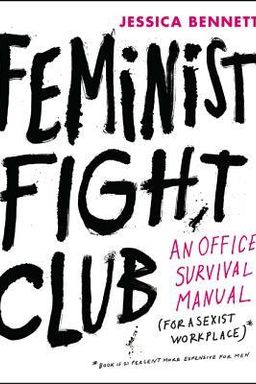
Feminist Fight Club cover

Feminist Fight Club

by Jessica Bennett

Feminist Fight Club is an empowering survival guide for women facing subtle sexism in the workplace. Learn to dismantle discriminatory behaviors, boost self-confidence, and negotiate effectively while fostering a supportive network with fellow women. Jessica Bennett''s insightful manual offers practical strategies to achieve gender equality and personal success.

Feminist Fight Club and the Everyday Battle for Equality

Have you ever left a meeting wishing you'd spoken up—but something held you back? Or watched a man take credit for your idea, only to smile politely instead of calling it out? In Feminist Fight Club: An Office Survival Manual for a Sexist Workplace, journalist Jessica Bennett asks those same questions and gives women the audacious tools to answer them with grit, humor, and tactical know-how. She argues that workplace sexism hasn’t vanished—it’s simply evolved. In a world that prizes “diversity” while still rewarding confidence in male form, Bennett contends that every woman needs a strategy, a sisterhood, and an arsenal to fight back against the subtle injustices that pervade the modern office.

At its heart, the book is both manifesto and manual—a spirited field guide for navigating power dynamics that remain stubbornly unbalanced. Bennett’s thesis is straightforward but powerful: women are fighting an invisible war at work, and the only way to win is by getting strategic about how we respond. Through stories, research, and humor, she empowers you to understand these systemic patterns while reclaiming agency within them.

Fighting the Subtle Sexism of Modern Work

Bennett opens with an engaging portrait of her real “fight club”—a group of women who gathered monthly to share experiences, advice, and pasta salad while navigating sexist workplaces. They vented about how male colleagues interrupted them, how “nice girls” weren’t promoted, and why their ideas were overlooked until voiced by someone male. These stories echo the paradox that shapes her argument: women are told the war for equality is over, yet they face daily death-by-a-thousand-cuts microaggressions. In Bennett’s telling, sexism has gone stealth. It's not as overt as in the days of male-only boardrooms—it’s subtle, often couched in politeness, yet equally damaging.

The Arsenal: Enemies, Saboteurs, and Traps

The book’s structure mirrors a battle plan. Bennett divides her survival strategies into six parts—enemies, traps, sabotaging behaviors, ways to command speech, tactics for negotiating pay, and a final section titled “What Would Josh Do?” (her tongue-in-cheek model for borrowing the unshakable confidence of a mediocre white man). Each chapter introduces a battlefield archetype, from the “Manterrupter” who steamrolls women’s voices to the “Bropropriator” who takes credit for their ideas. She follows these with “Fight Moves”—practical hacks that help women counteract bias. For instance, if a male colleague repeats your idea, she suggests “Thank ’n’ Yank”: thank him for agreeing with your idea, then yank back the credit by softly reclaiming ownership (“I’m glad you liked my suggestion”).

From Humor to History: The Feminist Lineage

Although hilarious and packed with wit, Bennett’s message runs deep into feminist history. She connects her contemporary fight club to the consciousness-raising groups of the 1960s and ’70s, when women met to discuss unequal pay, sexual harassment, and labor discrimination. What those groups did politically, Bennett’s club does personally—transforming private frustration into collective empowerment. This intergenerational link underscores her central point: the battle isn’t new, but the strategies must evolve.

The Tactical Tone: Battle Meets Banter

In tone, Feminist Fight Club blends academic research with rebellious humor. Bennett punctuates her advice with charts, quizzes, and battle metaphors—“verbal tripwires” for undermining communication, “saboteurs” describing ways women accidentally hinder themselves, and “traps” illustrating stereotypes they must dodge. Each concept comes alive through real stories, like Smita’s misadventure directing an all-male TV crew who ignored her authority until she jokingly bribed them with meat sticks, realizing how leadership stereotypes forced her to shapeshift between “nag,” “mother,” and “diva.” These anecdotes bring theory into vivid reality.

Why It Matters Now

Bennett’s purpose isn’t just catharsis—it’s revolution by awareness. Every page insists that if you don’t spot bias, you can’t fight it. Alongside humor, she compiles decades of research showing women are interrupted twice as often as men, seen as less competent when assertive, and hold themselves to harsher standards (echoing studies by Sheryl Sandberg and Amy Cuddy). Understanding these statistics gives women rhetorical armor: knowing the pattern helps defang its sting. In this sense, Bennett reframes feminism as practical battlecraft. Her playbook reads less like a sermon and more like a sidekick whispering, “You’ve got this—but you’ll need strategy.”

A Sisterhood for Survival

Ultimately, Bennett’s call to arms is communal. Women succeed, she argues, when they champion one another—a recurring mantra echoed by her “Ten Commandments of Vagffirmative Action,” urging readers to hire, mentor, and promote women rather than compete with them. Solidarity becomes both self-defense and system overhaul. In this feminist fight club, the goal isn’t to hate men; it’s to dismantle patriarchy through resilience, support, and well-timed humor. The message is clear: empowerment is contagious, and the revolution continues one confident act at a time.


Know the Enemy: Spotting Everyday Sexism

Bennett’s first command is simple: recognize that the battlefield exists. “Know the Enemy” introduces the subtle archetypes of workplace sexism—people who undermine women’s authority, silence their voices, or misattribute their ideas. While it’s tempting to think of misogyny as loud and overt, the modern enemy operates under fluorescent lights and polite language. Identifying these patterns, Bennett says, is the first step toward reclaiming control.

The Manterrupter: Silencing by Stealth

The “Manterrupter” cuts women off in meetings twice as frequently as men are interrupted (as confirmed by linguistic studies). The act is small but cumulative: every interruption chips away at perceived authority. Bennett offers countermeasures—such as “verbal chicken” (keep speaking until he swerves) and “Womanterruption” (another woman interjecting, “Let her finish”). She cites examples like Obama’s female staffers who amplified each other’s points in meetings so ideas stuck to their rightful speakers. These tactics combine humor and solidarity to halt conversational erasure.

The Bropropriator: Credit Thief in a Suit

This enemy steals credit outright, often unintentionally, because male voices carry institutional weight. When a woman’s idea lands, he repeats it and gets nods. Bennett references historical examples—Ada Lovelace’s code, Rosalind Franklin’s DNA work, and Elizabeth Magie’s invention of Monopoly—to show this pattern isn’t new. The fix? “Thank ’n’ Yank”: thank him for his enthusiasm about your idea, then pull it back graciously. The goal isn’t confrontation—it’s retention of authorship.

The Lacthater and Menstruhater: Biological Bias

Bennett describes how motherhood and menstruation become professional liabilities, from colleagues asking if schedules “work around your kids” to men joking about PMS when women are firm. These biases are subtle power drains. Her solution is deflection through professionalism—redirecting emotion to objective concern (“I’m not upset, I’m concerned about our progress”) or turning clichés into quips (“Nope, not on my period—just noticing that you’re late on your report”). Humor reframes defensiveness into dominance.

A Practical Ethos of Calling It Out

Bennett understands calling out sexism can feel risky. So she gives you options: subtle humor, data, or team tactics. By making bias visible, you neutralize its power. Her rule—“You can’t fight what you don’t see”—anchored in leadership research (Joan C. Williams, What Works for Women at Work) transforms observation into activism. Knowing the enemy isn’t about resentment—it’s about reclaiming reality from bias’s camouflage.


Know Thyself: Overcoming Self-Sabotage

Once you’ve spotted workplace patriarchy, Bennett turns the lens inward. “Know Thyself” explores how women unintentionally hinder their progress—habits absorbed from centuries of conditioning. This section reframes self-silencing, imposter syndrome, and perfectionism as combat wounds rather than character flaws. Understanding your patterns, she says, liberates you to rewrite them.

The Impost-Her: Fighting Internal Doubt

Bennett recounts her own paralysis while writing a column—hundreds of drafts, constant second-guessing, convinced she was a fraud. She then reveals that women from Sheryl Sandberg to Meryl Streep confess similar feelings. The culprit? Imposter syndrome, the belief that success came by accident. Her recovery prescription is factual self-talk: list your accomplishments, collect praise emails, and reread them until your self-doubt shuts up. Having a “boast bitch” (a hype friend) helps too—she brags for you so you don’t have to.

The Herfectionist and Burnout Cycle

Perfectionism may look virtuous, but Bennett calls it the “duck syndrome”—appearing graceful while paddling like hell underneath. She cites studies proving women set unrealistically high standards and then collapse under them. Her antidotes: celebrate incremental wins, set smaller targets, nap without guilt, and learn when to fold a futile goal. She connects this to burnout—women report exhaustion almost twice as frequently as men—arguing that rest is rebellion. Quoting Arianna Huffington’s research on sleep, she reframes self-care as strategic power maintenance.

The Office Mom and Doormat

Even helpfulness can backfire. Women are socialized to be agreeable, so they end up taking notes and organizing parties while men reap promotions for “leadership.” Bennett advises you to clock unpaid emotional labor, decline politely, and underpromise so you can overdeliver. Say “Can you help me prioritize?” instead of “Sure, I’ll do it.” It’s not about becoming selfish—it’s about refusing to equate service with success.

“Carry Yourself with the Confidence of a Mediocre White Man”

Her most meme-worthy mantra is simple: mimic unearned male confidence until yours feels natural. Bennett’s fictional muse “Josh” always assumes competence, even when he shouldn’t. His superpower is entitlement, not expertise. Channel it as “Femulation”—fake it till you make it with integrity. This pivot turns centuries of masculine privilege into a feminist muscle memory.


Booby Traps: Stereotypes and Hidden Biases

Even armed with awareness, women face external traps that punish success or personality. Bennett calls these “booby traps”—sexist double binds that dictate how women must act to be liked. You’ll recognize them: powerful men are ambitious; powerful women are “ruthless.” A woman speaks firmly, and she’s “bitchy.” Smiles less? Cold. Smiles more? Flirty. It’s a dance no one can win—but Bennett shows how to hack the system.

The Ambition Catch-22

When Hillary Clinton appeared ambitious, headlines called her “pathological.” When Bernie Sanders proposed sweeping policies, his goals were “bold.” Bennett cites studies confirming this bias: successful women are liked less than their male counterparts. Her fix? “Gender Judo”—mix warmth with strength. Humor, kindness, and empathy can soften assertiveness without losing authority. It’s unfair you must juggle tone policing, she admits, but learning to blend warmth strategically makes power visible, not threatening.

Psychology of the “Nag”

A woman who asks twice is labeled a nag. A man who does the same shows “urgency.” Bennett suggests creating a “Nag Hag”—a partner to follow up on your behalf so reminders seem collaborative, not repetitive. Combine this with “Multimedia Nagger”—alternate channels (call, walk by desk) so persistence reads as professionalism. The mantra? “What Would Josh Do?”—ask without apology.

Age and Appearance Bias

Older women aren’t “distinguished”—they’re dismissed. Bennett quotes comics like Jena Friedman joking about post-visibility womanhood (“Will I be able to hail cabs once I become invisible?”). Her hack: “Give less f*cks.” Claim your confidence as liberation from the beauty rat race. Every decade survived is feminist street cred—and proof you’re done performing youth for others’ comfort.

By exposing these traps not as personal flaws but cultural absurdities, Bennett moves readers from frustration to power—inviting you to laugh, curse, and keep leading anyway.


Get Your Speak On: Language as a Power Tool

Words matter, Bennett insists—they can elevate or undermine authority. In “Get Your Speak On,” she dissects the verbal patterns that lessen women’s perceived power. From over-apologizing to upspeak, vocal fry, and hedging, each habit stems from centuries of gendered expectations. Rather than shaming these styles, Bennett offers mindful alternatives to reclaim linguistic authority.

The Over-Apologizer and the “Sorry” Reflex

Bennett lists absurd apologies—saying sorry when corrected, bumped, or served wrong coffee. This “linguistic tip of the hat,” she explains, evolved from politeness but now signals insecurity. Replace apologies with gratitude (“Thanks for catching that”) or directness (“Let’s fix this”). The goal isn’t rudeness—it’s presence. (Deborah Tannen’s research supports this: constant apologies erode credibility.)

The Sexy Baby and Vocal Fry

Popularized by media figures, vocal fry—the creaky low register—makes women seem less competent to older listeners. But Bennett highlights its paradox: younger audiences find it normalized, even assertive. Her advice? Use it strategically, know your audience, and don’t apologize for sounding like yourself. Authority doesn’t require imitation of male baritones.

Hedging and Upspeak

Tags like “Does that make sense?” or “Maybe we could…” dilute power. Bennett distinguishes useful hedges (buying time, softening requests) from destructive ones (signaling deference). Practice clear statements: “Here’s what I suggest” instead of “I feel like maybe we should.” Confidence begins in syntax.

Emoji, XO, and Digital Speech

Modern communication has its own gender traps. Women tend to use emojis and XOs to soften tone—digital forms of kindness that sometimes read as weakness. Bennett doesn’t demonize them but encourages awareness: decide whether warmth is effective or diluting. Empowered language means intentional language—whether typed or spoken.

Her broader message? Your voice—literal and written—is an instrument for leadership. Learn its mechanics, wield it consciously, and never confuse politeness with diminishment.


F You, Pay Me: The Art of Negotiation

The wage gap isn’t just numbers—it’s negotiation culture. Bennett’s fifth section, “F You, Pay Me,” attacks pay inequity with research and humor. Women earn roughly eighty cents to men’s dollar, yet avoid negotiating partly due to fear of backlash. The antidote? Preparation, timing, and linguistic judo.

Negotiation Myths and Excuses

From “It’s not the right time” to “I’m bad at negotiating,” Bennett lists excuses that keep women underpaid. She reminds you: the worst-case scenario is “no.” Her “stop making excuses” mantra reframes asking as power exercise, not aggression. She outlines concrete paths after refusal—seek feedback, plan improvement, or walk away—with humor and pragmatism.

Lay the Groundwork

Preparation wins battles. Bennett suggests keeping a running log of accomplishments, collecting testimonials, and researching pay norms on sites like Glassdoor. Choose timing wisely—right after a win or before reviews—and define a precise ask. She advises practicing scripts aloud (“I’ve done research, and the standard rate is…”) to replace emotional appeals with data.

Gendered Tactics

Women face unique penalties when negotiating. Studies show identical scripts evoke “aggressive” labels unless paired with smiles. Bennett humorously suggests “grin and bear it”—weaponizing warmth while demanding fairness. Another trick? Use collective phrasing: “We feel this would strengthen the team.” Collaboration masks assertiveness as selflessness—while achieving the same pay bump.

Solidarity and Transparency

When Jennifer Lawrence discovered her pay gap, Bradley Cooper pledged salary transparency. Bennett urges readers to replicate that by sharing pay data, even anonymously. Knowledge breeds empowerment—and the “Feminist Fight Club” thrives on shared intel. Her message is simple: talk about money. Silence favors patriarchy; conversation favors progress.


WWJD: Channeling Unapologetic Confidence

The book’s finale, “WWJD: What Would Josh Do?” distills Bennett’s philosophy into psychological empowerment. Josh—her fictional confident colleague—becomes a role model for unflappable self-belief. Through him, she teaches women to discard apology culture and practice fearless initiative.

Fail Up and Ask Forgiveness, Not Permission

Men often fail publicly, then still advance—“failing up.” Bennett urges women to normalize mistakes as learning, citing stories from Oprah to Harry Potter’s initial rejection. Fear of failure fuels paralysis; embracing it fuels growth. Likewise, instead of asking for permission (“Can I…?”), act and apologize later. This attitude—seen in men adapting flexible work hours without approval—turns risk into agency.

Fake It Till You Make It

When unsure, sound sure. Change tone before content, she says. Overconfidence beats hesitant truth. Women often apply only when they meet 100% of job descriptions, while men jump in at 60%. Convert hesitation into action—send the resume anyway. Confidence isn’t innate; it’s practiced muscle.

Fight as a Team

Josh operates solo, but Bennett closes by reminding readers that the true feminist fight club is communal. She celebrates solidarity stories—members who helped one another quit toxic jobs, land promotions, or avoid burnout by sharing tactics. Sisterhood remains the strongest form of armor. Ending with Nora Ephron’s call to “make a little trouble,” Bennett leaves readers laughing, inspired, and ready to take the next battle head-on.

Dig Deeper

Get personalized prompts to apply these lessons to your life and deepen your understanding.

Go Deeper

Get the Full Experience

Download Insight Books for AI-powered reflections, quizzes, and more.