
Idea 1
We Are Time: The Psychology of Living in Time
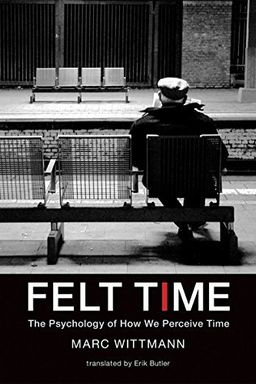
Have you ever wondered why time seems to fly as you grow older—or drag endlessly when you’re waiting? In Felt Time: The Psychology of How We Perceive Time, psychologist and neuroscientist Marc Wittmann takes you on a fascinating journey into the science—and soul—of how human beings experience time. Wittmann argues that our sense of time is not an external measurement but an embodied feeling, deeply rooted in our consciousness, body rhythms, emotions, and memories. We live time through our bodies, and our experience of it reveals who we are.
Drawing from fields that range from philosophy to neuroscience, anthropology, and art, Wittmann paints a scientific yet existential portrait: time is both the medium of our consciousness and the mirror of our existence. The faster life feels, the more disconnected we are from our own present. The slower it moves, the more deeply we inhabit our embodied selves. His central contention is both elegant and unsettling—time is a function of self-awareness. Understanding how we perceive duration, rhythm, and change means understanding what it means to be human.
The Core Argument: Time Is Not Measured, It’s Felt
Wittmann contends that human beings do not "perceive" time the way we perceive color or sound. There is no organ for time; instead, we feel its passage through bodily processes such as heartbeat, breath, and movement, and through changes in our emotional and mental states. In moments of fear, excitement, boredom, or love, time dilates or contracts—not because the clock hands speed up or slow down, but because our consciousness intensifies or withdraws.
This felt sense of time, Wittmann explains, arises from the insula—a region in the brain where bodily signals, emotional states, and consciousness intersect. Through it, our brains weave together heartbeat, sensations, and thought into what neuroscientist Bud Craig calls the “global emotional moment”—the very feeling of “I exist, now.”
Why This Matters: The Time Crisis of Modern Life
The implications go far beyond neuroscience. Wittmann shows that our modern relationship to time has fractured our relationship with ourselves. As society accelerates—emails, deadlines, and digital pings—the tempo of our inner life lags behind. We become alienated from bodily time, leading to stress, burnout, and the haunting feeling that we are “running out of time.” By studying time perception, Wittmann implicitly offers a path for healing: slowing down, cultivating mindfulness, and regaining synchrony between our internal rhythms and outer lives.
The Book’s Framework
Across seven chapters, Wittmann builds a comprehensive picture of subjective time. He begins with the Marshmallow Test, showing how the capacity to wait—delaying gratification—determines self-control, success, and happiness. He then explores the inner rhythm of the brain and the neurological foundations of our temporal awareness, demonstrating that we live in small “windows” of presence, roughly three seconds each. This is the psychological present—long enough to perceive change and to act, but fleeting enough to make us rely on memory to construct a sense of continuity.
Wittmann then examines internal clocks and biological rhythms—from circadian cycles to the phenomenon of “social jetlag.” He connects these to emotional well-being, demonstrating that our time perception speeds up or slows down with arousal, attention, and bodily states. Later chapters tackle age, happiness, and mortality showing that time accelerates with routine and repetition, and can be expanded by novelty, emotion, and mindful awareness. Finally, Wittmann addresses the philosophical crux of the matter: the self is time-consciousness embodied. Our awareness of duration, boredom, and change shapes who we are.
Why “Felt Time” Is Transformative
By merging empirical research with philosophical reflection, Wittmann makes time personal again. His experiments in fMRI labs, studies of meditative states, and anecdotes—from isolation tanks to performance art—reveal that living fully in time means regaining sensitivity to bodily presence. Whether describing Marina Abramović’s stillness in MoMA or the three-second breath of a mindful monk, Wittmann reminds readers that control over time begins with awareness of the body.
“Because I have a body, I perceive the passing of time.”
In these words, Wittmann summarizes the entire project: time is not an abstract dimension—it’s an experience of change rooted in our corporeality. By tuning into body time, we rediscover presence, slow down subjective acceleration, and perhaps, as the Stoics like Seneca advised centuries ago, learn that life is long enough—if only we use our time wisely.