
Idea 1
Losing Weight by Feeling Great: A Whole-Life Approach
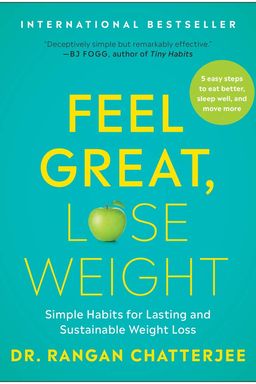
Why is losing weight so often a struggle—even when you know what to eat and how to exercise? Dr. Rangan Chatterjee argues in Feel Great, Lose Weight that the real barriers to health have less to do with willpower and more to do with how modern life disrupts our natural body signals. In this candid, compassionate, and science-backed guide, he invites you to stop blaming yourself and start understanding how your environment, emotions, and habits quietly shape your weight. This isn’t a diet book—it’s a manual for changing your relationship with food, movement, and self-care.
Chatterjee’s key message is clear: it’s not you—it’s your environment. Humans have not changed much in 100,000 years, but our surroundings have. We live in an age of constant stress, sleep disruption, and engineered foods that hack our appetite systems. Instead of relying on short-term diets that fail, we must repair the fundamental body signals—hunger, fullness, and energy—so that losing weight becomes natural and sustainable. He introduces the concept of tuning your body’s internal “mechanics,” much like servicing a car, and teaches you to become your own mechanic using five lenses: what we eat, why we eat, when we eat, how we eat, and where we eat.
A New Paradigm: Beyond Diets and Discipline
Instead of narrow calorie-cutting, Chatterjee provides a compassionate no-blame framework that addresses your whole life. He explains that most conventional diet plans fail not because people lack motivation but because they fight biology. Crash diets push your “weight point”—the brain’s internal target for your body fat—higher, making rebound weight gain almost inevitable. His approach focuses on resetting those biological signals through gradual habit change, mindfulness, and repairing the way your body interprets hunger and energy needs.
He also introduces the idea of the "weight point": your brain’s perception of your ideal weight. If it’s set too high due to years of nutrient-poor eating, emotional stress, or poor sleep, your body will resist fat loss by ramping up hunger and slowing metabolism. Through real food, movement, restorative sleep, and emotional health, you can gently dial that weight point down—leading to effortless, lasting results.
Our Broken Environment—and How to Reclaim Control
Chatterjee draws a vivid picture of how modern life sabotages our health. We are surrounded by foods engineered for maximum pleasure—what he calls “blissy foods”—that combine sugar, salt, and fat to trigger powerful dopamine responses in the brain. These foods are designed to keep you coming back for more, just like gambling or social media. Add in stress, disrupted sleep, sedentary jobs, and constant digital stimulation, and it’s no wonder our hunger and fullness signals short-circuit. The takeaway: you’re not lazy or greedy—your environment is fighting against you. To win, you must learn to design an environment that supports your goals rather than undermines them.
Throughout the book, real-life case studies—like Emily, who overcame emotional eating by joining a choir, or Alan, who reversed his sugar crashes by eating dinner for breakfast—illustrate how small, personalized changes create ripple effects. These stories emphasize that sustainable weight loss happens when your habits align with your biology and values.
The Five Dimensions of Healthy Eating
The book’s structure mirrors Chatterjee’s holistic philosophy. Each of the five sections reframes a different relationship with food:
- What we eat: Opt for “real food” and one-ingredient meals that work with your body’s hunger signals rather than against them.
- Why we eat: Identify the emotional drivers—such as loneliness, stress, and lack of self-worth—that often disguise themselves as hunger.
- When we eat: Understand circadian rhythms and how meal timing, snacking, and time-restricted eating influence fat storage.
- How we eat: Rediscover mindful eating—slowing down, savoring flavors, eating with people, and listening to fullness cues.
- Where we eat: Optimize your surrounding environment at home, work, and school to make healthy choices easier and automatic.
The Whole-Life “Toolbox” for Transformation
By the final chapters, Chatterjee introduces a “toolbox” of practical actions—three foundations, three everyday habits, and three boosters—that empower you to design your own personalized plan. The foundations are eating real food, prioritizing sleep, and walking daily. The everyday habits—lifting something daily, connecting with others, and reflecting each day—help create reinforcing loops of motivation. Finally, boosters such as emotional awareness, food timing, and mindful eating serve as levers to break plateaus. This modular structure makes the program adaptable to every lifestyle.
The big promise of Feel Great, Lose Weight is that feeling better and losing weight are one and the same process. When you nurture your body with good sleep, connection, movement, and real food, fat loss becomes a side effect of living well. Rather than punishing yourself with restriction, you learn to live in harmony with your innate biology—and that, Chatterjee argues, is the most sustainable weight-loss strategy there is.