
Idea 1
How Food Lies Shape What You Eat
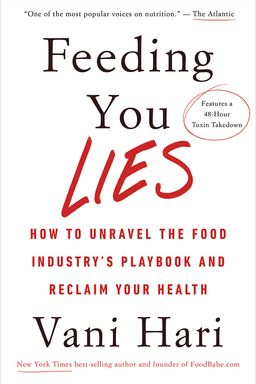
Why do so many foods advertised as wholesome or “scientifically proven” harm your health? This book reveals a coordinated system of deception in which food corporations, chemical producers, and even academic institutions embed marketing messages into nearly every corner of public life. The author argues that Big Food and its allies have mastered influence—funding scientific “experts,” shaping media narratives, manipulating regulatory frameworks, and chemically engineering products that keep you hooked. The result: your diet, health knowledge, and consumer choices are shaped by entities whose first loyalty is profit, not public welfare.
The Corporate Architecture of Deception
Food giants sustain their power through vast networks of trade associations and ostensibly independent “science councils.” Groups such as the American Council on Science and Health, the U.S. Farmers and Ranchers Alliance, and the Center for Food Integrity appear grassroots but operate with corporate funding from companies like Monsanto, Hershey, and Coca‑Cola. Their experts, trained to sound impartial, provide journalists with quotes that validate industry positions. By laundering publicity through trusted institutions, they make pro‑industry claims appear objective—a mechanism sometimes called credibility laundering.
Media and Narrative Control
Media manipulation amplifies these voices. Corporations host press junkets, subsidize conferences, and fund dietitians to place favorable op‑eds. When critics arise—like food activist Vani Hari—industries deploy astroturfing tactics, unleashing coordinated social‑media attacks to destroy reputations and suppress dissent. Even mainstream outlets such as NPR have run stories quoting sources with undisclosed financial conflicts. The larger aim is narrative dominance: to make the industrial food system look inevitable, scientific, and safe.
Regulatory Capture and Government Complicity
Regulators often function as partners rather than protectors. Loopholes such as GRAS (“Generally Recognized as Safe”) allow corporations to self‑certify the safety of additives without notifying the FDA. Political pressure from trade associations ensures these gaps persist. The USDA subsidizes fast‑food cheese promotion through the dairy checkoff program, and industry influence infiltrates agencies from the EPA to the CDC, weakening enforcement and distorting research priorities.
The Engineered Food Environment
Beyond policy, corporations design products to exploit human biology. Flavor houses craft “natural” flavor systems—chemical cocktails that mimic and exaggerate real tastes, activating reward centers and encouraging binge eating. Meanwhile sugar, the most profitable additive of all, has been systematically exonerated by funded science since the 1960s, when Harvard researchers—later revealed to be on the sugar industry payroll—shifted blame toward dietary fat. This manipulation set decades of public health policy on the wrong path.
The Consumer’s Dilemma—and the Way Out
You live in a world where the labels “low‑fat,” “sugar‑free,” “natural,” and even “fortified” often conceal processed ingredients, artificial sweeteners, emulsifiers, and chemicals like glyphosate—all approved under compromised oversight. The book arms you with investigative tools: follow the money, trace ingredients, and test claims of independence. As the author insists, a food system that genuinely protects health would favor transparent labeling, independent research, and whole foods free from addictive design. Until then, conscious consumers must act as their own regulators and truth seekers, choosing simplicity and transparency over marketing gloss.