
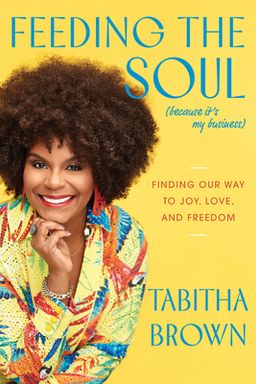
Feeding the Soul (Because It''s My Business) cover

Feeding the Soul (Because It''s My Business)

by Tabitha Brown

Feeding the Soul is a heartwarming blend of memoir and self-help, guiding readers to embrace their inner voice and follow their passions. Through personal stories and vegan recipes, Tabitha Brown inspires with her journey from struggle to success.

Feeding the Soul: Living with Authentic Joy, Faith, and Freedom

How do you reclaim your joy and purpose when life feels heavy, when faith feels far away, and when you’ve lost sight of who you really are? In Feeding the Soul (Because It’s My Business), beloved actress and vegan influencer Tabitha Brown invites you into her life’s testimony — a journey from physical pain and depression to healing, laughter, and light. She argues that soul nourishment is just as vital as physical sustenance. Joy, empathy, forgiveness, and faith are the nutrients that sustain your spiritual health. But to receive them, you must first learn to trust yourself, love yourself, and mind your own business — literally.

Brown’s book is part spiritual memoir, part self-help guide, and part cookbook, blending storytelling with life lessons. Known for her warmth and catchphrases (“That’s your business,” “Like so, like that,” and “Very good!”), Brown’s voice feels like sitting down with your wise, funny aunt who offers tough love in one hand and vegan tacos in the other. Through 30 chapters grouped into five parts — That’s Your Business, Have the Most Amazing Day, Don’t You Dare Go Messing Up Nobody Else’s, Like So, Like That, and Very Good — she mixes personal trials with encouragement to build a life rooted in divine alignment and authenticity.

From Pain to Purpose

At the heart of Brown’s message is transformation. She shares how years of physical illness, chronic neck pain, and depression forced her to surrender to faith and make radical lifestyle changes — most notably, adopting a vegan diet that became a spiritual doorway. Her popular YouTube and TikTok videos started not as a branding project, but as a way to share healing and hope. When one of her upbeat vegan food reviews went viral, Brown’s message of love and laughter reached millions, proving that purpose often grows out of pain. It’s a concept that aligns with teachings from other faith-based writers like Sarah Jakes Roberts (Woman Evolve) and Gabrielle Bernstein (The Universe Has Your Back): surrender is the first step to freedom.

Faith, Family, and Freedom

Brown believes that when God delivers you from darkness, you have a responsibility to shine that light for others. Her storytelling — from growing up in Eden, North Carolina, to chasing acting dreams in Los Angeles — revolves around faith in divine timing. She reminds you that storms refine you, vision boards need specificity, and blessings flow when you’re truly prepared. Through anecdotes about her parents, especially her mother — who passed away after battling ALS — and her husband Chance, she shows how love, patience, and prayer sustain both marriage and personal growth. By turning her pain into testimony, she demonstrates what she calls a “How I Got Over” life: one lived with gratitude even through hard times.

Empathy and Authentic Living

A major theme throughout the book is empathy — the ability to love people through their pain, even when they project negativity. In an age of digital comparison and criticism, Brown models how to respond to toxicity with grace instead of anger. This, she asserts, is “feeding your soul”: choosing compassion when cruelty is easier. Like Brené Brown’s work on vulnerability or Don Miguel Ruiz’s The Four Agreements, Brown’s lessons are simple yet profound; they call you back to self-trust, authenticity, and love. Her famous line “That’s your business” isn’t indifference — it’s an invocation for boundaries, reminding you that your peace doesn’t require explanation or permission.

Cooking by the Spirit

Even food becomes a metaphor for faith in Brown’s world. She refuses to cook by strict measurements, insisting that in her kitchen, you “cook by the spirit.” This style of intuitive cooking becomes a lesson in trusting yourself and the God within you. Her vegan recipes sprinkled throughout the chapters — from Un-Tuna Wraps to Fried Peaches and Biscuits — are extensions of her philosophy: food should nourish joy and connection. The act of cooking becomes a meditation on self-trust, creativity, and abundance.

Why This Message Matters

In a world overwhelmed by anxiety, division, and performance culture, Feeding the Soul offers a reset. Brown’s mix of spirituality, Southern humor, and practical wisdom reminds us that authenticity is healing work. The book invites you to slow down, to listen to God’s voice within, and to create peace in your home, relationships, and daily rhythms. You come away understanding that healing, joy, and success aren’t found through striving but through surrender — through trusting your gifts, guarding your peace, and letting divine love guide your business. Like Tabitha herself would say, “You can still live your dreams, baby. Just believe — and let God blow your mind.”


Your Gifts Are Your Divine Assignment

Tabitha Brown begins her journey by challenging you to recognize the divine gifts within — those talents you were born with but might have neglected. “We’re all gifted,” she says, quoting Ethel Waters’s reminder that this inheritance comes from God. To ignore those gifts out of fear or doubt is to deny your purpose. Brown’s own path from class clown to actress, visionary, and storyteller demonstrates what happens when you stop hiding your light.

Recognizing the Gift Within

From childhood, Brown had an uncanny sense of humor and an intuitive spiritual gift — what she calls “the gift of seeing.” Her dreams often foreshadowed real events: a vision about being trapped in sliding doors that later came true; seeing her neighbor’s loss before it was spoken. For years, she tried to suppress it, afraid others would think she was “crazy.” But her mother, who recognized that same prophetic sight in herself, reassured her that these visions were God’s trust in her. This chapter urges you to stop shrinking from the abilities God has given you, even if those gifts make others uncomfortable. Suppression, Brown observes, doesn’t erase the calling — it only delays purpose.

Embracing Authenticity as Strength

Brown’s acceptance of her intuitive gift became a turning point. By embracing what once frightened her, she transformed fear into purpose. This mirrors themes from Marianne Williamson’s famous quote: “Our deepest fear is not that we are inadequate. Our deepest fear is that we are powerful beyond measure.” As Brown learned to trust the Spirit’s guidance, opportunities aligned — not because she forced them, but because she finally stepped into her assignment. She reminds readers that ignoring your gifts out of fear of judgment often results in spiritual stagnation; using them brings peace, expansion, and joy.

Purpose Has No Age Limit

In one of her “Tabitha Service Announcements,” Brown notes that her father opened his own barbershop at sixty-five, while she reached widespread success in her forties. Her point? Divine timing doesn’t expire. When you honor your gifts, no matter when or how, “God will blow your mind.” Your age, past mistakes, or failures are irrelevant to divine purpose. What matters is your belief — your willingness to move when God says move. Her invitation is clear: don’t die with your music still inside you. Use what’s in your hands today and watch how life expands when you trust your anointing.


Faith Without Works Is Dead

Dreaming and praying, Tabitha Brown insists, are not enough — you have to act. Citing Shonda Rhimes’s quote, “Dreams do not come true just because you dream them,” Brown drives home a realistic spiritual principle: if you keep doing what’s breaking you, you can’t keep asking God to fix it. Whether it’s unhealthy habits, toxic relationships, or a passive approach to vocation, true transformation begins when you do your part. The divine meets you in motion.

The Work Behind the Faith

Brown recounts moving to Los Angeles filled with faith but quickly realizing that no one was waiting to hand her success. She worked retail at Macy’s, took acting classes at night, and accepted unpaid film roles — anything that honed her gift. She married faith to diligence. Her philosophy echoes the Epistle of James — “faith without works is dead” — and reflects the spiritual pragmatism of Iyanla Vanzant and Bishop T.D. Jakes: prayer is the beginning, not the end, of the process. Brown’s symbolic lesson — “Take your keys back” — implores readers to reclaim control of their lives from the passengers who’ve been “driving their car without paying for gas.”

Acting as a Spiritual Metaphor

For Brown, acting itself is holy work — a channel for empathy. Bringing characters to life is her way of giving voice to unseen people. This creative labor also mirrors how God wants us to embody faith: you can’t just say lines; you must inhabit them. She tells of performing on Will & Grace, where a creator later remembered her professionalism and helped her develop her own series at ABC. That full-circle moment, she says, proved that effort never dies — seeds planted in diligence bloom in their season.

Stop Waiting, Start Moving

The moral: stop waiting for Mondays, New Years, or perfect conditions. “Today is all you have for sure,” Brown writes. Begin with what you can control — your choices, self-compassion, consistency — and let divine momentum handle the rest. Growth requires participation. In short: pray like it depends on God, but work like it depends on you.


Everyone Can’t Go With You

One of Brown’s most freeing truths is also one of the hardest: not everyone can come with you on your growth journey. Drawing on Nina Simone’s line, “You’ve got to learn to leave the table when love’s no longer being served,” she urges you to release attachments rooted in fear, obligation, or comfort. Every elevation requires separation.

Walking Alone in Faith

When Brown decided to go vegan for her health, her husband Chance supported her choice but happily returned to his chicken the next day. She realized the next leg of her path — healing through food — was hers alone. By stepping out in obedience rather than consensus, she witnessed both physical and spiritual renewal. Later, her husband’s faith in her grew when he saw her success, illustrating her mother’s wisdom: “God didn’t give them your dream.” The vision you carry is personal, tailored like a divine prescription only you can see through.

Grief and Solitude

Brown also connects this idea to grief — the lonely terrain where even shared loss feels private. When her mother died, she learned that each person grieves differently. Expecting others to understand your sorrow, she cautions, can deepen pain. Sometimes God uses isolation not as punishment but preparation. You grow capacity in loneliness.

Release and Reward

Letting go comes with blessings: clarity, peace, and destiny. As Brown puts it, “The best bet you’ll ever make is the one you make on yourself.” When you stop shrinking your dreams to fit relationships and step forward alone, you create space for divine partnerships ready for your new season. You will discover, as she did, that solitude often precedes visibility — and inner peace makes excellent company.


The Power of Forgiveness and Healing

Forgiveness, Brown says, is not letting someone “off the hook.” It’s letting yourself off the hook of pain. Inspired by Martin Luther King Jr.’s line — “He who is devoid of the power to forgive is devoid of the power to love” — she reframes forgiveness as self-liberation. You do it for you, not for the offender.

A Dream That Saved a Life

One of Brown’s most cinematic stories recounts a dream about a coworker’s hand bleeding profusely. Afraid to seem strange, she almost ignored it — until a spiritual nudge made her speak up. The woman, Miss Stella, later discovered she had stage three cancer and credited Brown’s message for saving her life. The episode taught Brown the danger of withholding truth and compassion out of fear. When God gives you a nudge to speak or forgive, it’s medicine meant for release — not storage.

Restoring Relationship

Brown also shares a moving reconciliation with her stepfather, who treated her mother poorly during her illness. For years she carried hatred, convinced he didn’t deserve forgiveness. But one morning, she awoke overwhelmed by divine compassion and wrote him a letter of pardon. The peace that followed confirmed what she now teaches: forgiveness doesn’t excuse wrongdoing — it transforms the forgiver. “You can’t ask God to bless you while holding hate in your heart,” she observes. Releasing resentment creates room for miracles.

Speaking to Heal

Forgiveness also requires conversation. Brown urges you to swap vague social media posts and lingering grudges for human connection. “Stop vague-posting,” she jokes, “Pick up the phone.” Whether reconciliation happens or not, honesty itself is healing. It removes the emotional clutter that blocks your freedom. Ultimately, choosing to love — even the undeserving — is how you return to wholeness.


Change Means Choosing Yourself

In her chapter “I Changed My Mind and That’s Okay,” Brown offers a revolutionary permission slip: you are allowed to outgrow traditions, expectations, and even old versions of yourself. Drawing from Angela Davis’s words, “I am changing the things I cannot accept,” Brown positions self-renewal as holy rebellion. Change isn’t betrayal; it’s alignment.

Breaking Tradition with Love

Brown recounts how her Southern Pentecostal upbringing often enforced guilt — “come as you are” often turned into “come when you’re ready.” As a parent, she broke that tradition by refusing to force religion on her children. Instead, she introduced them to God through love and freedom, not fear. Her philosophy: coercion pushes people away; love draws them near. This lesson applies beyond faith — to careers, relationships, and personal growth. You don’t have to keep doing something “because it’s always been done.”

Creating New Rhythms

Change also means setting boundaries and being unashamed about new choices. When Brown enrolled in acting classes that conflicted with her family’s dinner routine, she faced resistance from her husband. Instead of folding to guilt, she persisted — and everyone adjusted. Her gentle wisdom behind the mantra “That’s your business” encourages readers to make self-care decisions without apology. You cannot pour from an empty cup.

Freedom Through Flexibility

Brown’s life demonstrates that flexibility, not fixation, leads to peace. She reminds readers to rewrite limiting scripts — about motherhood, marriage, success — and to trust that God blesses honest evolution. As she puts it, “Failing is just another way to learn.” Changing your mind doesn’t mean you’re unstable; it means you’re listening. It’s the only way to evolve from surviving to thriving.


Freedom, Faith, and Gratitude

In the final chapters of Feeding the Soul, Brown ties her teachings together through a trinity of freedom, faith, and gratitude. To feed your soul is to live freely as who God created you to be, to believe even when you can’t see the outcome, and to live in constant thanksgiving for every stage along the way.

Freedom: Being Enough as You Are

Brown’s signature message — “Freedom is knowing you’re enough” — invites you to stop performing for acceptance. She tells of being mocked for her Southern accent, only to embrace it later as her superpower. Like Brené Brown’s call to authenticity, Tabitha’s freedom manifests through vulnerability and self-respect. When you love yourself, you shed old layers naturally. “Donna,” as she calls her Afro, becomes a metaphor for faith — she sheds hair as she grows, reminding readers that release is part of progress.

Faith: Trusting the Journey

Her faith narrative culminates in the recurring mantra “It’s going to happen.” After twenty-three years of acting setbacks, she became an “overnight success.” Each detour, delay, and heartbreak prepared her for purpose. Like Elizabeth Gilbert’s insight in Big Magic, Brown teaches that the universe doesn’t waste experiences. The only question is: can you stay faithful long enough for the blessing to ripen?

Gratitude: Seeing Miracles in the Mundane

As she stands in her dream home or cooks vegan lobster pasta, Brown floods every page with humility. “It’s not about the stuff,” she says, “It’s about who I became to receive it.” Gratitude, she explains, keeps entitlement from eroding joy. Remembering her mother, her struggles, and her community helps her stay grounded. The lesson is universal: when you live thankful, every small thing becomes a miracle, and your soul — fully fed — can finally rest easy.

Dig Deeper

Get personalized prompts to apply these lessons to your life and deepen your understanding.

Go Deeper

Get the Full Experience

Download Insight Books for AI-powered reflections, quizzes, and more.