
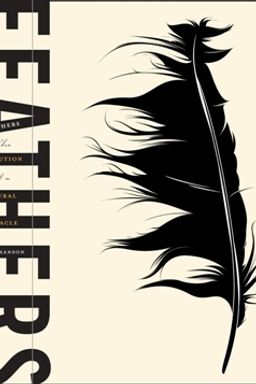
Feathers cover

Feathers

by Thor Hanson

In ''Feathers,'' Thor Hanson delves into the evolution of feathers, exploring their role in connecting dinosaurs to modern birds, influencing human technology, and shaping cultural practices. Discover the marvels of this natural innovation that has inspired advancements in aviation and fashion alike.

Feathers: Nature’s Masterpiece of Evolution and Wonder

When you stop to watch a robin preen in your backyard or feel the softness of a down pillow, do you ever wonder just how those intricate filaments came to be? In Feathers: The Evolution of a Natural Miracle, biologist Thor Hanson invites you to explore one of nature’s most extraordinary inventions—a seemingly simple structure that transformed the animal kingdom, influenced human history, and continues to inspire science and art today. Hanson argues that feathers are far more than the signature of birds—they are a story of evolution, survival, and creativity, connecting dinosaurs, ecosystems, fashion, and flight itself.

Hanson contends that to understand feathers, you must see them as a bridge between worlds—between earthbound creatures and those who soared, between biology and beauty, between the ancient and the modern. Every chapter explores how feathers evolved, what they do, and how humans across centuries have used them for warmth, adornment, writing, and wonder. But Hanson goes further: he shows that feathers symbolize curiosity itself—a reminder that the smallest object can reveal the deepest truths.

From Vultures to Vision

The book opens with a personal story about vultures in Kenya—birds whose bald heads and dark plumage sparked Hanson’s lifelong fascination. They became a symbol of perfect adaptation: efficient scavengers whose feathers (or lack thereof) are exactly suited to their needs. When a vulture dropped a feather at Hanson’s feet, it felt like an omen—a call to study this natural miracle. That moment grounds the book in a personal scientific quest, blending storytelling with research, philosophy, and awe.

The Evolutionary Drama

Hanson’s core argument unfolds through evolutionary history—the fossil of Archaeopteryx lithographica, the “Rosetta stone” of bird evolution, ignited scientific battles between Charles Darwin’s supporters and opponents. Hanson details how feathers evolved not from scales but through a remarkable series of developmental stages (as Yale’s Richard Prum theorized), from simple tubes to complex vanes capable of supporting flight. This story of innovation mirrors scientific discovery itself—each feather a record of nature’s innovation and persistence.

Form, Function, and Fancy

Beyond evolution, Hanson explores the stunning functions of feathers: keeping birds warm in Arctic winters, cool under desert suns, dry underwater, and airborne through complex aerodynamic feats. He explores the “fluff” chapters on insulation (where Golden-crowned Kinglets survive subzero nights) and “flight” chapters on aerodynamics, featuring experiments with falcons and ancient fossils. Later, he dives into “fancy”—the cultural obsession with feathers from New Guinea’s birds of paradise to the Las Vegas showgirls who echo their flamboyant courtship displays. In every case, feathers become a lens on beauty, desire, and identity.

Human Creativity and Conservation

Feathers have shaped human culture—from quill pens that transcribed scripture to hats that spurred conservation revolutions when plume hunting threatened birds to extinction. Hanson’s storytelling brings together adventurers, paleontologists, and fashion designers. In his “function” chapters, feathers become technology: models for waterproof fabric, bio-inspired flight engineering, even industrial innovation. This convergence of biology, design, and ethics turns the book into a meditation on interconnectedness.

Why Feathers Matter

Ultimately, Hanson argues that exploring feathers means exploring wonder itself. They teach you how evolution experiments with form and utility, how art borrows from science, and how curiosity bridges species and centuries. As he writes, feathers are a “debt of wonder” owed to nature. Whether you’re watching a robin, studying ancient fossils, or marveling at a down flight jacket, feathers remind you of what’s possible when simplicity meets complexity. Through this story, Hanson rekindles that timeless scientific joy: the thrill of asking why—and being amazed by the answer.


The Ancient Origins of Feathers

Hanson begins by taking you deep into the evolutionary mysteries behind the first feather. He tells the story of a quarryman in Bavaria who, while paying for his tuberculosis treatment with a fossil, unknowingly changed science forever. That fossil, Archaeopteryx lithographica, revealed a creature that was half reptile, half bird—a skeletal body with unmistakable feathers. It became the centerpiece of nineteenth-century debates about Darwin’s theory of evolution. Was it a bird or a dinosaur? The controversy between Richard Owen and Thomas Huxley captured the tension between religion and science, and Hanson narrates their clash as vividly as any courtroom drama.

Feathers as Evolutionary Innovation

Feathers, as Hanson explains, did not start as flight tools. Early researchers like John Ostrom proposed that feathers evolved as “insect scoops” or “heat shields,” serving functions long before flight. But the breakthrough came when Richard Prum theorized that feathers evolved through five developmental stages—from simple hollow filaments to vaned forms and finally to asymmetrical flight feathers. This process revealed that evolution often designs complexity through small, cumulative changes rather than aiming directly for flight. Hanson shows that each feather stage appeared across ancient theropods like Sinosauropteryx, Caudipteryx, and Beipiaosaurus, confirming that dinosaurs were the ancestors of birds.

The Fossil Revolution

Hanson guides you through China’s Liaoning Province, where paleontologist Xing Xu’s excavations uncovered troves of feathered dinosaurs. These discoveries resolved the “temporal paradox” that skeptics like Alan Feduccia cited to reject the dinosaur-bird link. Fossils such as Anchiornis huxleyi proved that feathered dinosaurs existed even before Archaeopteryx. In this unfolding story, science becomes detective work—each fossil a clue that links ancient creatures through structure, chemistry, and genes. Hanson’s narrative embodies the joy of discovery in real science: collaboration across continents, the persistence of debate, and the thrill of finding bright feathers preserved in stone.

From Scaleless Reptiles to Feathered Flight

You come to see that feathers embody evolution’s artistry. They weren’t designed; they grew—from reptilian keratin scales into intricate structures able to generate lift, conserve warmth, and shimmer with color. Hanson contrasts this biological ingenuity with Daedalus’s mythic wax wings that melted in the sun, showing that real flight was not born from imitation but from millions of years of adaptation. For Hanson, studying feathers means appreciating evolution not just as a process of survival but as an engine of creativity.


Keeping Warm: The Genius of Fluff

What would you wear on a night below zero? Thor Hanson answers with one word: feathers. His chapter on insulation reveals that birds like the tiny Golden-crowned Kinglet survive brutal winters thanks to down feathers so efficient they outclass any human technology. During a legendary ice storm in Maine, Hanson joined naturalist Bernd Heinrich’s Winter Ecology course and watched these thumb-sized birds resting through nights reaching –17°F. Their bodies, covered in thousands of down filaments, maintain a pocket of warmth 140 degrees hotter than ambient air. It’s a miracle of design that also warms our sleeping bags.

The Structure of Warmth

Down traps static air through its web of barbs and barbules. This creates “loft”—a measure of insulation comparable to R-value in architecture. Each feather acts as an air bubble, and birds can manually “fluff” them to regulate temperature. Hanson explains how these feathers operate like natural thermostats, allowing kinglets, geese, and penguins to stay comfortable from Arctic tundra to Antarctic ice. Even the tiniest songbird turns its down into a perfectly calibrated thermal armor.

From Birds to Bedding

Hanson doesn’t stop with nature. He visits the Pacific Coast Feather Company, where 200,000 pounds of goose and duck feathers are processed monthly for pillows and comforters. He follows Travis Stier, a buyer who negotiates feather deals across China and Southeast Asia, describing how the global down industry depends on culinary habits. Goose down costs more because geese are eaten less. Hanson discovers that despite technological advances, synthetics like Thinsulate still can’t beat down’s warmth-to-weight ratio—a reminder that humanity is still catching up with birds.

Adaptation and Awe

Under Bernd Heinrich’s mentorship, Hanson learns that warmth is only part of the story. Down evolved early, even before the first flying birds, showing that keeping warm may have been a driving force behind feather origins. From kinglets huddled in icy firs to goose-down sleeping bags on mountaintops, the convergence of evolution and engineering reveals how life perfects solutions. When Hanson kneels in the snow to watch a tiny bird survive what would kill a human, he sees not just adaptation but grace—proof that nature’s genius is woven into every plume.


Flight: From Ground-Up to Tree-Down

Can chickens teach us how dinosaurs learned to fly? Hanson uses his backyard flock—a trio of Silver-laced Wyandottes—to illustrate a scientific feud over flight’s origin. The “ground-up” camp argues that flapping wings evolved from running and leaping dinosaurs, while the “tree-down” proponents claim flight started with gliding from branches. Watching his chickens sprint and flap awkwardly, Hanson sees evolution in motion. Their futile flapping embodies millions of years of trial and error that led to powered flight.

Feuds and Theories

Thomas Huxley’s early theories linked flight to terrestrial theropods. Later scientists like Alan Feduccia defended the tree-down model, arguing that gravity assisted evolution. Hanson presents this as a dialogue between camps, each holding evidence from fossils like Microraptor, whose four wings suggest a transitional form between gliding and flying. Yet the fossil record also shows terrestrial feathered dinosaurs. The truth, Hanson suggests, might be both: flight may have developed from cooperation between climbing and running behaviors.

The WAIR Solution

Hanson introduces ornithologist Ken Dial and his son Terry, whose experiments revealed “wing-assisted incline running” (WAIR). By studying Chukar Partridges racing up hay bales, the Dials found that birds use their flapping wings like spoilers on race cars—to push themselves against surfaces while climbing. This behavior bridges both theories: the ground-up mechanics of running combine with tree-down climbing. WAIR proves evolution favors incremental advantage: even half-formed wings could help survival by improving traction, balance, and escape.

The Joy of Inquiry

For Hanson, flight’s origin is not just a scientific puzzle but a metaphor for curiosity. Scientists like Dial and Xu illustrate how wonder drives discovery even amid controversy. The mystery of lift still challenges us, but birds remind us that sometimes evolution’s greatest leaps come from cooperation—between theories, between disciplines, between curiosity and observation. By watching chickens run and falcons soar, Hanson turns flight itself into an intellectual adventure.


Aerodynamics and Human Innovation

Once humans dreamed of flying; now we study birds to refine jet design. Hanson traces the parallels between avian aerodynamics and human innovation in a chapter that travels from Leonardo da Vinci’s notebooks to Boeing’s laboratories. He calls this process biomimicry—the art of learning from nature. For engineers, feathers are perfect airfoils, and their curves and microstructures inspire airplane wings, propellers, and even noise-reduction technology.

Lessons from the Masters

Da Vinci’s sketches showed he understood how curved bird wings generate lift by manipulating airflow, centuries before modern aerodynamics. The Wright brothers watched gulls to learn “wing warping”—the idea of flexing wingtips to steer. Otto Lilienthal designed gliders after studying storks, achieving hundreds of successful flights before his fatal crash. These pioneers turned birdflight into engineering principles, shifting flight from myth to science.

Modern Innovation

Hanson explores how feather structures still influence technology. The addition of “winglets” to airplane tips mimics soaring raptors, reducing drag and saving billions in fuel costs. Engineers study owl feathers to design quieter aircraft, and Boeing tests fuzzy wing surfaces inspired by the “roughened” feather texture of birds in flight. Feathers manage turbulence, lift, and silence better than any human-made surface, offering clues for future design.

The Dream of the Bird

From gliding Lilienthals to robotic Swifts and ornithopters at the University of Toronto, humanity continues to chase the bird dream. Hanson sees in this relentless progress the same yearning that drove Daedalus, Galileo, and Wright. Yet his conclusion is humble: no matter our machines, only the feather perfectly unites structure, flexibility, and life. Real progress comes not from imitation but from learning the subtle physics already perfected by birds.


Beauty and Desire: Birds of Paradise and Human Fancy

Feathers are not just functional—they are irresistible. Hanson’s section on “Fancy” dives into the lush plumage of New Guinea’s birds of paradise, those evolutionary masterpieces of color and courtship. He then connects their beauty to human obsession—from Victorian milliners adorning hats with egret plumes to Las Vegas showgirls shimmering under stage lights. In both worlds, feathers signify allure, competition, and creativity.

Evolutionary Seduction

Darwin’s theory of sexual selection was first inspired by birds like the Greater Bird of Paradise. Hanson describes Alfred Russel Wallace’s ecstatic observations of their “dance parties,” males festooned in golden feathers performing synchronized displays to attract females. Darwin saw these flamboyant traits not as accidents but as evolutionary strategy—females choose beauty. Hanson explains how this “good genes” principle rewards males whose stamina and health allow costly ornamentation, while runaway selection exaggerates features into pure extravagance.

The Plume Boom and Its Consequences

By 1912, feathers were so prized for hats that the Titanic’s most valuable cargo was not jewels but boxes of ostrich plumes. Millions of egrets and birds of paradise died for fashion until conservationists like Frank Chapman and William Hornaday spearheaded the Audubon movement. Hanson recounts how women’s style became both the cause and cure—female bird lovers formed grassroots campaigns that birthed modern wildlife protection laws. Beauty, Hanson argues, can be dangerous but also redemptive.

Modern Echoes of Paradise

In Las Vegas’s “Jubilee!” show, feathers reemerge as spectacle—ostrich and pheasant plumes rising in golden fans on dancers’ heads. Costume designer Pete Menefee tells Hanson that feathers are “grace itself.” The comparison with birds is uncanny: showgirls, like paradisiacal males, balance between beauty and mobility, attraction and survival. Hanson turns this analogy into philosophy—the pursuit of adornment is part of the same evolutionary impulse that drives life to flourish.


Function, Technology, and the Endless Adaptation

Feathers, Hanson shows, are endlessly adaptable. He closes his book with stories that prove evolution never stops reinventing them. From waterproof cormorant feathers that behave like advanced polymers to vultures shedding plumage for hygiene, feathers adjust to every ecological and human need. Even our pens, flies, and jackets are part of this living legacy.

Waterproofing and Resistance

Hanson discovers that birds stay dry not by oil alone but through microscopic architecture—barbules that form air pockets repelling water. Sandgrouse, however, reverse this principle to deliver water to their chicks, soaking their spiral-barbed feathers like living sponges. He then contrasts this with human technology: engineers studying these microstructures for sustainable materials, replacing Teflon with biomimetic designs.

Human Genius from Bird Genius

From fly-fishing lures devised with the plumage of exotic parrots to quill pens that wrote Shakespeare and scripture, humans have borrowed feathers for art and invention. Hanson’s visits with artists and calligraphers like Donald Jackson, creator of the St. John’s Bible, reveal reverence for the feather’s lightness and sensitivity. Even the U.S. Supreme Court’s tradition of placing goose quills on counsel tables echoes this ancient respect.

Forever Evolving

In his final scientific reflection, Hanson meets Cornell biologist Kimberly Bostwick, who discovered a manakin whose feathers make violin-like music during courtship—a new evolutionary function entirely. Feathers, she tells him, are “already doing things we don’t appreciate.” That statement encapsulates Hanson’s philosophy: evolution is still creating, still experimenting. Feathers remain alive with possibility, proof that nature never stops dreaming.


A Debt of Wonder: Learning to See Again

Hanson closes Feathers with a moving revelation: the pursuit of feathers is ultimately the pursuit of wonder. Whether identifying a Golden Eagle plume in the Smithsonian lab or watching a puffin soar across the sea, he reminds you that science begins with awe. His conversations with feather detective Carla Dove at the National Museum of Natural History reveal that curiosity connects everything—from aviation safety to wildlife conservation. Every feather carries a story, whether preserved in stone or fluttering in sunlight.

Seeing the World Differently

For Hanson, being a “feather fanatic” means learning to see ordinary things as extraordinary. Feathers bridge art and science, instinct and intellect, reminding us that no discovery happens without imagination. His encounters with explorers, biologists, and artists show that to pay our “debt of wonder” is to remain curious. From Darwin and Wallace’s theories to Boeing’s designs and Audubon’s activism, feathers link minds across centuries.

Feathers as a Call to Stewardship

The book ends as a conservation plea. Hanson implores readers to notice birds—to become advocates for the living miracles around us. Birds are environmental barometers, and their feathers reflect the planet’s health. Protecting them means honoring the creative force that made them. As Hanson watches families marvel at a giant puffin photograph in the Smithsonian, he sees science and wonder merge—the same awe that once drew him to vultures now blooms in others’ eyes.

Hanson’s final insight is simple but profound: when you look closely at a feather, you glimpse the story of life’s imagination and resilience. To study feathers is to rediscover humility and gratitude—to realize that wonder, not certainty, keeps science alive.

Dig Deeper

Get personalized prompts to apply these lessons to your life and deepen your understanding.

Go Deeper

Get the Full Experience

Download Insight Books for AI-powered reflections, quizzes, and more.