
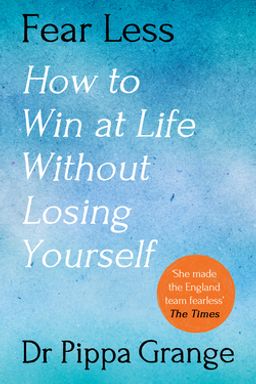
Fear Less cover

Fear Less

by Pippa Grange

Fear Less by Pippa Grange explores how hidden fears impact our lives and offers powerful strategies to overcome them. By identifying these fears, readers can achieve greater personal satisfaction, improve relationships, and live more courageously.

Fear as the Hidden Force That Shapes Your Life

When was the last time you felt truly scared — not by a horror movie or sudden danger, but by the possibility of failing, being judged, or not being enough? In Fear Less, performance psychologist Dr. Pippa Grange argues that fear is the invisible compass steering far more of our lives than we realize. It drives our choices, shapes our relationships, and limits our fulfilment. Her central claim: we have learned to win — but we've forgotten how to live without fear.

Grange contends that modern culture has mistaken fear for fuel, creating a world obsessed with competition, perfection, and control. On the surface, fear is the spark behind ambition; beneath, it’s the root of burnout, jealousy, separation, and shame. In her words, fear has become our behavioral GPS, guiding us toward hollow success and away from real joy. To reverse that, she proposes a different way of being — shifting from “winning shallow” to “winning deep.” Winning deep means pursuing success with soul, connection, and meaning, not fear of losing. The book promises to show how you can replace fear with trust, purpose, emotion, laughter, surrender, and love.

The Two Faces of Fear

According to Grange, fear operates through two major forms. The first is in-the-moment fear — the physiological panic of a threat, an exam, or a performance. It’s sharp, quick and visible. The second is not-good-enough fear — slower, deeper, and more insidious. This manifests as anxiety, stress, perfectionism, jealousy, or social isolation. It's the fear of rejection or of not being lovable, competent, or safe. This internalized fear, she says, drives most of our anxious thinking and unhelpful behaviors.

Both forms of fear come from biological and cultural sources. Evolution primed our amygdala to react quickly to threats — long before the logical brain catches up. But modern environments flood that survival system constantly. Workplaces, families, and schools often recycle fear as motivation or control: shaming mistakes, rewarding perfection, and limiting emotional expression. The result? We feel perpetually unsafe even when we’re not in danger.

Why You Keep Winning Shallow

Early chapters describe how fear culture — from competitive corporate hierarchies to sports coaching — teaches us that success depends on dominance, sacrifice, and emotional suppression. We internalize myths such as “losing makes you a loser,” “fear makes you stronger,” and “only the fittest survive.” These myths glorify control and toughness while diminishing curiosity, play, and emotional honesty.

To illustrate, Grange recounts the story of Paul, a professional footballer who realized that even after winning a championship, he felt empty. His joy had been replaced by fear — fear of injury, of judgment, of not measuring up. His experience epitomizes “winning shallow”: striving driven by insecurity rather than desire. Real fulfilment, Grange insists, only comes when performance and humanity are integrated — when you allow emotion, connection, and trust to coexist with excellence.

The See–Face–Replace Method

To transform fear, Grange introduces a practical framework: See, Face, Replace. First, you see fear in its many disguises — perfectionism, judgment, separation, control. Next, you face it honestly, identifying how it limits you and affects others. Finally, you replace it with narratives and behaviors rooted in trust and love. That process forms the core of the book’s structure. She alternates psychological insights with real stories: athletes, musicians, business leaders, and even parents who trace fear’s effects and learn to transform it.

Why This Matters

Grange’s argument isn’t just about sports or performance; it’s about the spirit of modern living. She shows how fear distorts everything — from parenting and leadership to creativity and relationships. It makes people over-control, withdraw, or chase validation endlessly. Yet when you learn to boss fear, you gain what she calls “mental freedom” — the ability to act consciously, not reactively. Mental freedom opens the door to authenticity, connection, and meaning.

Throughout Fear Less, you’ll encounter strategies to reclaim that freedom: processing fear through breath and self-talk, letting go of control, embracing emotional surrender, and creating safe, compassionate cultures. You’ll see how vulnerability builds resilience, how laughter and creativity counter fear, and how facing the “mess” of life deepens your soul. It’s a conversation that blends psychology, story, and philosophy — teaching not just how to manage fear, but how to live fear less, love more, and win deep.


Understanding Fear’s Biological and Cultural Roots

Grange explains that fear isn’t just a mental issue; it’s the most ancient survival reflex hardwired into your brain. The amygdala — your emotional alarm system — reacts faster than thought. When something seems threatening, your body floods with adrenalin and cortisol, diverting blood from digestion or logic to muscles ready to fight, flee, freeze, or appease. Even a harsh email or critical boss activates the same system that used to keep cave dwellers alive.

The trouble, she says, is that modern life rarely presents mortal danger. Yet we still live as though it does. Performance reviews, exam grades, or social comparison trigger our “fight-flight” instincts thousands of times a week. Fear steals cognitive capacity — lowering IQ, creativity, and empathy — while narrowing focus to danger. Studies she cites show that under threat, we become defensive, tribal, and unimaginative.

How Fear Culture Keeps You on Edge

Cultural norms amplify biology. Grange describes “fear cultures” — environments where shame, control, and pressure dominate. In these settings, people overwork, chase perfection, and mistake fear for discipline. She recounts examples from sports and business: organizations where employees stay late, athletes accept humiliation as motivation, and leaders use silence as intimidation. These systems recycle fear generation after generation.

She argues that fear culture is self-reinforcing. In workplaces, low trust breeds anxiety, leading to micromanagement and burnout. In families, it turns love conditional — “make me proud” becomes “don’t disappoint me.” Over time, we internalize fear as personality: controlling, perfectionist, self-critical. We forget what being free feels like. Grange’s antidote is awareness: recognizing that much of your anxiety isn’t personal weakness but a cultural inheritance.

Fear and Shame: The Twin Traps

Shame, she says, is fear’s close cousin. Fear tells you something will go wrong; shame tells you that you are wrong. Cultures that shame mistakes or vulnerability drive people to hide weakness, suppress emotion, and perform constantly. Brené Brown’s research on shame resilience complements Grange’s findings: connection and compassion heal this dynamic, while shaming destroys confidence.

Recognizing these roots — biological and cultural — is the first step toward mental freedom. You can’t outthink the amygdala, but you can retrain the system by changing behavior and environment. Fear, she reminds us, is not the enemy. It’s a natural signal. The real work lies in refusing to let fear dominate the story of your life.


The Psychology of Winning Deep

One of Grange’s most useful distinctions is between winning shallow and winning deep. Winning shallow means success driven by fear — the need to dominate, prove yourself, or avoid shame. Winning deep means success rooted in purpose, passion, and soul. It’s about playing wholeheartedly instead of anxiously. This distinction reshapes how you think about achievement, leadership, and ambition.

Shallow Wins: Fear-Driven Success

Grange’s story of Paul, the footballer who lifted a trophy only to feel empty, reveals how fear corrodes joy. He worked under coaches who equated fear with discipline — “no rest,” “be afraid,” “never surrender.” These mantras produced results but left players hollow. In psychology terms, it’s extrinsic motivation gone toxic: performing for approval rather than fulfillment. Similarly, corporate professionals might win promotions while feeling numb, sensing that success isn’t happiness.

Deep Wins: Soulful Success

Winning deep, by contrast, feels expansive. It integrates heart and mind. Grange connects this to the mindset of the New Zealand All Blacks, who emphasize humility and purpose: “Champions do extra.” Their success arises not from fear of failure but love of excellence. Winning deep is collaborative, compassionate, and internally secure. It values the journey as much as the trophy.

She urges you to redefine what winning means for you. Is it love and presence? Creativity and resilience? If success doesn’t make you feel alive, it’s probably built on fear. (This echoes Simon Sinek’s Start With Why, which advocates purpose-driven performance.) Real success, Grange insists, enriches relationships instead of breaking them.

Practical Reframe

To shift from shallow to deep, ask: “What’s driving me — fear or desire?” If it’s fear, pause. Reconnect with purpose instead of proving yourself. Replace the mantra “I can’t fail” with “I’m here to create.” Winning deep isn’t less ambitious; it’s infinitely more meaningful.


Seeing, Facing, and Replacing Fear

Grange’s method for transforming fear — See, Face, Replace — is the book’s emotional engine. It’s both introspective and practical, built on twenty years of psychological coaching. You can use it whether you’re confronting jealousy, perfectionism, or self-doubt.

See It: Naming the Fear

First, she says, you must identify fear’s disguise. Often it hides behind ambition, control, or moral conviction. What triggers it? What texture or image does it have? She invites creative visualization — seeing fear as a snarling dog, creeping shadow, or heavy chain. This brings the unconscious emotion into awareness. As Deepak Chopra writes, imagination can either serve creativity or anxiety; Grange uses it for awareness.

Face It: Engaging Without Denial

Once you can see fear, she encourages you to face it gently but directly. Ask what it costs you — in time, energy, relationships. She quotes poet Theodore Roethke: “In a dark time, the eye begins to see.” Facing fear often involves admitting uncomfortable truths: you may be controlling loved ones, sabotaging creativity, or staying small to feel safe. This vulnerability, she says, is where transformation starts.

Replace It: Choosing Love and Hope

Finally, replace fear with new stories. For example, Jacques, a perfectionist father estranged from his daughter, reimagined himself not as a failure but as someone meeting her halfway. His image of a “middle ground” between dungeon and sky became his path back to connection. Caroline, a jealous producer, replaced her shame with self-compassion and creativity. By rewriting internal narratives, they freed themselves from fear’s old script.

Seeing, facing, and replacing fear doesn’t erase it but transforms its energy. Fear becomes compost — substance that nurtures future growth. It’s a slow, soulful process, but over time, it brings emotional agility and peace.


Letting Go: The Power of Surrender

In one of the book’s most moving chapters, Grange redefines surrender not as weakness but as wisdom. She calls it “useful surrender” — releasing control and trusting bigger forces. Whether that’s fate, spirituality, or collective energy, surrender quiets the ego’s need to dominate and lowers tension. She contrasts two colleagues watching a game: one clenched and fearful, the other relaxed, open-palmed, accepting that outcomes aren’t his to command. The latter, she says, is winning deep.

Surrender as Trust

Trusting something beyond yourself — God, luck, or nature — soothes anxiety. Grange shares Lionel Messi’s story in the 2018 World Cup: when a journalist gave him a lucky red ribbon, Messi wore it for comfort, later scoring to advance Argentina. The ribbon didn’t “cause” victory; it helped him release fear. Believing in mystery, Grange says, gives psychological power even to non-believers.

Surrender as Letting Go of Control

Fear tightens grip, producing rigidity — “My way is the only way.” She challenges this with mindfulness: control outcomes less, control effort more. Adaptability and resilience, not certainty, are the real foundations for growth. Her examples — from WWII air crews inventing luck rituals to a musician learning to see music as co-created — show that letting go unlocks creativity and calm.

Emotional Surrender

Finally, Grange encourages emotional surrender — allowing feelings to move through you. Crying, shouting, singing, anything that expresses fear prevents repression. Bottled emotion, especially in men, becomes toxicity. She says, “Emotional energy is fluid: it needs to move.” Surrender turns suffering into flow. (This mirrors Eckhart Tolle’s view that resistance prolongs pain.) When you stop fighting fear, you stop being ruled by it.


Purpose, Dreams, and Passion as Antidotes to Fear

One antidote to fear is living with purpose and passion — energy that burns cleaner than anxiety. Across several chapters, Grange intertwines stories of courage through purpose, desire, and creative drive. These emotional fuels expand the soul where fear contracts it.

Purpose Creates Stability

She recounts Khalida Popalzai’s journey founding Afghanistan’s first women’s football team. Facing violent threats, Khalida turned fear into activism. “Every human has a right to a voice,” she said. Purpose, Grange explains, converts fear into service. It shifts focus from survival to contribution. When your ‘why’ is bigger than your ‘what if,’ fear loses its grip.

Dreams Fuel Courage

Dreams, unlike plans, start without guarantees. Former Royal Marine Lee Spencer dreamed of rowing the Atlantic solo—then did, despite losing a leg. His motto: “Dare to dream, and if you don’t fail, you’re not dreaming big enough.” Grange highlights how his failures built resilience. Dreams pull you through fear because they excite imagination and hope, overriding survival instincts.

Passion Transforms Pain

Pain, too, can become fuel. Joeli Brearley founded Pregnant Then Screwed after being fired while pregnant; activist Anthony transformed trauma into creative education for inner-city kids. Passion — emotional intensity with purpose — alchemizes suffering into growth. When directed outward, it heals both self and others.

Whether through purpose, dreams, or passion, Grange shows a pattern: each requires vulnerability and imagination, the opposite of control. Fear can’t coexist with service and creation. The moment you care deeply, you are already fearless.


Connection, Vulnerability, and Laughter

The final chapters remind you that fear dissolves in connection. Love, intimacy, and humour are the ultimate fear-busters. Grange’s psychology aligns with Johann Hari’s (Lost Connections): belonging heals isolation. She asks, “Who are your people — the ones who really see you?” Building vulnerability brings safety, joy, and authenticity.

Real Connection

At Melbourne’s Richmond Football Club, tough players built connection through a ritual called Triple H — hero, hardship, highlight. Sharing stories aloud shattered barriers, produced empathy, and led to victory. Emotional openness, far from weakness, became their strength. Grange says, “People learn from those they love. They can risk failing with those who love them.”

Vulnerability as Strength

Across examples — Jake coming out to his parents, Trent Cotchin’s emotional speech — vulnerability replaced perfectionism with unity. When leaders showed fear openly, teams grew more connected. This contradicts traditional leadership ideals of toughness. Compassion, she insists, is the foundation of courage.

Laughter

Grange ends on humour. From Marines joking in −76°C Norway to cancer survivor Emma Campbell finding joy amid chemo, laughter changes emotional chemistry. Fear contracts; humour expands. Shared laughter links people and resets perspective. “Cheerfulness in the face of adversity,” she writes, isn’t denial but defiance — proof that humanity can rise above fear through connection.

To live fear less, she concludes, is to choose love over fear — daily, deliberately, and with a smile.

Dig Deeper

Get personalized prompts to apply these lessons to your life and deepen your understanding.

Go Deeper

Get the Full Experience

Download Insight Books for AI-powered reflections, quizzes, and more.