
Idea 1
Power, Process, and the Presidency
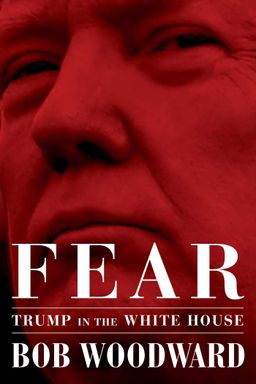
What happens when instinct, ideology, and bureaucracy collide inside the Oval Office? In Fear (Bob Woodward), you watch a presidency defined less by structured deliberation and more by reactive, personality-driven decision-making. The book’s central argument is that the mechanisms of power—who speaks to the president, who controls access, and who removes drafts from his desk—often determine national policy more than formal orders or doctrines.
Woodward portrays Donald Trump’s White House not as a conventional administration but as a constant stress test on American institutions. Through hundreds of insider interviews and documents, he reconstructs how military generals, economic advisers, lawyers, and family members alternately guide, obstruct, and improvise around a leader driven by impulse. You see the daily tension between a president seeking simple wins and a government built on complexity and rules.
Governance Through Personalities
You start with people. Steve Bannon turns a chaotic campaign into a populist insurgency by framing Trump as champion of the “forgotten man.” Gary Cohn fights a lonely war against tariffs. Jim Mattis, John Kelly, and H.R. McMaster try to anchor national security in discipline and alliances. Jared Kushner bypasses the State Department to build personal diplomacy with Saudi Arabia and Israel. Each personality carries a philosophy but also a method—data, persuasion, or gatekeeping—and their combined friction defines governance.
Even administrative acts become political weapons. Staff secretary Rob Porter “slow-walks” documents to prevent snap decisions. Advisors withhold drafts of orders that could upend trade or treaty relationships. (Note: Woodward calls this phenomenon an “administrative coup of good intentions,” reflecting how unelected officials sometimes shield the system from its own elected head.)
Institutions on the Edge
Throughout the narrative, you see the U.S. government’s formal processes—intelligence briefings, National Security Council reviews, attorney consultations—strained by a president mistrustful of experts. The January 2017 intelligence briefing on Russian interference becomes a defining fracture point. The decision to include the unverified Steele dossier poisons the relationship between Trump and his intelligence chiefs, setting off years of suspicion that culminate in the Mueller investigation. Each institution—FBI, CIA, Pentagon, NSA—must decide whether to accommodate or resist presidential volatility.
Woodward documents how generals and defense civilians attempt to create layered buffers around national-security risk. The “Tank” meeting at the Pentagon and the North Korea crises illustrate their method: display data, explain alliances, appeal to history. Yet persuasion fails when the president prioritizes cost over security. It’s a study of process failure—how reason collapses under the weight of personality.
The Economic and Legal Battlefields
Economically, the West Wing resembles a marketplace of doctrines. Globalists like Cohn, Mnuchin, and Porter argue for stability and trade alliances. Protectionists like Navarro, Bannon, and Ross pitch tariffs and national identity. Process serves as their battleground: whoever places a memo on the desk shapes American policy. When Cohn removes a draft terminating the KORUS trade deal, or delays the NAFTA withdrawal order, he’s waging policy by omission.
Legally, the presidency becomes defined by defense. The Comey firing, Rosenstein’s appointment of Mueller, and the cascade of subpoenas force Trump’s lawyers—Dowd, Cobb, Kasowitz—to treat governance as litigation management. Meetings about policy often become risk assessments about perjury, obstruction, or evidence exposure. The law narrows governing space; politics absorbs the language of defense.
The Broader Narrative
When you read this book as a whole, you see a government functioning through improvisation. The generals balance restraint and deterrence with North Korea. Economic advisers practice procedural obstruction to protect global stability. The legal team maneuvers between cooperation and confrontation with federal investigators. Communication staff scramble to manage the fallout of events like Charlottesville. Each episode—gates, memos, raids, or resignations—acts as a chapter in the same larger question: How much can process save a presidency from its own instincts?
“It’s not chaos; it’s survival.”
That unspoken ethos runs through Woodward’s narrative. You are watching professionals, partisans, and patriots invent ad hoc systems to contain unpredictability—often by redefining what stability even means in modern governance.
Ultimately, Fear gives you a manual of contemporary American power: process as shield, personality as driver, and improvisation as both danger and survival mechanism. It’s not a story about ideology alone; it’s about systems stress-tested by personality—and the delicate balance between protecting a nation and respecting the will of its elected leader.