
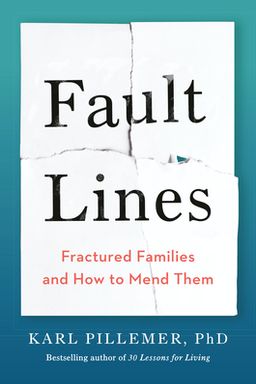
Fault Lines cover

Fault Lines

by Karl Pillemer

Fault Lines delves into the hidden epidemic of family estrangement, affecting over a quarter of Americans. Through insightful research and real-life stories, Karl Pillemer offers practical advice for understanding root causes and reestablishing connections, giving hope to those seeking reconciliation.

Understanding the Hidden Epidemic of Family Estrangement

Family estrangement—the severing of close kin relationships—is far more common and complex than most people realize. In his research, Karl Pillemer exposes a hidden epidemic: nearly one in four adults report being cut off from a close relative. Yet most feel profoundly alone, mistakenly believing their experience is unique. This silence fosters shame and blocks recovery. The book aims to lift that cloak by showing how estrangement arises, why it hurts so deeply, and how reconciliation can transform both parties—even when full harmony is impossible.

How Estrangement Takes Shape

Estrangement rarely comes from one explosive moment. Instead, it follows recurring patterns shaped by past trauma, divorce, conflicting expectations, and lifestyle differences. Pillemer’s six pathways—such as the long arm of abuse, the legacy of divorce, and value clashes—show that estrangement isn’t arbitrary; it often stems from cumulative pain or mismatched roles. Dani Bartlett’s case, for instance, reveals how abuse led her to protect herself through cutoff. Elena Fuentes’s decision after her father’s unreliability illustrates how adult choice interacts with childhood wounds. Understanding your pathway helps identify what kind of repair might work: mediation for financial disputes, acceptance work for value clashes, and boundary setting for cyclical fights.

Why It Hurts So Deeply

Estrangement isn’t merely an absence of contact—it activates biological and psychological alarms. Pillemer identifies four threats that make it endure: chronic stress, broken attachment, rejection pain, and ambiguous loss. You replay memories as if re-living trauma; your nervous system responds like it’s under attack. Attachment theory explains why you may still yearn for the very person who hurt you—parents and children are core identity anchors. Rejection wounds the self, even triggering the same neural regions as physical pain. And ambiguous loss keeps you suspended between hope and grief, since the person remains alive but absent. Recognizing these mechanisms reduces shame; you’re reacting normally to abnormal circumstances.

Ripple Effects Across Generations

Estrangement’s damage spreads beyond the immediate relationship. Grandparents lose access to grandchildren; cousins drift apart. Jody Alessi’s family, once close, became strangers across decades due to a business feud—illustrating how lost ties erase social capital. Emotional contagion compounds the problem: relatives forced to mediate absorb others’ distress. Even more troubling, cutoff behavior can become a family tradition. Some families learn to resolve conflict by exclusion, transmitting the pattern through generations. Pillemer invites readers to consider legacy thinking: how will today’s feud shape your descendants’ sense of belonging? Framing estrangement in generational terms reframes it from a private hurt to a communal challenge.

Moving Toward Reconciliation

The book’s second half shifts from pain to possibility. Pillemer doesn’t promise easy healing—some bonds cannot be safely repaired—but he draws on reconcilers’ wisdom to show real paths forward. They advise, “Do it for yourself.” Reconnecting brings relief from rumination and regret, and even imperfect relationships can restore belonging. Benefits include emotional peace, restored access to family networks, practical caring support, and regained shared lifetime.

The Practice of Living Forward

Ultimately, Pillemer reframes reconciliation as a personal discipline—an act of growth rather than surrender. Like Kierkegaard’s idea that life is understood backward but lived forward, reconciliation demands that you stop obsessing about winning the past and instead learn skills: perspective-taking, setting limits, recalibrating expectations, allowing coexistence of differing narratives, and offering one final test of renewed contact. It’s not about erasing pain; it’s about cultivating resilience and agency. The goal isn’t perfection but freedom—the ability to live forward without being consumed by old injury.

Key takeaway: Estrangement is widespread, painful, and often quietly transmitted, yet change is possible. By mapping your pathway, understanding its psychological grip, and practicing disciplined, bounded outreach, you can begin living beyond estrangement—whether or not reconciliation succeeds.


Mapping the Six Pathways to Estrangement

Estrangements follow recognizable routes. Identifying your pathway clarifies the underlying forces shaping your rift and guides realistic repair strategies. Karl Pillemer outlines six recurring patterns found across his interviews.

1. The Long Arm of the Past

Early dysfunction—abuse, neglect, favoritism—creates lasting emotional triggers. Survivors often cut ties for self-protection. Dani Bartlett, abused by her mother, chose estrangement as survival. (In a therapeutic sense, this mirrors trauma-informed boundary work taught in psychology.)

2. The Legacy of Divorce

Divorce can fracture parental bonds, especially if distance or new families intervene. Adult children may later cut contact with unreliable parents, as Elena Fuentes did when her father refused adult-level engagement. Estrangement here often protects children from repeating poor models.

3. Problematic In-Laws

When a new spouse or partner alters family dynamics, loyalty tensions arise. Roy Shaw’s brother’s ultimatum over marriage forced loyalty choices, permanently redrawing family boundaries. Rifts born here often require balancing marriage and origin-family boundaries.

4. Money and Inheritance

Disputes over assets often mask emotional wounds about recognition and fairness. Rayna Bergstrom’s inheritance feud illustrates how financial symbolism becomes emotional warfare—will documents fix outcomes while feelings resist closure.

5. Unmet Expectations

Roles around caregiving, reciprocity, or obligation often diverge. Grace Brock’s fight with sister Marlene over parental care expectations shows how perceived inequity can freeze affection.

6. Value and Lifestyle Differences

Core identity conflicts—religion, politics, sexuality—tend to be the hardest. Marian Russo’s estrangement after coming out underscores that identity rejection feels existential.

Action insight: Identify which pathway best describes your rift; the solution must fit the source. Emotional trauma calls for healing boundaries; financial conflict calls for mediation. Diagnosis precedes remedy.


The Psychology of Estrangement's Pain

Estrangement activates primal survival systems—explaining why people experience grief, ruminative stress, and physical symptoms years after a split. Pillemer outlines four psychological threats that sustain suffering and offers ways to understand them without self-blame.

Chronic Stress

Instead of fading, estrangement behaves like ongoing trauma. Daily rumination—remembering the fight, imagining rejection—replays physiological alarms. People like Kim Padilla develop insomnia and digestive disorders from unending tension. Naming this as chronic stress, not weakness, helps target solutions like therapy and mindfulness.

Broken Attachment

Attachment theory reveals why family rejection can be more painful than romantic breakups. Parents and siblings form your sense of safety; losing them triggers separation anxiety and longing even when abuse occurred. Frieda Greenwood’s yearning for her mother illustrates this paradox. Therapies that address attachment injury often help more than those treating generic depression.

Rejection and Self-Worth

Social neuroscience shows rejection activates brain regions for physical pain (George Slavich’s research). The self-esteem wounds of explicit cutoff—such as ignored calls or blocked emails—generate recurring grief. Recognizing the biological basis can shift you from shame to compassion toward yourself.

Ambiguous Loss

The cruelest element is uncertainty. Pauline Boss’s concept of ambiguous loss explains the inability to mourn or hope definitively because the person still exists. Crystal Buchanan’s sporadic contact with her daughter mirrors the emotional paralysis this creates. Managing ambiguity—through acceptance rituals, reframing, or boundary decisions—restores agency.

Insight: These four threats are natural, not moral failings. Understanding their mechanisms turns endless rumination into knowledge—and knowledge into choice.


Collateral Damage Across Generations

Family rifts ripple outward, shattering more than individual bonds. Estrangement can deprive entire networks of emotional and social capital. Understanding collateral damage reframes the problem from private pain to systemic family dysfunction.

How Estrangement Spreads

Jody Alessi’s family business feud erased cousin relationships for decades. Grandchildren grew up not knowing relatives, forfeiting shared history. Emotional contagion occurs when unaffected members—like Lois Miles mediating her brother’s conflict—absorb stress until they feel it physiologically.

Transmitting the Pattern

Repeated cutoffs can become cultural norms inside families. If previous generations solved tension through avoidance, children learn exclusion as normal interaction. This generational modeling mirrors social learning theory: patterns persist unless consciously changed.

Legacy Thinking

Molly York’s intervention proves legacy awareness can motivate reconciliation. She reminded feuding relatives that their fight harmed nieces and nephews; perspective on future generations shifted their priorities. Drawing diagrams to visualize who loses connection helps potential reconcilers see beyond their own hurt.

Practice tip: Map the ripple effect and ask what you want your family culture to look like in 20 years. Sometimes legacy thinking is the first step toward thawing stubborn estrangements.


The Reconcilers' Case for Reconnection

Why reconcile at all? For many, the estrangement provides temporary safety but long-lasting strain. People who successfully rebuilt ties offer compelling reasons to try—not primarily for others’ benefit but for self-liberation.

Reconciliation as Self-Relief

Cliff Miller’s case shows reconciliation’s internal payoff: peace, reduced mental clutter, and freedom from resentment. Reconcilers consistently report less rumination, even when relationships remain imperfect. The act of attempting becomes therapeutic.

Four Specific Benefits

  • Avoiding lifelong regret, as Lois Miles discovered after reconnecting before her brother’s death.
  • Regaining access to shared networks and events, seen in Sidney Kelly’s reintegration.
  • Recovering practical resources and caregiving, like Amy Sanders’s aunt’s help after reconciliation.
  • Restoring years of potential shared life, as Naomi Unger found late but fulfilling.

Signs of Readiness

Changing circumstances—a new life stage, fading anger, or external signs like a sermon or dream—often trigger readiness. Fletcher Inman acted after a Christmas sermon and reestablished sibling ties. (Behavioral change models echo this transtheoretical approach.) You may feel a quiet inner nudge: imagine contact and plan small, safe steps. When readiness aligns with realism, the journey begins.

Lesson: Reconciliation done for self-growth—rather than forced forgiveness—returns agency and often dissolves chronic regret.


Reframing and Letting Go of the Past

One of the hardest truths in reconciliation is accepting that you may never align stories about what happened. Reconcilers emphasize letting competing memories coexist instead of demanding shared truth. This cognitive shift enables new beginnings.

Stop Fighting Over History

People protect self-image through narrative coherence. Sadie Morris and her son Eric built incompatible life stories from the same events—each version legitimate to its author. Forcing agreement entrenched conflict. As reconcilers say: you needn’t surrender your truth, only the expectation that others adopt it.

Abandon Waiting for Apologies

Bethany Richardson’s decade-long wait for maternal apology proved that behavioral change often precedes verbal repentance. Randall Abbott reinforced positive conduct instead of demanding confession—a tactic drawn from behavioral psychology—that ultimately altered behavior more effectively than words.

Build New, Present-Focused Contact

Reconnections work best through new shared experiences that eclipse old wounds. Nadine Perry’s weaving workshop and Johanna Payne’s playful outings with her sister created neutral space where trust could regrow. If you can tolerate dual histories, start with low-stakes contact. Focus on creating joint present moments rather than adjudicating the past.

Mindset shift: Acceptance of divergent truths opens practical reconciliation—it transforms conflict from courtroom arguments into collaborative present-making.


Responsibility Without Blame

Defensive ignorance—the insistence you’re blameless—locks relationships into paralysis. Pillemer’s reconcilers learned that growth requires distinguishing accountability from shame. You can take responsibility without surrendering dignity.

Recognize Defensive Narratives

John Cobb’s mystified retelling of his own accusatory email, and Katrina Orr’s labeling her children as entitled while recounting confrontations, illustrate denial that blinds self-understanding. Acknowledging your role doesn’t justify others’ harm—it opens insight. (George Herbert Mead’s theory of role-taking grounds this empathy shift.)

Three Practical Tools

  • Perspective-taking: imagine how the other person narrates the story. Connie Dunn’s empathy for sister Patty’s estate grief rebuilt their bond.
  • Writing from the other’s viewpoint: journaling expands emotional distance and reduces defensiveness.
  • Seek neutral feedback: people outside the echo chamber—therapists, trusted acquaintances—reveal blind spots.

Small Daily Practice

Write several pages from their perspective and share reflections with an objective listener. Rather than blaming or explaining, ask: “What would motivate their actions?” This cognitive empathy doesn’t erase injustice—it creates the only platform from which genuine change can start.

Key idea: Taking responsibility expands insight and options—it shifts you from confusion to agency, and from paralysis to strategic decisions.


Changing Expectations and Setting Boundaries

Many rifts persist because of unrealistic expectations—assuming family members should behave according to your personal code. Reconcilers succeed when they revise expectations and enforce boundaries that preserve self-respect while allowing cautious contact.

Adjusting Expectations

Jonas and Olga Krevsky’s disappointment over postpartum access to their grandchild stemmed from unmet cultural assumptions, not malice. Realizing expectations are relative dissolves moral absolutism. Parents often hold loyalty norms stronger than adult children, creating asymmetry that demands parental adjustment.

Three Steps for Change

  • Lower unrealistic hopes—accept that not all relationships can meet ideal emotional standards (Steffy Poole’s relief).
  • Test for change—offer controlled contact to see if behavior shifts (Courtney Lutz’s cautious reunion).
  • Define minimum acceptable terms—Polly Thorpe’s conditional reunion illustrates enforceable practicality.

Building Boundaries

Harriet Dugan’s family maintained reconciliation through explicit conditions: responsibility, honesty, and avoidance of new crises. Boundaries make reconnection sustainable. Expect testing—Sanjay Haldar used Bowen-informed differentiation to resist emotional fusion. Therapy helps maintain composure and enforce limits.

Rule of thumb: Boundaries are not walls—they are fences establishing safe distance so connection doesn’t destroy containment.


One Last Chance and Living Forward

After years of silence, many feel the relationship is beyond repair. Pillemer proposes a third route between permanent cutoff and full reunion: the deliberate, conditional last chance—a time-limited test drive of reconnection. This closing concept ties to his philosophy of living forward as personal growth.

Offering or Accepting A Last Chance

The experiment reduces regret either way. Lisbeth Tobias’s structured three-month trial allowed her mother to change and rejoin limited contact; Karen Huang’s similar attempt failed yet granted closure. Define duration, measurable behaviors, and exit triggers to limit risk.

Using Leverage Wisely

Estrangement itself proves boundaries matter. Sybil Okafor’s case shows how the act of cutoff strengthened her negotiating position upon return. Maya Schweitzer’s limited contact maintained safety while still preserving humanity. The principle: compassionate firmness—try once more from a position of control.

Living Forward Through Practice

Tricia Stewart’s disciplined reconciliation exemplifies the book’s closure: repair as ongoing personal training. By practicing calm communication, empathy, and self-boundaries, you cultivate resilience regardless of outcome. Kierkegaard’s “live forward” principle transforms reconciliation into a growth habit rather than a singular event.

Final insight: A structured last chance offers freedom—either refreshed connection or the peace of knowing you tried. Living forward means turning pain into practice.

Dig Deeper

Get personalized prompts to apply these lessons to your life and deepen your understanding.

Go Deeper

Get the Full Experience

Download Insight Books for AI-powered reflections, quizzes, and more.