
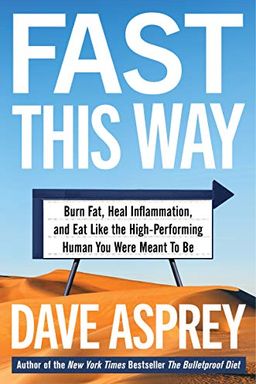
Fast This Way cover

Fast This Way

by Dave Asprey

Fast This Way offers a fresh perspective on fasting, using cutting-edge science and personal insights to guide readers toward sustainable practices. This book reveals how fasting can enhance health, boost self-discipline, and foster personal transformation.

Fasting as Liberation and Biological Mastery

What if going without food could make you stronger, clearer, and freer? In Fast This Way, Dave Asprey reframes fasting from an act of deprivation into a toolkit for reclaiming control of your biology and psychology. His central claim is that fasting—done intelligently and compassionately—unlocks energy, sharpens focus, rewires habits, and extends longevity. The book combines ancient spiritual wisdom with modern biochemistry and behavioral science, arguing that the fasted state is your biological default, not a punishment.

Asprey opens with the story of his four-day vision quest in a cave in the Sonoran Desert, guided remotely by a shaman named Delilah. Alone with only water, he confronted the emotional panic that arises when you go without food. The revelation: cravings are not hunger. Hunger is biological; craving is learned fear. That insight becomes the book’s animating principle—fasting frees you from the illusion that you must respond to every internal signal as if it were an emergency.

The science of cellular renewal

Beyond his personal story, Asprey brings forward the molecular mechanisms that make fasting effective. When you fast, insulin and glucose drop, autophagy activates (the body’s recycling program), mitochondria repair themselves, and ketones fuel clean energy for your brain. He ties this cascade to studies from Duke, Scripps, and MIT showing that fasting enhances NAD+, stem-cell renewal, and metabolic flexibility. In essence, fasting gives cells the space to perform maintenance instead of constantly digesting and storing.

Metabolic flexibility and energy intelligence

Metabolic flexibility—the ability to switch between burning glucose and fat—is the hallmark of a healthy system. Most people today run purely on sugar; fasting retrains the body to burn fat and produce ketones when glucose is absent. Asprey compares this to upgrading your phone to charge from multiple sources, freeing you from biological dependency on constant snacks. MCT oil, particularly C8 (Brain Octane), acts as an accelerant, quickly converting to ketones that sustain focus while keeping you metabolically fasted.

Psychological and spiritual reframing

Fasting also exposes the emotional scripts beneath our habits: fear of scarcity, loneliness, anxiety, and social pressure. Asprey uses fasting as a training ground for self-awareness. Practices like dopamine fasting—stepping away from phone notifications or streaming—mirror the food fast’s mental challenges. By tolerating absence, you increase self-trust. Ritual or group fasts enhance connection rather than deprivation, as shared experience triggers oxytocin and reduces inflammation (supported by studies from Brunel and Surrey Universities).

A circadian and evolutionary reset

Fast This Way reminds you that eating and sleeping are biological rhythms governed by ancient light-dark cycles. Aligning meal timing with daylight improves sleep and energy through circadian cues regulated by the suprachiasmatic nucleus. Asprey’s “circadian reset” pairs morning light exposure, early meals, and no late-night snacks to restore the body’s natural repair cycle. (He notes that fasting during sleep is the original biological fast.)

Ancient roots and modern adaptation

Cultural fasting traditions—from Ramadan to Lent, Hindu vratas, and vision quests—serve as historical precedent. Asprey channels their essence but engineers a modern version: flexible, data-driven, and emotionally intelligent. Rather than an all-or-nothing ordeal, fasting becomes adaptive—a personal science experiment in hormesis (beneficial stress). Done intentionally, it tunes both mitochondria and mind toward resilience.

Core message

Fasting is not about discipline through suffering—it’s about freedom through understanding. You learn that you are not ruled by hunger, you are guided by awareness. When you fast this way, you experience not deprivation but mastery.

By merging neuroscience, cellular biology, psychology, and ancient tradition, Asprey reframes fasting as a multidimensional upgrade protocol—for your cells, your focus, your emotions, and your spirit. Across the chapters ahead, you learn biohacks to make fasting painless, psychological tools to dissolve cravings, and practical rituals to align body and mind with resilience and gratitude.


The Biology of Fasting

Fasting works not by magic but through measurable biochemistry. At the molecular level, fasting lowers insulin and glucose, initiates autophagy (your cell’s recycling mechanism), raises ketones, and triggers longevity genes. These shifts allow the body to prioritize repair over storage—essentially a metabolic reboot. Asprey integrates findings from Scripps, Duke, and MIT to show how these mechanisms converge on reduced inflammation, improved mitochondrial efficiency, and slower cellular aging.

Autophagy and repair

Autophagy literally means self-eating—your body’s version of spring cleaning. During fasting, lysosomes break down damaged proteins and recycle them into amino acids. Asprey explains that autophagy becomes pronounced after roughly 16–24 hours and peaks between 36–72 hours. This is the zone where deep cellular repair occurs, explaining why multi-day fasts often produce clarity and lightness once past initial discomfort.

Ketones and clean energy

Ketones—beta-hydroxybutyrate and acetoacetate—are high-octane fuel molecules your liver produces during fasting. They generate energy more cleanly than glucose and reduce oxidative stress. According to Satchidananda Panda’s work at the Salk Institute, they also sharpen cognition. Asprey calls this “keto clarity”—the mental brightness that often replaces the sluggishness of sugar dependence.

Stem cells and longevity chemistry

A 24-hour fast at MIT was shown to rejuvenate intestinal stem cells, demonstrating fasting’s regenerative ability. Simultaneously, NAD+ and sirtuins (SIRT3 in mitochondria) rise, activating anti-aging pathways. Asprey positions this as controlled hormesis—stress applied with purpose. Just like muscle adaptation after a workout, fasting repairs you stronger than before when you refeed wisely.

Key takeaway

At the cellular level, fasting reprograms the body from constant consumption to intelligent maintenance, translating short-term discomfort into long-term vitality.

You can leverage this biology by combining short intermittent fasts (12–16 hours) with occasional longer fasts (24–72 hours) to stimulate repair without burnout. This way, fasting becomes a biochemical ally rather than an endurance test.


Training Flexibility: Stages and Styles

Asprey divides fasting into practical stages and interchangeable styles so you can choose what works for you rather than submit to doctrine. He defines fasting as progressive adaptation: you move gradually from Stage Zero (just pausing snacks) to multi-day fasts, each step building metabolic resilience. The key is cycling styles for balance, just as athletes vary training loads.

Stages of fasting

Stage Zero covers the 3 hours after eating—your body is digesting and insulin is high. Stage One (4–16 hours) includes the classic 16:8 fast, ideal for beginners. Stage Two (24 hours or one meal a day) deepens autophagy but shouldn’t be daily. Stage Three (36–120 hours) triggers major ketosis and cell cleanup, requiring electrolytes. Anything beyond five days falls into Stage Four and should be supervised, as intense detox and electrolyte imbalance can occur.

Styles of fasting

  • 16:8 intermittent fasting
  • Bulletproof fasting (fat-only mornings to ease cravings)
  • 5:2 or alternate-day fasting
  • Fasting-mimicking or protein-fast days (<15g protein)

Cycling these methods teaches metabolic flexibility. Constant, rigid fasting confuses hormones; variation signals safety and adaptability. The ultimate goal: a body that effortlessly toggles between fuel sources and recovers quickly.

Guiding principle

Treat fasting not as religion but as rhythm. The value lies in metabolic conversation, not permanent restriction.

By experimenting with stages and styles, you create personalized metabolic training. You fast this way, not anyone else’s way.


Making Fasting Painless

Asprey insists fasting doesn’t have to feel miserable. His biohacks preserve comfort while maintaining the biochemical fast. The best-known is Bulletproof Coffee—black coffee blended with grass-fed butter and C8 MCT oil. The fat converts to ketones, curbs hunger, and avoids insulin spikes. Caffeine compounds the effect by stimulating lipolysis (fat release). The result: you stay energized and metabolically fasted while skipping breakfast.

Prebiotic fiber and gut support

Small amounts of soluble fiber like acacia gum or larch arabinogalactan can feed gut bacteria without breaking the fast. Mixed with MCT, these fibers ease hunger and nourish the microbiome, which in turn produces beneficial short-chain fatty acids such as butyrate. This maintains digestive health during long fasts.

Managing toxins and hydration

When fat cells release stored toxins, you may feel ‘keto flu.’ Activated charcoal binds lipopolysaccharides and other compounds to reduce inflammation. Electrolytes—sodium, magnesium, potassium—prevent fatigue and palpitations, particularly beyond 24 hours of fasting. These interventions turn willpower challenges into biochemical fine-tuning.

Avoiding kryptonite foods

Even outside fasts, what you eat determines how easily fasting feels. Asprey singles out seed oils, processed dairy, gluten-containing grains, and cheap emulsifiers as kryptonite foods that inflame the gut and disrupt hormonal balance. Removing them creates smoother fasts and clearer thinking.

Actionable lesson

You don’t need to suffer to fast effectively. Strategic biohacks let your biology do the hard work while your mind stays calm and nourished.

This approach transforms fasting from a motivational battle into a sustainable lifestyle practice that works in modern life.


Psychology and Mindset Shifts

In Fast This Way, fasting extends far beyond food—it becomes a lens for mastering cravings, habits, and thought patterns. You learn to observe discomfort without reacting. Asprey borrows principles from Stoicism and behavioral design: your language and self-talk shape whether a fast feels empowering or punishing.

Cravings and dopamine control

Cravings often mask emotional or sensory needs. Dopamine fasts (as coined by Cameron Sepah) and media abstinence train your brain to be calm in absence. By delaying gratification—whether food or phone notifications—you strengthen the neural circuits of patience. Asprey’s anecdote of leaving his phone off until after dropping his kids illustrates this reconditioning.

Language as a fasting tool

Words can fast, too. Asprey advises replacing weak phrases like “I can’t” or “I need” with empowered ones: “I choose.” Adding “...or I will die” to every “need” statement exposes most desires as wants. You build inner authority by adjusting your language, much like Stoic exercises from Epictetus and Marcus Aurelius that train rational detachment.

Fear and self-awareness

The desert vision quest remains this lesson’s metaphor. Alone with hunger, Asprey realized his panic was an amygdala reflex, not real danger. By “fasting from fear,” you learn courage—the ability to act despite discomfort. This mirrors the Stoic principle: it’s not events that disturb you, but your judgments of them.

Practical reflection

Try fasting from social media for one morning and from negative words for one day. Watch how your mood, patience, and power shift. Small linguistic and digital fasts strengthen willpower for deeper physical ones.

Here fasting becomes psychological self-engineering: by changing your inner story, you change how easily your body follows.


Applying Fasting for Performance and Longevity

The ultimate aim of Asprey’s approach is long-term vitality—physical, mental, and even spiritual. Fasting orchestrates multiple systems to reduce inflammation, protect mitochondria, improve brain function, and lengthen healthspan. It acts as an accessible, repeatable intervention for chronic modern stress.

Longevity mechanisms

Chronic inflammation accelerates aging and disease. Fasting lowers inflammatory cytokines, boosts antioxidant defenses, and enhances mitochondrial respiration. This combination, coupled with sirtuin activation, may explain why intermittent fasts correlate with reduced risks for heart disease and neurodegeneration. Research by Mark Mattson and Valter Longo supports the neuroprotective role of BDNF elevation during fasting, improving memory and resilience.

Training and hormetic stacking

For peak performance, Asprey outlines stacking methods: fasted HIIT, blood flow restriction exercise, and hot-cold therapy. These controlled stressors trigger rapid adaptation. HIIT produces testosterone and growth hormone surges. Saunas and cold plunges induce heat-shock proteins and hormetic resilience—an idea supported by Finnish studies on sauna frequency and reduced all-cause mortality.

Circadian alignment and sleep

Aligning fasts with daylight optimizes sleep cycles and glymphatic brain cleansing. Asprey’s light-based “circadian reset” protocol demonstrates how feeding times interact with light exposure to anchor deep sleep. Avoiding food after dusk supports nighttime repair, a crucial longevity lever.

Tailoring fasting for women

Asprey emphasizes gender-specific strategies: women respond differently due to fertility prioritization. Alternate-day fasting, fat-only mornings, and shorter fasting windows (12–14 hours) maintain hormonal balance. Pregnant or breastfeeding women should not fast, while postmenopausal women often adapt easily.

Final insight

Fasting becomes longevity training: a practice of strategic stress, disciplined rest, and mindful refeeding that harmonizes your energy systems for a fuller, healthier life.

To fast this way is to live by design—cycling nourishment and emptiness, activity and stillness—so that your body, brain, and spirit align toward enduring strength.

Dig Deeper

Get personalized prompts to apply these lessons to your life and deepen your understanding.

Go Deeper

Get the Full Experience

Download Insight Books for AI-powered reflections, quizzes, and more.