
Idea 1
How Fast Food Reshaped America and the World
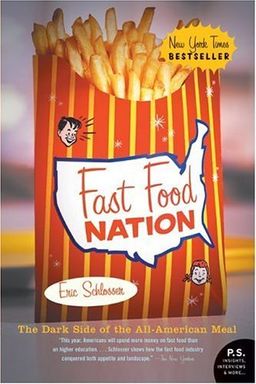
When you look at a McDonald’s on the corner or a Burger King off the highway, you’re seeing more than just a restaurant — you’re seeing a system that changed how America eats, works, builds, and imagines convenience. In Fast Food Nation, Eric Schlosser argues that the rise of fast food profoundly transformed not only diets but also economics, labor, and culture. He explores how this model of speed, uniformity, and predictability became a blueprint for organizing modern life.
The birth of McDonaldization
Schlosser traces the roots of this transformation to the McDonald brothers and Ray Kroc. The brothers’ Speedee Service System turned a kitchen into an assembly line; Kroc replicated it through franchising and relentless standardization. With QSC&V — Quality, Service, Cleanliness, Value — as his mantra, Kroc institutionalized a way of thinking about efficiency that soon escaped its restaurant origins. The Golden Arches became a guiding symbol of sameness, recognized across continents and languages.
Franchising: freedom and control
Franchising is the business backbone of fast food, but Schlosser shows how it trades autonomy for predictability. Franchisees buy into the dream of independence yet discover contracts tilted toward the parent company. McDonald’s and similar chains earn profits not just from burgers but from rent, fees, and the centralized purchase of ingredients. Harry Sonneborn’s real estate model — making McDonald’s landlord to its franchisees — created a system where ownership rarely means control. Carl Karcher’s rise and fall at Carl’s Jr. reveals this double-edged reality: success built on scale that ultimately undermines individual power.
Children as lifelong customers
Schlosser brings marketing into sharp focus, especially how corporations targeted the youngest consumers. Ronald McDonald rivals Santa Claus in recognition; playgrounds and Happy Meals turn selling into storytelling. Marketers like James McNeal developed techniques to stimulate “pester power,” encouraging children to nag parents into purchases. Partnerships with Disney and Coca-Cola extended these strategies into schools, where budget-starved districts traded ad space for cash. From Pizza Hut’s Book It! program to soda contracts negotiated by Dan DeRose, public education became a corporate marketplace.
Behind the counter
Fast food’s efficiency also rests on its labor model. Schlosser describes teenage workers in Colorado Springs learning repetition, not skill. Automated fryers and cash registers compress training to minutes, creating an ideal of “zero training.” The result is a workforce of young and low-wage employees with little upward mobility. Turnover and federal hiring credits keep this structure profitable while reinforcing instability. You get throughput — volume and speed — but lose human development.
Engineering taste and supply
The book’s deeper chapters reveal that taste itself has been industrialized. The frozen french fry, pioneered by J. R. Simplot, epitomizes this transformation: an agricultural revolution in Idaho linked to McDonald’s 1966 decision to standardize fries globally. The flavor industry — from International Flavors & Fragrances to Givaudan — designs the invisible chemistry that makes processed food irresistible. When you savor a strawberry shake or fry, you’re responding to laboratory formulations crafted to evoke nostalgia, not nature.
The cost of scale
Scale reshaped meatpacking as well. Independent ranchers gave way to enormous feedlots and processors like ConAgra and IBP. The farmer’s share of food dollars shrank as corporate consolidation expanded. Rural towns hollowed out, ranchers like “Hank” faced despair and debt, and the culture of independent agriculture faded. Inside slaughterhouses, the same pursuit of throughput produced danger: amputations, toxic cleaning chemicals, and E. coli contamination. The push for speed created both invisible suffering and nationwide health risks.
Regulatory retreat and corporate dominance
Schlosser situates these problems within a policy history of deregulation. The Streamlined Inspection System for Cattle (SIS-C) let packers inspect their own meat, weakening federal oversight. Outbreaks like the Jack in the Box tragedy exposed how political appointments and lobbying hollowed out safety structures. When contamination occurs, the USDA lacks power to compel recalls — companies like Hudson Foods negotiated voluntary withdrawals while sick customers waited. Information about retailers and affected consumers often remained secret.
Technology and accountability
The book distinguishes genuine reform from technological cover-ups. While industry promoted irradiation and steam pasteurization as fixes, Schlosser contrasts those with David Theno’s reforms at Jack in the Box. Using HACCP prevention systems, microbial testing every fifteen minutes, and traceability to individual feedlots, Theno proved safety could be achieved for about one penny per pound of beef. The lesson: transparency and measurement, not gadgets, make food safer.
Children, global expansion, and backlash
From school cafeterias to global plazas, fast food’s reach is total. The same supply chains that feed children at home extend to Plauen, Germany, and Bombay. McDonald’s becomes a cultural ambassador — and, for many, a symbol of homogenization. Activism from the McLibel trial to José Bové’s protests shows resistance against this global system. Even crises like mad cow disease reveal how market pressure (as when McDonald’s demanded supplier affidavits) can enforce safety faster than regulatory bureaucracy.
The larger argument
Schlosser’s message is larger than fast food. He uses burgers and fries as metaphors for American economic logic — uniform, efficient, profitable, and disconnected from human scale. What began as convenience became a cultural system. The challenge he poses to you is clear: think about not only what you eat but what kind of world you help sustain each time you buy a meal.