
Idea 1
The American Invention of Private Reality
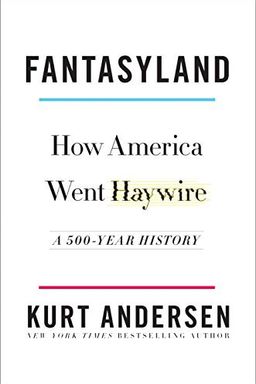
Why does the United States so often blur reality and imagination? In Fantasyland, Kurt Andersen argues that this fusion—between personal belief and shared truth—is not a recent mutation but the nation’s cultural DNA. From the Protestant Reformation through the Internet age, Americans have gradually normalized the idea that feeling can substitute for fact and that private conviction can be as legitimate as evidence. The book’s grand thesis: America became the world’s laboratory for self-invented reality.
How Protestantism planted the seed
Andersen begins the genealogy in 1517, when Martin Luther’s Ninety-Five Theses cracked centralized authority and distributed interpretive power to individuals. Once ordinary believers were told they could read and interpret Scripture themselves, faith became personal epistemology. The printing press multiplied this effect exponentially: millions could now hold and examine sacred texts, making religious truth a private experiment. In Puritan New England, that ethos hardened into cultural principle—every person a priest and every conviction potentially divine. (Note: This is arguably the first large-scale model of decentralized truth.)
A new world—and a marketing of dreams
The American colonies amplified that belief impulse with entrepreneurial optimism. Promoters like Richard Hakluyt and Sir Walter Raleigh sold America not as geography but fantasy: Eden reborn, gold mines awaiting discovery, divine destiny on sale. Jamestown settlers banked on miraculous reward rather than toil. This promotional faith became structural—America was conceived through advertising, attracting dreamers ready to believe whatever sold hope. Andersen calls this the first industrial use of fantasy as mobilization tool.
Puritan contradictions and the birth of hysteria
New Englanders mixed ferocious intellect with supernatural fervor. Cotton and Increase Mather, Harvard-trained scholars, preached apocalyptic expectation. Salem’s witch trials revealed the dark symbiosis between literacy and literalism: rational systems were used to prove irrational claims. That paradox—educated devotion feeding fanaticism—foreshadows later American episodes when institutional sophistication coexists with mass delusion.
The contagion of revival and spectacle
From the eighteenth century onward, revivalism gave Americans a repeatable script for ecstatic belief. Camp meetings and jerking conversions demonstrated emotional truth as social proof. By the nineteenth century, Joseph Smith’s Mormon revelations and the explosion of quack medicine crystallized two parallel economies—religious and commercial—built on conviction over evidence. Technology and mass print multiplied reach: sermons and patent-cure ads used identical rhetorical tools. Belief was professionalized, franchised, and monetized.
Show business as mainstream theology
Barnum’s humbug and Buffalo Bill’s Wild West shows codified spectacle as national entertainment. They taught audiences to relish—and pay for—fiction dressed as fact. World’s fairs proved that simulated authenticity could feel civic. The culture learned that well-produced unreality was not deception but delight, preparing the country for its twentieth-century metamorphosis into an entertainment society. (Note: Andersen likens this to America’s secular religion—belief in the power of self-made myth.)
The 1960s explosion and the relativist aftermath
Then came the cultural Big Bang: psychedelics, Esalen, and academic theories that made truth feel multiple and negotiable. LSD and Leary offered inner revelation; Kuhn and Feyerabend offered intellectual permission—science itself as story. The result was social liberation joined to epistemological looseness: an age where every reality could be valid if sincerely felt.
Fantasy institutions—theming, entertainment, and digital belief
From Disneyland’s Main Street USA to themed malls and casinos, America remade physical life into consumable spectacle. Theming blurred commerce and nostalgia, so civic memory became curated fantasy. Meanwhile, television politics and reality shows fused governance with performance. Finally, the Internet industrialized belief itself—virality rewarded sensational claims, and conspiracies multiplied into algorithmic cults.
The final convergence
By the twenty-first century, the separate strands—religious DIY, entrepreneurial optimism, show-business realism, relativist philosophy, and digital amplification—merged into one cultural complex. Andersen’s verdict: America’s genius and madness stem from the same habit. You are free to invent meaning, but in Fantasyland that freedom metastasizes into alternate realities that govern politics, science, medicine, and daily life. Understanding this lineage helps you see how belief without boundaries became the nation’s most enduring export.