
Idea 1
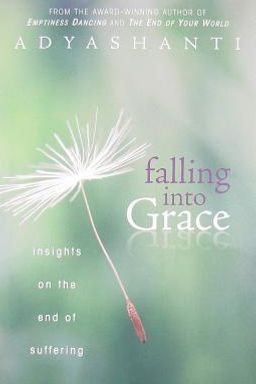
Falling into Grace: The Path Beyond Suffering
Have you ever wondered why, no matter how hard you try, lasting peace and happiness always seem to slip away? In Falling into Grace, Adyashanti argues that true freedom isn’t achieved by striving, fixing, or controlling life—it’s found by surrendering to the flow of existence itself. Rather than escaping suffering, he contends that awakening arises when we stop resisting reality and learn to fall—fully and consciously—into the grace that’s ever-present beneath life’s turbulence.
Adyashanti, a California-born spiritual teacher influenced by Zen Buddhism and Advaita Vedanta, offers a direct and accessible guide to liberation. He suggests that suffering persists because we believe our thoughts are reality, live from the ego’s illusion of separation, and argue endlessly with “what is.” His core message: stop trying to manage life and open to the infinite quiet and grace that have always been here. This isn’t about mysticism or dogma—it’s an invitation into direct experience, into the freedom that begins when we genuinely stop struggling.
The Human Dilemma
Adyashanti begins with what he calls the “great human dilemma.” As children we witness adults trapped in endless conflict and stress, and we slowly adopt their madness: we begin believing our thoughts are true. One day we internalize this way of seeing and start living as if our mind’s concepts define reality. From that moment, our suffering begins. The author recalls, even as a boy, seeing adults argue and thinking, “They’re insane—they believe their thoughts!” This simple insight forms the foundation of his entire teaching.
Grace as the Doorway to Truth
Grace, in Adyashanti’s world, isn’t religious favor or divine luck—it’s the living presence that floods in when you stop knowing. When you no longer cling to concepts, a mysterious openness appears. It can come in beauty or tragedy; a painful breakup or illness can open you the same way as a sunset or prayer. Grace is what remains when all effort ends. It isn’t earned—it’s revealed when the “self” collapses.
(In a parallel to Eckhart Tolle’s The Power of Now, Adyashanti emphasizes that grace and awakening occur when resistance dissolves into presence. Yet unlike Tolle’s method of ‘watching thoughts,’ Adyashanti invites you into the emotional surrender of falling—allowing yourself to be defeated by life until peace reveals itself.)
Why Simplicity Heals
Though his language is poetic, Adyashanti insists that awakening is simple. Complexity belongs to the mind, not reality. In his experiences teaching thousands of seekers, he’s seen that the most powerful truths are the simplest: suffering is resistance; freedom is openness; grace arrives when you stop clinging to what you think you know. The mind may argue, “That’s too easy,” and endlessly chase enlightenment techniques, but the essence of awakening is available right now—when you stop.
Why These Ideas Matter
In a world dominated by self-help promises and strategies for control, Adyashanti’s call to surrender feels radical. He suggests that humanity’s suffering won’t end through reforms, ideologies, or perfect habits—only through awakening at the individual level, which then ripples into collective transformation. When you stop arguing with what is, life ceases to be an enemy, and compassion arises naturally. Through this awakening, we rediscover the love and clarity that are already here, beneath the constant mental noise.
“The end of suffering is not an achievement—it’s a fall, a surrender, a letting go into what has always been present.”
What follows throughout the book are explorations of how suffering begins, how to awaken from the dream of ego, and how grace works through fear, emotion, and ordinary life. Adyashanti guides us through the mechanics of belief, emotional release, stillness, and love—not as theories, but as lived experiences. Ultimately, Falling into Grace is both a map and an invitation: to stop searching for freedom and discover the peace that’s quietly waiting at the center of now.