
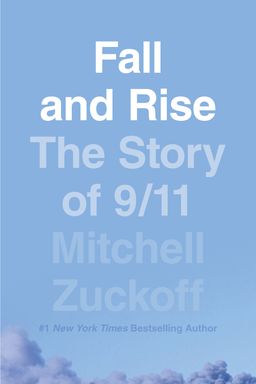
Fall and Rise cover

Fall and Rise

by Mitchell Zuckoff

Fall and Rise provides an intimate look at September 11, 2001, through remarkable stories of courage, survival, and loss. Mitchell Zuckoff delves into the meticulous planning of the attacks and the heroic responses, reminding us of the resilience of the human spirit.

The Day That Changed History

How can you grasp a day that split the world into before and after? In Fall and Rise: The Story of 9/11, Mitchell Zuckoff reconstructs the events of September 11 not through numbers or abstractions but through names, faces, and decisions. He contends that the only way to understand the day is to see it lived as ordinary life interrupted: people starting commutes, boarding flights, and answering phones. The book is both a memorial and a case study in complexity — how systems, structures, and individual choices intertwined to create an unimaginable outcome.

Zuckoff’s narrative nonfiction approach blends meticulous reporting with moral empathy. He structures the day across three movements: fall from the sky (the hijackings and collapses), fall to the ground (human survival, courage, and rescue), and rise from the ashes (grief, rebuilding, and remembrance). You journey from kitchen breakfasts to cockpit fights, from stairwells and firehouses to memorial pools and courtrooms. Each scene makes the abstract personal, each name turns loss into memory.

The human focus and moral method

The book opens not with terror but with people. You meet pilot John Ogonowski feeding Cambodian farmers on his land, flight attendant Betty Ong calmly reporting seat numbers during the hijacking, and passengers like Tom Burnett who turn communication into resistance. Each life becomes a doorway into the larger tragedy. Zuckoff began by profiling six people for the Boston Globe; this book expands that mosaic until it feels like a national portrait — a collective biography of an ordinary morning turned epochal.

(Note: This mirrors the approach of Lawrence Wright’s The Looming Tower, but Zuckoff’s goal is emotional rather than analytical — he reconstructs how the day felt rather than why it happened.) You see the human stakes of every system failure, every act of courage. He doesn’t invent dialogue but draws from calls, cockpit transcripts, and eyewitness interviews, respecting the line between storytelling and history.

Systems, failures, and fractures

Behind the human faces lies systemic failure. Al‑Qaeda’s Hamburg cell — Mohamed Atta, Marwan al‑Shehhi, Ziad Jarrah, and others — exploited bureaucratic silos that kept intelligence agencies from sharing watchlists. Airport screening was designed for negotiation-based hijackings, not suicide missions. Military defenses like NORAD and NEADS had too few alert sites and outdated protocols. Controllers at Boston and New York Centers acted bravely but lacked coordination tools. These gaps form a tragic lattice: intelligence missed leads, security misread signals, and air defense misinterpreted events until four planes had already become weapons.

Zuckoff does not assign blame narrowly; he shows that institutional blind spots and cognitive frames were exploited by attackers who understood them. The mental model of terrorism — that hijackers wanted demands, not death — shaped procedures that proved fatal. The lesson is systemic humility: crisis often reveals how partial information leads to total failure.

Architecture and vulnerability

The towers themselves were feats of efficiency and symbols of vulnerability. Their lightweight floor trusses, limited stairwells, and sprayed fireproofing optimized rentable space but reduced redundancy under fire. When Flight 11 and Flight 175 struck, jet fuel and combustibles stripped insulation and prolonged intense heat. Fire didn’t melt steel; it weakened it. Sagging floors transferred loads until the buildings’ reserve capacity gave way. The delay before collapse — nearly an hour — became the window in which thousands escaped or perished. Structure and design became central characters in a grim physics of endurance and failure.

Choices, courage, and chaos

From Betty Ong’s phone call to Rick Rescorla’s evacuation orders, the book captures courage as a series of small, moral calculations. Firefighters and passengers acted with clarity despite confusion. In Shanksville, volunteers processed wreckage with solemn skill. At the Pentagon, Navy doctor Dave Tarantino leg-pressed a desk to free a colleague amid fire. You see how leadership manifests not in hierarchy but initiative — when people act despite uncertainty. The day’s chaos and communication breakdowns, from failed repeaters to mixed evacuation orders, magnified tragedy and tested human resilience.

Aftermath and remembrance

Zuckoff ends where the story continues: with grief, memorials, and long consequences. Families identify remains through DNA fragments; communities like Shanksville build memorials of stewardship. The National September 11 Memorial & Museum in New York turns loss into civic remembrance; the Pentagon’s Phoenix Project rebuilds as resilience embodied. Later pages extend to wars, health crises among first responders, and enduring public memory. The moral conclusion is that history’s passage threatens empathy, and storytelling restores it. You close the book aware that the fatalities of 9/11 extend across decades — in disease, trauma, and the persistence of memory itself.

Central insight

Zuckoff argues that remembrance requires specificity: real names, real hours, real voices. When history becomes human again, empathy becomes durable. Through narrative precision and human focus, Fall and Rise transforms 9/11 from an event to a lived experience — asking you not just what happened, but who it happened to, and what that memory obliges you to preserve.

By combining granular detail with sweeping consequence, the book becomes both ledger and elegy: a chronicle of ordinary lives, systemic flaws, and enduring courage. It reminds you that tragedy does not erase humanity; it reveals it.


Lives Interrupted

Before impact and flames, Zuckoff grounds you in morning rituals. From Ron Clifford’s ferry ride and Stan Praimnath’s desk prayer to Elaine Duch buying her first cellphone, people live unremarkable hours that define what is later lost. These portraits of ordinary Americans — pilots, waiters, executives, small-town EMTs — transform catastrophe into a mosaic of daily life. You feel the weight of coffee cups, bagels, and children’s birthdays before the towers fall. The ordinariness builds empathy and anchors every later choice about evacuation, rescue, and survival.

Everyday humanity

The book juxtaposes Manhattan offices with rural homes, showing how the same serene morning stretched from Lower Manhattan to Shanksville. In Pennsylvania, Terry and Kathie Shaffer argue about a cellphone hours before becoming first responders to Flight 93’s crash. In New York, firefighters check equipment for routine calls, not realizing they are minutes from history. This cross-section — blue-collar and executive, urban and rural — universalizes the day’s trauma. It reminds you that large events begin as personal interruptions.

Faces that define memory

Names recur like refrains: Brian Clark, who helped Stan Praimnath survive; Jay Jonas, whose Ladder 6 team lived through the collapse; Elaine Duch, severely burned but alive to testify later; CeeCee Lyles, who called her husband from United 93. You remember these details because Zuckoff wants you to feel the personal texture of tragedy — not anonymous numbers but people caught mid-routine. These moments form the foundation for courage and failure alike.

Key insight

Ordinary life is the emotional lever of history. When you meet people before the disaster, you measure the magnitude of what followed through their absence.

The point of these early sections is empathy as method: you understand catastrophe best when it is described from kitchens and coffee counters rather than databases and dates.


The Plot Behind the Planes

While victims began their mornings, another set of people executed a multi-year plan. The Hamburg cell — Mohamed Atta, Marwan al‑Shehhi, Ziad Jarrah, and Hani Hanjour — trained in American flight schools, funded through low-profile channels, and joined Saudi 'muscle' recruits. Their mission, conceived by Khalid Sheikh Mohammed and approved by Osama bin Laden, aimed to weaponize civilian aircraft against symbolic American targets. Zuckoff shows how ideology and logistics intertwined: a fatwa in 1998 legitimized killing Americans, and systematic training turned fanatic vision into operational execution.

Designing the attack

Bin Laden scaled Khalid Sheikh Mohammed’s ten-plane ambition down to four to maximize plausible success. The plan’s genius — and horror — was its simplicity: synchronized hijackings on transcontinental flights departing within minutes, guaranteeing high fuel loads and national confusion. Atta’s leadership unified timing and tactic; seat selection near cockpits and use of box cutters leveraged aviation routines against themselves.

Why it succeeded

The plot’s success hinged on exploiting institutional assumptions. Aviation security expected negotiation, not suicide missions. Intelligence agencies siloed information. The Hamburg members blended as Western students, benefiting from cultural familiarity. This design mirrored the concept of asymmetric warfare: low-cost, high-impact methods using open societies against themselves.

Operational takeaway

Understanding how the plot evolved shows how small networks exploit systemic trust. Zuckoff invites you to see terror as process, not just outcome — patiently cultivated, bureaucratically invisible until it detonates.

The architecture of the plot tells you that modern vulnerability is social: openness and bureaucracy together create fertile ground for tragedy when imagination fails to match threat.


Failure and Confusion

When you follow the day through Zuckoff’s meticulous timeline, you see how confusion amplified impact. The FAA, NORAD, and NEADS exchanged incomplete coordinates as transponders went dark; fighters scrambled to the wrong locations; protocols presumed negotiation. On the ground, 9‑1‑1 operators lacked full situational briefings, and tower public-address systems contradicted each other — some ordering evacuation, others urging calm. Radios failed inside skyscrapers, making brave leadership functionally isolated. Each institution acted rationally within its frame, but those frames were obsolete. The result was tragic fragmentation: heroic effort amid systemic disarray.

Technical and command breakdowns

Air controllers operated separate radar feeds from the military; transponder codes vanished (7500 for hijack unused). NEADS commanders like Major Kevin Nasypany improvised, ordering fighter scrambles without confirmed targets. At the Pentagon, confusion about shootdown authority reflected ethical paralysis — who decides in seconds whether to kill civilians to save thousands? Meanwhile, FDNY repeaters malfunctioned, pausing critical evacuation messages. Communication, both electronic and human, became the defining theme of failure.

Lesson in systems

Complex systems often fail silently, not catastrophically — until crisis exposes them. Zuckoff’s reconstruction shows that coordination requires imagination equal to adversary innovation.

When read together, these failures compose a cautionary study in institutional learning: knowledge distributed across silos becomes useless in action. The tragedy teaches the cost of fragmentation in both information and empathy.


Fire, Collapse, and Human Decisions

After the planes struck, engineering met ethics. The towers’ design — exterior columns, lightweight floor trusses, and three stairwells clustered in the core — turned architecture into destiny. Jet fuel cascaded, igniting floor-by-floor fires that stripped insulation and weakened steel. Fire didn’t melt the towers; it undermined their strength until gravity completed the collapse. For those inside, every choice — stay or flee, help or hide — became both physical and moral. Rick Rescorla defied official advice to organize evacuation and saved hundreds; others who obeyed reassuring announcements perished. Zuckoff paints these events not as mechanical but human: the architecture shaped options, but courage shaped outcomes.

Structure under stress

Impact severed thirty-plus core columns per tower; fires burned hot and long, redistributing loads. Floor by floor, trusses sagged, transferring more weight until progressive collapse began. Those minutes of delay allowed thousands to escape, giving tragedy its paradoxical grace: design flaws and strengths intertwined. You see why engineers later studied compartmentalization and fireproofing systems as moral as well as technical lessons.

Choices amid danger

Brian Clark and Stan Praimnath’s encounter symbolizes chance and compassion: one trapped, one reaching through debris, both surviving by faith and luck. Welles Crowther’s red bandanna becomes a symbol of altruism. Frank De Martini’s team rescued dozens before collapse. The North Tower’s Stairwell B survivors — Jay Jonas and Josephine Harris — embody endurance under entombment. You witness that heroism thrives not from perfection but persistence.

When fire and physics meet human judgment, the result becomes moral architecture — an ethic of not leaving one another behind, even when stone and steel fall.


Courage and the Pentagon Response

At 9:37 a.m., Flight 77 hit the Pentagon, turning a hub of command into a battlefield. Zuckoff transforms its corridors into scenes of rescue: Navy officers Dave Tarantino and Dave Thomas crawling through smoke to free Jerry Henson, Lieutenant Colonel Marilyn Wills guiding wounded peers, and medical teams converting AE Drive into makeshift triage. Their discipline under fire demonstrates institutional courage at its purest — improvising under hierarchy.

Improvisation as doctrine

Military training stresses procedure, yet survival demanded invention. The Pentagon rescuers used muscle memory and moral clarity to act immediately. Their acts — leg‑pressing desks, dragging survivors, organizing treatment zones — read like combat snapshots. Later, the Phoenix Project rebuilt the struck wedge within a year, with design changes like low-level exit lighting and reinforced walls. Rebuilding became proof that resilience can be architectural.

Parallel responses in Shanksville

In Shanksville, the heroes were volunteers: Terry Shaffer, Rick King, and coroner Wally Miller managing a crash scene scattered across fields. Their work moved from rescue to recovery, sustaining dignity amid ruin. The contrast with the Pentagon’s scale reveals the same underlying value — initiative from ordinary citizens.

Shared truth

Institutional and community courage differ in form but converge in purpose: protecting life and memory under chaos.

These parallel stories remind you that preparedness and passion are on a continuum — whether military professionals or small-town volunteers, the capacity to act defines heroism.


Flight 93 and Defiant Agency

The saga of United Flight 93 offers the book’s most stirring embodiment of agency. Passengers learned through phones and onboard conversations that other planes had hit buildings. Their decision — to fight — transformed victims into actors. Todd Beamer, Tom Burnett, Mark Bingham, and Jeremy Glick merged fragments of information into a deliberate plan: breach the cockpit, use a beverage cart as a battering ram, and prevent another strike on Washington. The cockpit voice recorder captures struggle, screams, and determined courage. Their revolt ended in Shanksville at 10:03 a.m., sparing countless lives.

Communication makes courage

The passengers’ calls reveal the power of information under duress. Ed Ballinger’s ACARS messages, 9‑1‑1 connections, and loved ones’ relayed updates formed a distributed intelligence network that outperformed official channels. Where institutions failed to coordinate, ordinary people did. Their choice — knowing the probable outcome — embodies moral autonomy.

Legacy and remembrance

Shanksville’s later memorial — envisioned by Kathie and Terry Shaffer and Donna Glessner — preserves that moment as civic faith. Families turned grief into stewardship; the town became custodian of courage. The Flight 93 Memorial celebrates decision-making under despair.

Moral of resistance

When communication empowers ordinary people, collective courage becomes the strongest defense. Flight 93 proves information can transform helplessness into history.

Through this lens, Zuckoff teaches that heroism is possible even without hierarchy — an insight that radiates across every page of the book.


From Grief to Memory

In the aftermath, Zuckoff turns from destruction to endurance. Families seek pieces of loved ones — bone fragments, rings, ID cards — and build memorials that turn private grief into public remembrance. Ron Clifford buries sister Ruth and niece Juliana in Ireland; Lee and Eunice Hanson receive their son’s remains years later. Each recovered item, like Sonia Puopolo’s ring, becomes a symbol of continuity. Grief work blends forensic detail with ritual grace.

Public memory and design

The National September 11 Memorial in New York, the Pentagon’s rebuilt wedge, and the Flight 93 National Memorial all translate pain into permanence. Names engraved in bronze, reflecting pools at footprints, and a museum repository for remains turn loss into civic narrative. Rebuilding into One World Trade Center restores skyline and symbolism, echoing resilience over vengeance.

Continuing consequences

Zuckoff extends memory into policy and health. Wars in Afghanistan and Iraq, the 9/11 Commission’s investigations, and the rise of Ground Zero illnesses all show that catastrophe reverberates for decades. Many first responders later died from exposure-related diseases, proving that aftermaths are as real as events. The story’s final weight is temporal: 9/11 lasted years in lungs, laws, and grief.

Essential understanding

Memory is maintenance. Forgetting is failure. The book ends demanding responsibility — to keep names alive so empathy does not erode with time.

In rebuilding and remembering, a nation redefines itself. Zuckoff shows that survival includes moral duty: to witness, preserve, and learn.

Dig Deeper

Get personalized prompts to apply these lessons to your life and deepen your understanding.

Go Deeper

Get the Full Experience

Download Insight Books for AI-powered reflections, quizzes, and more.