
Idea 1
Fake Law and the Fragile Rule of Law
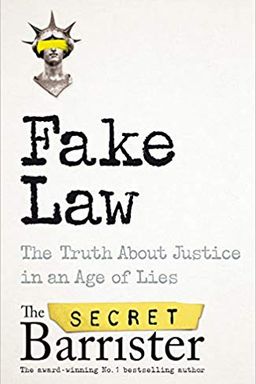
Why do so many people believe judges protect criminals, lawyers twist morality, and the legal system is broken beyond repair? The Secret Barrister argues that these beliefs are not spontaneous misunderstandings—they are manufactured illusions. In a world saturated with moral outrage and political spin, the book reveals a deeper pattern: Fake Law—the systematic distortion of legal reality. It is not just a media problem but a democratic one. If the public cannot distinguish myth from law, politicians can rewrite justice for applause rather than accountability.
What follows is an unmasking of how legal ignorance is cultivated and why it matters. Through vivid case studies—from self‑defence myths to scandals over child medical treatment and human rights “abuses”—the author dissects how public frustration has been weaponised. The book is thus both diagnosis and civic manual: it asks you to understand the structure of law, the importance of evidence and proportionality, and the role of access to justice in a functioning democracy.
The ecosystem of misinformation
Fake Law spreads through an incentive system that prizes sensationalism over truth. Journalists trim nuance for headlines; politicians translate complexity into slogans; campaign groups weaponise isolated cases. When you read about “monster judges”, “crooked asylum rulings”, or “compensation culture gone mad”, you are usually seeing fragments of truth repackaged into emotional ammunition. The famous “cat prevents deportation” story, for instance, came from a throwaway mention of a pet as one evidential factor—yet became a headline denouncing all human rights law.
Public ignorance also has structural causes. Legal databases like BAILII carry only part of the case law, most statutes online are out of date, and the language of judgments can seem arcane. Those who cannot access accurate law rely on intermediaries who often don’t understand it either. (Note: this mirrors Daniel Kahneman’s warning that when information is complex, minds default to emotional substitutes.) In that gap between complexity and emotion, myths thrive.
The democratic cost
If you believe the system is corrupt for the reasons tabloids claim, you will demand the wrong reforms. Every false outrage—over prisoners’ voting, trivial payouts, or supposed leniency—distracts from real structural decay: legal aid cuts, collapsing courts, and underfunded prosecutors. You are nudged to hate safeguards that exist to protect you. The Secret Barrister shows how “performative reforms” designed to appease headlines actually erode fairness: tougher sentences that ignore rehabilitation, shaved appeal rights, and deterrent fees that keep ordinary citizens out of court. Once you cheer those measures, you weaken your own defences against abuse of power.
Learning to see the law’s architecture
At its heart, English law depends on precedent, reasoning, and procedure—a slow accumulation of tested judgments. To see through Fake Law, you need basic legal literacy: the distinction between criminal and civil standards of proof, the difference between Parliament’s statutes and judicial interpretation, the role of appeal courts in guarding consistency. The book compares this foundation to structural engineering: you only notice it when it cracks. Understanding why the “gavel” stereotype is wrong becomes a metaphor for clearing away cinematic myths and seeing legal reality as craft, not theatre.
Key message
“Fake Law succeeds because we have forgotten what law is for.” The law’s purpose is not to guarantee popular vengeance but to calibrate fairness—between citizen and state, victim and accused, power and principle.
The book’s journey
From here, the author guides you through interconnected terrains: how myths around self‑defence and compensation warp our sense of justice; how distortion of the Human Rights Act feeds authoritarian reflexes; how the collapse of legal aid and erosion of due process turn rights into privileges; and how attacks on judges or juries corrupt the very notion of impartial law. Finally, it sketches an ambitious repair plan: public legal education, transparent courts, and an institutional watchdog to defend truth against political convenience.
If you follow this map, you will see that the crisis is not the law itself but the stories told about it. The rule of law still protects you—but only if you know what it is, and care enough to defend it.