
Idea 1
Power, Law, and the Myth of Exceptionalism
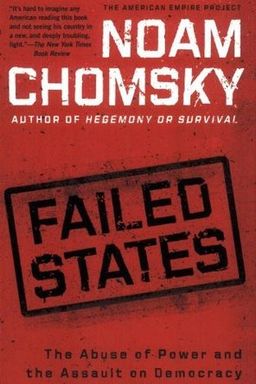
The central argument you encounter is stark: when a state claims the right to stand above the law it helped design, democracy and legality collapse into privilege. Noam Chomsky situates the United States—the self-proclaimed guardian of freedom—as a case study in how exceptionalism corrodes the international order and civic life at home. The book’s underlying claim is that the post–World War II legal architecture, founded on universality and accountability, is being unmade by those who created it.
The architecture of accountability—and its betrayal
You learn that international law’s origin lies in shared trauma after global war: the UN Charter, the Nuremberg principles, and the Geneva Conventions were meant as binding limits on state violence. Under those rules, aggression and torture are prosecutable crimes; no nation enjoys special exemption. Yet, drawing on documents and court rulings, Chomsky shows how successive US administrations rewrote definitions and evaded these limits. The 1986 International Court of Justice ruling against US aggression in Nicaragua is treated as a pivot—Washington simply rejected its jurisdiction. Later, Office of Legal Counsel memos during the Bush era crafted narrow definitions of torture (pain equivalent to organ failure) and declared Geneva Conventions ‘quaint and obsolete.’
This self-exemption forms what Chomsky calls “the single standard”: universal rules for others, discretionary exceptions for the powerful. It is not rhetorical hypocrisy but a structural pattern that turns law into an instrument of dominance rather than mutual protection.
From empire to legality gaps
Across time, the same logic recurs. The book traces early expansions—John Quincy Adams’s “security through expansion,” Andrew Jackson’s Florida campaigns—as prototypes of legal evasion under the banner of civilization and defense. Cold War doctrines, Clinton’s humanitarian wars, and Bush’s preemptive strikes repeat the pattern. Contemporary crises such as Iraq, Kosovo, and Afghanistan appear as iterations of an older imperial habit: aggression reframed as moral necessity. (Compare this to Hannah Arendt’s warning that legal exceptions become permanent instruments of tyranny.)
Consequences abroad and at home
The Iraq War section, for example, shows the practical fallout of deception and unilateralism. Fabricated intelligence on WMDs provided legal cover for invasion; when the story collapsed, the justification pivoted to ‘democracy promotion.’ The human toll—civilian casualties, destroyed infrastructure, and cultural looting—is documented alongside corruption and strategic blowback. Meanwhile, rendition, Guantánamo, and secret torture sites reveal how the legal black hole was institutionalized. These are not anomalies but expressions of systematic exemption from law.
Domestically, the book turns the lens inward. If failed states are judged by contempt for law and unaccountable leadership, Chomsky argues, the United States now exhibits those traits: secrecy, concentration of corporate and executive control, and a political system where elections serve marketing rather than popular will. Polling by PIPA and Gallup, repeatedly ignored by mass media, shows majorities favoring international cooperation, disarmament, and social welfare—yet policy persistently runs opposite. This mismatch exposes what he calls the nation’s “democratic deficit.”
The stakes—nuclear, planetary, and moral
When Chomsky turns to existential threats—nuclear policy and space weaponization—the pattern’s danger becomes literal. Pursuit of total security for one state breeds universal insecurity. Moves toward first-strike capability, unilateral missile defense, and militarization of space provoke arms races. Analysts like McNamara, Perry, and Allison concur that such doctrines make ‘apocalypse soon’ materially more likely. The erosion of reciprocity in treaties such as the Non-Proliferation Treaty mirrors the general erosion of legality.
Core message
If law ceases to bind the powerful, both global security and internal democracy disintegrate. Exceptionalism preserves domination but destroys legitimacy—and legality without universality is mere theater.
Restoring principle through action
The book closes not in despair but with practical proposals: rejoin the World Court, sign the Kyoto Protocol, relinquish the Security Council veto, and cut military spending in favor of social investment. Chomsky presents these as conservative steps to restore respect for law and public preference—hardly utopian, often backed by majority opinion. The moral logic is clear: genuine democracy means applied accountability both at home and abroad. For you, the task is not to adopt his ideology but to test your government’s conduct against the universality it proclaims. When words and deeds align, democracy recovers integrity; when they diverge, law withers, whether in Baghdad or Washington.
In sum, the book invites you to read power historically and legally: to recognize continuities of intervention, to see how doctrines like 'illegal but legitimate' normalize aggression, and to realize that defending law begins with rejecting privilege. The survival of democracy—and perhaps civilization—depends on that realization.