
Idea 1
Healing Codependence: Facing the Roots of Emotional Wounds
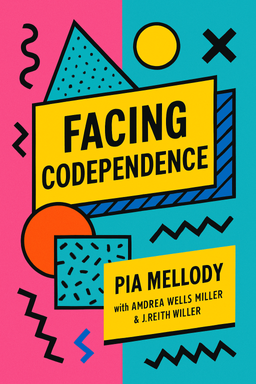
Have you ever felt that your relationships seem to revolve around other people’s emotions, while your own needs go unnoticed? In Facing Codependence: What It Is, Where It Comes From, How It Sabotages Our Lives, Pia Mellody argues that codependence is not just a pattern of unhealthy behavior—it’s a disease rooted in the emotional injuries of childhood. Through decades of counseling experience at The Meadows treatment center, Mellody developed a structured framework for understanding how dysfunctional families create adults who struggle with boundaries, self-worth, and intimacy.
According to Mellody, codependence emerges when a child’s natural development is disrupted by abuse—whether physical, sexual, emotional, intellectual, or spiritual. These early experiences generate profound shame and distort basic human capacities such as self-esteem, autonomy, and trust. The result is an adult who cannot balance giving and receiving in relationships, oscillating between control and submission. The core idea of the book is that only by facing the emotional wounds of childhood can we free ourselves from the patterns that keep us trapped in pain.
Understanding Codependence as a Disease
Mellody challenges the notion that codependence is simply a personality flaw or a tendency to care too much. Instead, she places it in the same category as addiction—a “disease of lost selfhood.” Codependents use relationships the way addicts use substances: to regulate unbearable emotions. They seek validation, control, or approval to offset deep feelings of shame and inadequacy. But this strategy only traps them in cycles of resentment and despair.
Unlike addiction, where the chemical is the culprit, the codependent’s drug is the “other person.” Mellody’s groundbreaking insight is that many people who grow up in dysfunctional families internalize this disorder even without a chemically dependent member. For them, the real addiction is to caretaking—to the illusion that if they can fix others, their own unbearable emotions will disappear.
The Five Core Symptoms of Codependence
The first part of the book defines five core symptoms that form the backbone of Mellody’s model:
- Difficulty experiencing appropriate levels of self-esteem
- Difficulty setting functional boundaries
- Difficulty owning and expressing one’s own reality
- Difficulty taking care of adult needs and wants
- Difficulty experiencing and expressing one’s reality moderately
Each of these deficits sabotages our personal growth and relationships. A person raised with inconsistent love may base all worth on pleasing others (what Mellody calls “other-esteem”), while another may swing toward grandiosity to cover inner shame. Both responses are symptoms of the same root injury: a child who learned that being authentically human was unsafe.
Childhood Origins: The Link Between Abuse and Codependence
Mellody traces these adult symptoms to childhood dynamics she calls “less-than-nurturing experiences”—a broad term encompassing everything from overt physical violence to subtle emotional neglect. She expands the concept of abuse beyond traditional definitions, arguing that even well-intentioned parenting practices (such as shaming, overprotection, or the refusal to apologize) can stunt a child’s emotional development. Such environments teach children to distrust their feelings, suppress their needs, and conflate love with control.
The cornerstone of this dysfunction is shame. When a child is told, “You shouldn’t feel that way” or is punished for mistakes, healthy shame—the awareness of imperfection—mutates into toxic shame: the belief that one is a mistake. This shame core becomes the unconscious engine driving the disease of codependence. Adults replay these early lessons through relationships that mirror their childhood abuse, a process Mellody calls “re-enactment.”
Recovery as Reparenting the Inner Child
If childhood abuse caused the problem, then recovery requires returning to that injured inner child and providing the nurturing they never received. Mellody advocates for a structured process of awareness, acknowledgment, and re-experiencing childhood feelings in a safe context. “Hug your demons,” she famously tells her clients, “or they’ll bite you.” Facing the pain is the only way to end denial and reclaim selfhood.
This approach resonates with other recovery pioneers such as John Bradshaw (Healing the Shame That Binds You), who also emphasizes inner-child work. But Mellody’s model is distinct in its specificity: she maps adult dysfunction directly onto the child’s developmental stages and provides a diagnostic structure for both understanding and healing the disease.
Why Facing Codependence Matters
For Mellody, this work is not just psychological repair—it’s a spiritual awakening. To recover from codependence means to reconnect with a Higher Power and rediscover the truth that you are “precious and perfectly imperfect.” It’s a call to move beyond the shame that has ruled your life and into emotional freedom. The courage to face one’s own history, she writes, is the first act of self-love.
“If you do not embrace what is dysfunctional, you are doomed to repeat it.”
In the pages that follow, Mellody explains how codependence manifests in daily life, how abuse forms its roots, and how recovery offers a path to wholeness. Each key idea reveals a new aspect of her model—from diagnosing the disease to healing through awareness, boundaries, and spiritual resilience.