
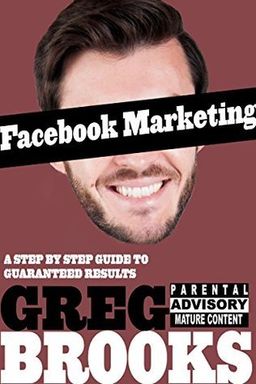
Facebook Marketing cover

Facebook Marketing

by Greg Brooks

Facebook Marketing by Greg Brooks is a definitive guide to mastering Facebook advertising. From setting up basic ads to advanced targeting techniques, this book equips marketers with the skills to craft compelling ads, optimize performance, and reach precise audiences, ensuring profitable results in the ever-evolving digital landscape.

Mastering Facebook Advertising for Business Growth

What if you could turn Facebook—the world’s largest social platform—into a precise, profitable marketing machine that grows your business? In Facebook Advertising in 2015, online entrepreneur Daniel Silver argues that you absolutely can. His central claim is that Facebook is no longer merely a place for social interaction; it’s a fully fledged advertising network with the power of Google but the intimacy of social engagement. To succeed, Silver contends, you have to understand how Facebook ads work, how to strategize effectively, and how to leverage the platform’s advanced tools like the Power Editor to target with surgical precision.

This book walks you through the complete lifecycle of building and optimizing Facebook ads—from setting up your business page and mastering Facebook SEO, to refining your ad creation process and targeting your audience by interests, demographics, and behavior. Silver’s approach blends practical instruction with strategy-building, leaving you not only knowing how to create ads but why certain campaigns succeed and others fail.

Why Facebook Advertising Matters

Silver begins by placing Facebook ads in the broader context of digital marketing. He reminds you that Facebook runs on the same principles as Google—its revenue depends on businesses buying targeted ads. But unlike Google, Facebook’s targeting comes from expressed interests and behavioral patterns, not just search queries. That makes its data more personal and therefore, more potentially profitable. Facebook advertising isn’t about guessing who might be interested in your offer; it’s about knowing precisely who already is.

This precision makes Facebook advertising incredibly powerful for entrepreneurs and small businesses. You can target “Red Team Mega Fans” rather than just “Football fans,” dramatically increasing conversion rates. For many users, Silver writes, Facebook seems to know them better than they know themselves—and that’s the reason your campaign can thrive here if executed correctly.

The Structure Behind Successful Campaigns

Silver presents Facebook advertising as an art form that thrives on structure and logic. A campaign begins with clear objectives—page likes, conversions, traffic—and ends with measurable ROI. Every successful campaign has three hierarchical layers: campaigns (objectives), ad sets (audiences), and ads (creatives). Through this, you can test different audiences with the same campaign, or different creative styles aimed at similar demographics. It’s Facebook marketing as a data-driven learning system rather than blind experimentation.

“A poor workman blames his tools,” Silver notes, reminding readers that bad results usually come from poor strategy—not from the platform itself.

Understanding campaign structure teaches you to diagnose where performance breaks down—whether at the creative level, audience selection, or optimization phase. This strategic mindset differentiates amateurs from skilled advertisers who treat campaigns as scientific experiments.

Tools That Make or Break Your Success

Two major platforms dominate Facebook advertising: the basic Ads Creator and the professional Power Editor. Silver emphasizes that beginners should start with Ads Creator but move quickly to Power Editor, where advanced targeting, bulk editing, and campaign tagging unlock far deeper control. Power Editor allows you to access custom audiences, partner categories (data drawn from third-party sources such as consumer browsing behavior), and lookalike audiences built from existing fans or customers. It turns Facebook from a simple ad tool into a professional-grade system for long-term scaling.

The author’s walkthrough of Power Editor is meticulous: how to filter and organize campaigns by tags, how to recycle audiences from previous ads, and how to edit pricing models like CPC, CPM, and oCPM. He treats these features as essential levers of profitability. For example, optimizing cost-per-action bids ensures your ads reach not just people but people likely to act.

The Strategic Mindset

What stands out throughout Silver’s writing is his insistence that Facebook advertising is not just about tactics—it’s a discipline of mindset and planning. Strategy begins when you clearly define your goals (“Understand your needs; understand your audience’s needs; create a win/win scenario”). You must also think in terms of expressed interests—how Facebook defines relevance based on activity—and precision targeting, which keeps you from wasting money on irrelevant eyeballs.

Silver compares Facebook’s huge reach to a noisy marketplace—powerful but dangerous. Without clear direction, you’ll spend hundreds for poor results. But with refined targeting, optimized pages, and consistent split testing, even a small budget can yield disproportionate returns.

Why This Book Matters

At its core, Facebook Advertising in 2015 is both manual and manifesto. It argues that any entrepreneur can use Facebook’s immense data and reach to build a scalable marketing system—if they learn to combine creativity with analytical testing. Silver’s advice remains relevant today: success on Facebook isn’t about gimmicks or guesswork, it’s about blending psychology, data, and continuous optimization.

You’ll finish this book not only knowing how to create ads but understanding the underlying engine that drives them: Facebook’s behavioral data, campaign architecture, and optimization algorithms. That knowledge gives you control—the most profitable thing any advertiser can have.


Understanding the Facebook Advertising Ecosystem

Daniel Silver begins by decoding the scale and mechanics of Facebook’s ad ecosystem. It’s not just a social platform but a global marketplace where attention is bought and sold with precision. Every user leaves behind behavioral data—likes, follows, clicks—and that data powers the advertising engine. When you advertise on Facebook, you’re not throwing messages into the void; you’re tapping into the most advanced consumer database on earth.

From Random Ads to Precision Targeting

Silver contrasts Facebook advertising with older web advertising. Traditional banner ads appeared anywhere, relying on generic demographics. Facebook, by contrast, thrives on relevance. For instance, people who join pages about yoga are instantly categorized in Facebook’s algorithm as “yoga-interested.” Businesses selling yoga mats can target only these users, creating a higher conversion likelihood from every impression. This data-driven model turns Facebook ads into measurable investments rather than speculative expenses.

He also explores how “off-Facebook behavior”—searches, purchases, website visits—feeds partner categories. This synergy between internal (Facebook activity) and external data providers expands your reach beyond the platform itself, enabling advertisers to find customers even before they show interest explicitly.

Why Businesses Must See Facebook as a Search Engine

A major takeaway from Silver’s explanation is that Facebook is not just a social network; it functions as a search engine. Just as Google ranks pages based on relevance and keywords, Facebook ranks business pages via its internal algorithms—factors like keywords, category, and engagement. If your business page isn’t optimized with the right keywords and descriptions, you’re virtually invisible in searches. Silver’s approach therefore integrates advertising with SEO: success derives from making your page discoverable and promotable.

Facebook’s Role in Long-Term Business Strategy

The author encourages viewing Facebook as more than a short-term advertising tool. It’s a relationship channel where you nurture awareness and loyalty. Ads bring new eyes; pages maintain trust. Over time, this combination builds communities—what he calls the foundation of sustainable growth. This concept parallels advice from experts like Gary Vaynerchuk (Jab, Jab, Right Hook), who argue that social ads succeed only when integrated into a broader value-driven presence.

In summary, understanding Facebook as a unified ecosystem—data, advertising, SEO, relationships—is the first step in mastering it. Silver makes clear that if you treat it simply as a tool for exposure, you’ll waste money. If you treat it as a living system of audience intelligence, you’ll build lasting profit.


Building and Optimizing Your Business Page

Before launching any ads, Silver insists you must set up and optimize your Facebook Business Page properly—it’s the cornerstone of all strategies. He describes his process by walking readers through a fictional company, “WebMoneyTutor Sports Shop.” This step-by-step example demonstrates how page setup directly affects your ad performance, since Facebook’s internal search and categorization draw heavily from your page’s metadata.

Applying SEO Principles to Facebook

Silver explains that Facebook’s internal search works much like Google’s. Every page is indexed based on keywords, description, and category relevance. You should treat your business description as on-page SEO text—embedding product-related keywords, your website address, and relevant categories (“Sporting Goods” in his example). Moreover, setting a vanity URL that includes essential keywords helps your page rank better.

The goal here is simple: when people search Facebook for terms related to your business, your page should appear among the first results. Without optimization, you miss out on free and passive traffic before even advertising.

The Importance of Long Descriptions

Silver dedicates attention to the long description field—often overlooked by page owners. As of early 2015, he notes, Facebook began indexing these longer entries for internal SEO. Your long description should complement the short one with more detail and natural keyword usage. It’s not simply a formality; it’s a visibility booster. Pages properly filled out with long, keyword-rich descriptions tend to appear higher in Facebook search results, amplifying organic reach and reinforcing ad effectiveness.

Optimization Compounds Advertising

In Silver’s model, page optimization and advertising are inseparable. An optimized Facebook page acts as an engine that compounds the results of paid ads by capturing organic interest from the platform’s user base. When combined, you gain both paid and organic traction—a synergy that strengthens your ROI. This principle draws parallels to Neil Patel’s emphasis on the blend between paid promotion and on-page SEO—both act as amplifiers, not standalones.

Ultimately, the business page isn’t just a profile. It’s your storefront and brand ambassador. Treating it like a search-optimized website positions you to succeed before your first ad dollar is spent.


Creating an Effective Advertising Strategy

Silver argues that strategy is the most essential yet neglected step in Facebook advertising. Many entrepreneurs rush to create ads without defining their goals, leading to expensive misfires. A coherent strategy clarifies what outcomes you want, whom you need to reach, and how your message satisfies mutual interests.

Defining Your Objectives

Every ad should serve a clear purpose: lead generation, email sign-ups, website traffic, or product sales. You begin by identifying “your need”—the business outcome—and “your audience’s need”—the value they receive. Silver illustrates this with a hypothetical online education company seeking subscribers for a course launch. Instead of blanket targeting “students,” he recommends segmenting by specific interests (such as people who liked pages on “online learning” or “career advancement”). This shift from general to specific transforms ad relevance.

Precision in Audience Targeting

Facebook categorizes users by expressed interest: their page likes and interactions define their identity in the algorithm. You must leverage this by choosing precise interests. For example, instead of targeting “Football Fans,” target “Red Team Mega Fans” aged 18–23. Silver’s core message is that precision saves you money. Without it, you may gain thousands of impressions but zero conversions. Precision ensures that your ad reaches the right eyes with the right tone.

The Win–Win Frame

Your ad should foster mutual benefit—what Silver calls the “win/win” scenario. If users gain something valuable (information, offers, entertainment), they reward you with clicks or sign-ups. This mindset shifts advertising from persuasion to collaboration.

He concludes that understanding how Facebook defines and categorizes interests unlocks your ability to target genuine prospects. Strategic clarity dictates creative success: when your audience definition, goal, and creative call to action align, the campaign becomes a predictable revenue channel rather than a risky experiment.


Mastering Facebook’s Power Editor

The Power Editor is Silver’s favorite weapon for advanced advertisers. It’s where automation and customization merge. Accessible only through Google Chrome, this tool lets you manage numerous campaigns simultaneously and gives deeper control than Ads Creator.

Custom Placement Options and Bulk Editing

In Power Editor, you can choose from a wider array of ad placements beyond the basic newsfeed or right column—everything from mobile newsfeed to partner networks. Silver stresses split testing each placement to discover where your demographic responds best. Bulk Editing is another standout feature, allowing you to modify dozens of ads in one go, saving extraordinary amounts of time when managing multiple campaigns.

Audience Recycling and Custom Audiences

Rather than re-entering the same audience details for every new ad set, Power Editor saves previous audiences for reuse. You can even import email lists or API data from external sources—enabling advanced retargeting. For example, you can target people who signed up on your website but haven’t yet followed your page. These “custom audiences” typically deliver the highest ROI because they’re already warm leads.

Partner Categories and Lookalike Audiences

Silver explains how Facebook works with external data companies to build “partner categories”—analytics based on users’ internet behavior outside of Facebook. Accessing these lets you refine targeting to unprecedented levels. Lookalike audiences take this further: Facebook finds users similar to your existing followers. If your heavy metal page has 100,000 followers, for example, Facebook can find people who resemble them demographically and behaviorally—powerful for scaling without losing relevance.

Bulk Import and Campaign Tagging

You can also import ads directly from Excel spreadsheets, an essential feature for agencies managing multiple clients. Tagging campaigns within the editor organizes and streamlines your workflow—helpful when handling large or multi-brand accounts.

Silver insists that mastering Power Editor transforms casual advertisers into professionals. It’s where efficiency, precision, and scalability converge.


Ad Creation, Optimization, and Pricing

In the ad creation phase, Silver encourages thinking in three distinct stages: Creative, Audience, and Optimization & Pricing. This triad forms the backbone of Facebook ad development, ensuring that design, targeting, and budgeting operate in harmony.

Creative: Crafting Visual and Textual Appeal

Your creative defines first impressions. Use concise text (under 90 characters) and attention-grabbing imagery—especially human faces, which naturally draw eyes. Silver showcases examples like Tony Robbins’s ads featuring expressive facial imagery. He recommends aligning image dimensions (1,200x1,200) for optimal display across mobile and desktop. Creativity, he reminds readers, determines click-through rate (CTR), the primary metric of ad engagement.

Audience: Precision Targeting for Higher ROI

Once you finish designing, shift to audience definition. Define demographics—age, gender, language—and refine through interests, behaviors, and lookalikes. Silver emphasizes that the smaller and more relevant your target group, the better your ROI. He also notes that “related interest” targeting often outperforms broad category targeting. For example, fans of “Running Motivation” pages may convert better for sporting products than generic “Sports Fans.”

Optimization & Pricing: Navigating CPC, CPM, and oCPM

Finally, choose how you pay. Cost Per Click (CPC) means paying per click; Cost Per 1,000 Impressions (CPM) means paying for visibility. Optimized CPM (oCPM) combines both by automatically showing ads to those most likely to act. Silver finds oCPM costly but often effective, quoting expert John Loomer, who reported consistently better cost-per-action outcomes with oCPM campaigns. The author warns, however, that bids can spike unexpectedly—so monitor your budget closely.

These pricing styles give you control over cost efficiency and visibility. Choosing the right model depends on your goal: awareness, engagement, or conversion.


Exploring Facebook Ad Types

Silver reviews each type of Facebook ad, outlining when and how to use them. Knowing the distinctions helps you match ad form to campaign objective, maximizing return.

Page Post Engagement and Video Ads

Page Post Ads promote existing posts, appearing directly in newsfeeds. They’re ideal for engagement-based goals like comments or shares. Use vivid imagery or short, emotional videos—especially human-centered visuals. Video ads replace static images to create dynamic connections. Silver recommends them for promotions since video skips the lead time between exposure and conversion.

Right Column Mini-Ads

These are the cheapest and simplest ad style. Located in the desktop sidebar, they’re effective for traffic generation, particularly when paired with CPM budgeting and high-converting landing pages. Use them to test concepts cheaply before scaling.

Multi-Product and Mobile App Ads

Multi-Product ads showcase several items in one scrollable unit—fantastic for e-commerce. Silver praises them for mobile success and early conversion potential. Mobile App Install ads, on the other hand, are mobile-exclusive, letting users download apps directly within Facebook. For app developers, this format eliminates friction from external stores.

Offer Claims and Event Responses

Advertisers can also run campaigns around in-store offers or event promotions. Silver suggests testing these alongside page engagement ads to learn what motivates physical attendance vs. online clicks. Each ad type has its function; the art lies in combining them strategically through split testing.

Silver positions mastering ad types as a form of experimentation that reveals audience preferences, helping refine content for future campaigns. Advertising, in his approach, isn’t static—it’s iterative learning.

Dig Deeper

Get personalized prompts to apply these lessons to your life and deepen your understanding.

Go Deeper

Get the Full Experience

Download Insight Books for AI-powered reflections, quizzes, and more.