
Idea 1
The Promise and Transformation of 3D Printing
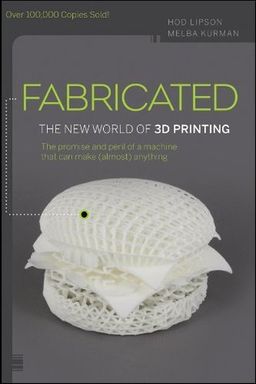
Imagine a world where a single machine can materialize your ideas—objects emerging from software, layer by layer. In Fabricated: The New World of 3D Printing, Hod Lipson and Melba Kurman argue that we stand at a turning point: for the first time since the industrial revolution, manufacturing is being democratized. 3D printing—or additive manufacturing—fundamentally alters who makes things, how they’re made, and what “manufacturing” even means.
Lipson and Kurman frame this change around a core shift: from economies of scale to economies of scope. Traditional factories succeed by producing millions of identical parts cheaply. 3D printing flips that logic—complexity and variety become free, encouraging custom, localized, and rapid production. As the authors show through examples from dental labs to aerospace prototypes, the technology’s reach is as broad as its philosophical weight. It redefines creativity, production, and even biology itself.
From Software to Substance
At its core, every 3D print begins as code. A digital design—scanned, sculpted, or evolved—is converted to slices that a printer reads layer by layer. The promise lies in that transmutation: digital bits become physical atoms. This principle powers all the cases in the book, whether it’s ABC Imaging printing architectural models or scientists building living tissue scaffolds.
The authors distill this world into what they call ten core principles: complexity and variety are free; manufacturing can be local and waste‑minimal; and customization defines the new value chain. These principles explain why integrators like Shapeways succeed not by owning machines but by building ecosystems—platforms that link designers, printers, and customers in a global “cloud factory.”
A Movement from Mass to Nimble
In contrast to 20th-century mass production—with its long lead times, rigid tooling, and distant supply chains—3D printing enables what Lipson and Kurman call nimble manufacturing. Entrepreneurs like “Mike” in the Rust Belt turn a garage into a microfactory, producing bespoke components for clients faster than large plants could retool. Distributed networks—what the authors describe as “ants with factories”—extend this model globally through cloud manufacturing platforms, marrying local agility with network scale.
This model reshapes business logic. Value no longer resides in economies of scale, but in the ability to iterate, personalize, and respond instantly to change. For designers and managers, this means success depends less on owning machines and more on orchestrating networks and experiences.
Beyond Objects: The Living, the Edible, and the Architectural
The book’s scope extends past objects of plastic or metal into life, food, and architecture. In bioprinting, “living ink”—cell-laden hydrogels—lets researchers grow cartilage, bone, and perhaps one day organs. In digital cuisine, software engineers and chefs explore “recipe-as-file,” printing edible materials in new forms. And in architecture, builders such as Behrokh Khoshnevis and Enrico Dini experiment with printers that extrude concrete or bind sand, hinting at on-demand construction that can adapt to environmental data.
Each application reveals a deeper truth: when fabrication becomes programmable, design ceases to be descriptive and becomes generative. You don’t just specify shape; you encode behavior, taste, or biological function. In doing so, you push manufacturing into territory once reserved for nature or art.
Design, Data, and Democratized Making
The book’s middle chapters emphasize that 3D printing is as much a software revolution as a hardware one. Digital design tools, scanners, and file standards like STL and AMF form the invisible infrastructure of fabrication. Lipson and Kurman argue that “garbage in, nothing out” applies more to printing than computing: flawed files generate worthless prints. Thus the next frontier in design tools—“matter compilers” and evolutionary CAD—will let you describe intentions (“make this light but strong”) and let software evolve the best shapes.
This progression parallels personal computing: early CAD required expertise; new gamified tools like Minecraft or Endless Forms democratize creativity. Anyone can design; the skill is framing problems, not drawing geometry. As printers grow smarter, feedback loops close: printers adjust mid‑print, learn, and even replicate improvements (a clear echo of biology).
Ethics, Ecosystems, and Education
Democratized fabrication also tests law and ethics. 3D‑printed weapons, counterfeit parts, and liability dilemmas challenge regulators, while open hardware and micropatent models propose alternatives to rigid IP systems. The authors liken it to the Napster moment for physical goods—control is shifting from corporations to individuals.
Education offers a constructive counterpart to these disruptions. K–12 projects like Glen Bull’s “Make to Learn” program show how printers turn theory into tangible learning—inclusive, interdisciplinary, and engaging. The same participatory ethos that underpins the Maker movement can expand literacy in design, systems thinking, and problem-solving for the next generation.
Toward Active Digital Matter
The book ends by looking ahead: from shaping materials to designing matter itself. Multimaterial printing already produces metamaterials with properties no traditional process can match—auxetic foams, self-healing composites, and embedded electronics. Beyond that lies “digital matter”: voxel‑based systems where objects are composed of standardized physical pixels that can be reconfigured or repaired. The long‑term trajectory points toward programmable materials and self‑replicating machines, blurring manufacturing, computation, and life itself.
Core takeaway
3D printing is not simply a faster factory—it’s a shift in how humanity makes things, merging code, culture, and chemistry. When you understand its principles and tools, you participate not just in a new market but in a new literacy: the ability to turn information directly into matter.