
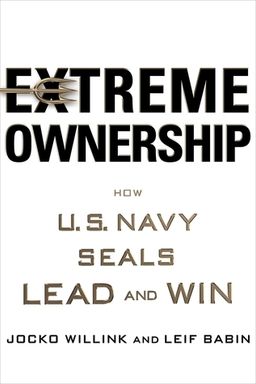
Extreme Ownership cover

Extreme Ownership

by Jocko Willink and Leif Babin

Extreme Ownership reveals how Navy SEAL leadership principles can be applied to business, emphasizing total responsibility, strategic planning, and effective team management. Learn to lead and win in any environment by adopting SEAL strategies for success.

Extreme Ownership: The Mindset That Transforms Leadership

Have you ever faced a situation where everything went wrong and your first instinct was to look around for someone to blame? In Extreme Ownership, former Navy SEALs Jocko Willink and Leif Babin argue that the key to great leadership—and success in any domain—is doing the opposite: taking full responsibility for everything in your world. This core principle, which emerged from the heat of battle in Iraq’s most violent city, Ramadi, isn’t just about military command. It’s about how anyone—from executives to parents—can shape outcomes by owning every result they produce.

Willink and Babin contend that leadership is the single most important factor in any team’s success. Effective leaders build trust, clarity, and teamwork by embodying ownership at every level—from the planning room to the battlefield. Their book connects visceral combat experiences with practical lessons in management, revealing through vivid stories how humility, discipline, belief, and decisiveness work under extreme pressure.

From the Battlefield to the Boardroom

The authors were forged in the chaos of the Battle of Ramadi, one of the most violent urban conflicts of the Iraq War. Through hundreds of operations, they learned that leadership principles that keep people alive in combat could also keep companies thriving in the marketplace. When they returned home, they helped train new SEAL leaders and later founded Echelon Front, a consulting firm teaching these battlefield-tested principles to executives. In both settings, they saw that teams win only when leaders accept total responsibility.

The concept of Extreme Ownership emerged after a devastating friendly-fire incident. Instead of blaming others, Willink took personal responsibility for every mistake. That act of humility restored trust, transformed his team’s performance, and provided a foundational lesson: real leadership means owning both successes and failures.

Why It Matters Beyond Combat

Why does this matter for you? Because everyone leads something—whether it’s a business department, a family, or a personal project. Extreme Ownership teaches that leaders set the tone. When you take ownership, you build a culture of accountability; when you deflect blame, you breed confusion and mistrust. This mindset replaces excuses with solutions. It builds stronger teams because people emulate the leader’s behavior. As Willink says, leadership isn’t about position or rank; it’s about responsibility.

The Structure of Victory

The book is divided into three parts that mirror a SEAL mission cycle:

  • Part I – Winning the War Within: explores mindset—Extreme Ownership, humility, belief in mission, and controlling ego.
  • Part II – The Laws of Combat: introduces four core operational principles—Cover and Move, Simple, Prioritize and Execute, and Decentralized Command—designed to create tight, effective teams.
  • Part III – Sustaining Victory: teaches how to plan, balance decision-making, lead up and down the chain of command, and maintain discipline through paradox.

Together, these twelve chapters form a blueprint for leadership that applies equally to a CEO navigating market chaos or a team leader managing a crisis. Each principle is illustrated through gripping SEAL missions—sniper overwatches, hostage rescues, and urban battles—that reveal human limits under stress and the power of clarity under fire.

Why Simplicity and Discipline Matter

One of the book’s strongest messages is that leadership isn’t mysterious—it’s practical and repeatable. The authors urge you to develop a disciplined framework like the SEALs: plan clearly, decide calmly, rely on teamwork, and execute with focus. Discipline brings freedom. By imposing structure—whether in decision-making or communication—you gain flexibility to respond to changing situations without chaos.

The Human Element of Leadership

Still, Willink and Babin emphasize that leadership is human. Ego, fear, and doubt are constant adversaries. Learning to control them—checking your pride, believing in your mission, and trusting others—separates good leaders from weak ones. In this way, Extreme Ownership is a philosophy about character, not control. It’s about humility, accountability, and service.

“Leaders must own everything in their world. There is no one else to blame.”

When you fully think of success as your responsibility, everything changes. Whether you’re commanding troops or leading a meeting, Extreme Ownership provides a compass: take responsibility, simplify decisions, prioritize resources, trust your team, and maintain discipline. Those core values make leadership not just possible—but transformative.


No Bad Teams, Only Bad Leaders

Leif Babin tells the story of SEAL trainees during Hell Week—five days of cold, exhaustion, and relentless physical trials—to illustrate one of the most powerful truths of leadership: there are no bad teams, only bad leaders. He describes how one underperforming boat crew transformed into the top team simply by changing its leader. Nothing else changed—the same exhausted men, the same sea, the same conditions. What changed was leadership.

The Example of Boat Crew Six

During Hell Week at BUD/S (Basic Underwater Demolition/SEAL Training), seven-man boat crews carry huge inflatable boats on their heads and race for miles. Boat Crew Six always finished last, arguing and blaming each other. Boat Crew Two always crushed the competition. The instructors swapped their leaders. Within hours, Boat Crew Six went from last to first. The only difference was the officer running it.

That moment taught Babin that the leader’s attitude sets the tone. If a leader believes the team can win, they transmit confidence and unity. If they focus on blame and frustration, that negativity infects everyone. The transformation reflected a simple but profound truth: leadership drives performance.

From Training to Combat

Babin’s own experiences in the Battle of Ramadi reinforced this principle. His platoon faced life-or-death decisions every day. When teams faltered, the cause wasn’t lack of resources or skill—it was leadership failures: unclear communication, low standards, or poor morale. He realized that when teams suffer, the leader’s tolerance defines the standard. If you accept mediocrity, you teach everyone to settle. If you demand excellence and set an example, people rise.

“It’s not what you preach, it’s what you tolerate.”

Applying It in Business

The same principle later guided Babin’s work with corporations. One CEO complained that his chief technology officer kept making excuses for a failed product launch, blaming others—from sales to market conditions. Babin counseled him: if a team fails, it’s on the leader. The CTO’s unwillingness to take ownership made him ineffective. Babin called this type of leader a “Tortured Genius”—someone too proud to accept responsibility. Once replaced by a leader who practiced Extreme Ownership, the company rebounded and succeeded.

Building a Culture of Ownership

This idea expands beyond individuals. When leaders model ownership, it spreads throughout the organization. Team members learn to fix problems instead of blaming others. Leaders develop leaders who hold themselves accountable. Over time, this builds a self-sustaining culture of discipline and teamwork—what Willink and Babin saw in the SEALs and now teach in business.

If your team is failing, look in the mirror. The fix doesn’t come from firing your staff—it comes from owning the outcome. The leader who admits mistakes, demands accountability, and inspires belief can rebuild any team. That’s why, as Colonel David Hackworth wrote in About Face (another military classic Babin cites), “There are no bad units, only bad officers.” Extreme Ownership applies that truth everywhere: your team’s performance depends on you.


The Laws of Combat

Out of the chaos of urban warfare, Willink and Babin distilled four timeless leadership principles they call The Laws of Combat. These are not just tactics for warfare—they are operating principles for any complex endeavor where teams must cooperate under pressure. Master these laws, and you create clarity in confusion, unity in adversity, and momentum in chaos.

1. Cover and Move – Teamwork Above All

Cover and Move means teams must support each other. On the battlefield, one group provides covering fire while another moves forward. In business, it means departments help, not compete. When Willink’s SEAL platoon neglected to coordinate two sniper teams during a mission in Ramadi, they risked losing lives. He learned that success isn’t about independence—it’s interdependence. Every team must communicate, synchronizing their efforts toward the shared mission. Your focus must shift from “my job” to “our mission.”

2. Simple – Clarity Prevents Chaos

Under fire, complexity kills. Willink recounts a Marine officer whose overcomplicated patrol plan nearly led to chaos. Simplifying the route kept everyone aligned and saved lives. In business terms, Babin tells of a convoluted bonus structure in a manufacturing plant. Too complex, no one understood how their pay worked. When simplified into two factors—productivity and quality—motivation skyrocketed. A simple plan everyone understands leads to consistent execution.

3. Prioritize and Execute – Focus Beats Panic

When everything feels urgent, smart leaders triage. Babin’s patrol once faced RPG attacks, wounded men, and IED threats all at once. He remembered Willink’s mantra: “Relax, look around, make a call.” He prioritized: first neutralize immediate threats, then move to cover, then evacuate. This calm focus turned chaos into victory. In business, the same applies. When overwhelmed, leaders must identify the single most critical problem—the one thing that, if solved, makes all else easier—and execute relentlessly.

4. Decentralized Command – Empowerment Amplifies Scale

Willink’s key insight was that no leader can control more than six to ten people in dynamic environments. In Ramadi, he empowered his junior leaders to make decisions aligned with “Commander’s Intent”—the strategic purpose of the mission. This decentralization ensures faster responses and builds trust. In organizations, it means giving frontline managers autonomy but clear direction. As Willink analogizes, leaders shouldn’t micromanage nor detach too much; they must be “situationally aware and strategically engaged.”

“If leadership isn’t decentralized, chaos reigns. If it’s too decentralized, chaos reigns again.”

The Laws of Combat form a system: teamwork creates unity; simplicity clarifies purpose; prioritization directs energy; decentralization empowers execution. Together, they enable any team—military or corporate—to navigate complexity, act decisively, and dominate their battlefield.


Believe in the Mission

One of Willink’s most humbling lessons in Iraq came when his SEALs were ordered to fight alongside poorly trained Iraqi soldiers. Initially, he thought the mission was suicidal. But he realized that without belief—without understanding and committing to the mission—his team would fail before they even began.

Understanding the 'Why'

When Willink asked himself why the U.S. military would pair elite SEALs with unprepared Iraqis, he discovered the strategic purpose: if Iraqis never learned to defend their own country, American soldiers would be stuck there indefinitely. The partnership was ugly but necessary. Once Willink truly believed in that higher goal, he could communicate it clearly—and his men followed suit.

He gathered the team and told them plainly: “If the Iraqi military can’t handle security, who will? Us. Or our sons.” That clarity of purpose shifted attitudes. The SEALs didn’t have to love the plan—they just had to understand and believe in why it mattered. The outcome was transformative: working together, they trained Iraqis, crushed the insurgency, and helped secure Ramadi.

The Business Parallel

In business, disbelief in a strategy kills morale. Babin describes mid-level managers resisting a new compensation plan they didn’t understand. Once their CEO explained the reasoning—how lower overhead led to better opportunities for top performers—skepticism turned to support. Leaders learned that they must always communicate the 'why' behind decisions. In organizations, belief flows downward only when it’s instilled from the top and clarified through open conversation.

Conviction Without Ego

Belief also requires humility. Leaders must suspend ego and question their own understanding until they can align with their mission. When they do, conviction spreads naturally. Willink warns that blind obedience is not belief; real belief comes from comprehension. Ask questions until clarity emerges. Then communicate that clarity and execute with confidence.

“If the team doesn’t believe, they won’t commit. And if they don’t commit, they won’t succeed.”

Whether on a battlefield or in a boardroom, belief transforms resistance into commitment. Leaders must believe before they can persuade, and they must communicate that belief clearly. Without it, even the most capable team will crumble under doubt.


Check the Ego

Ego is the enemy—not just on the battlefield, but in every domain of leadership. Willink recounts how unchecked pride derailed collaboration during the Battle of Ramadi. A SEAL platoon commander resisted helping another unit, fearing they might look more competent. Meanwhile, visiting advisors ignored critical local advice because they thought they were smarter. Their arrogance risked lives and nearly destroyed relationships with the Army battalion they depended on.

Humility Over Hubris

In Ramadi’s lethal chaos, Willink realized ego could literally kill. “The enemy is outside the wire,” he reminded his team—not other SEALs, not advisors. Once the platoon commander humbled himself and helped the new unit integrate, cooperation flourished. Ego blinds leaders to reality; humility opens perspective. Every time a mission failed, Willink traced the root cause to inflated pride—leaders focused on personal credit or recognition rather than victory.

In Business and Life

Ego infects organizations just as easily. Babin describes a mid-level executive named Gary who clashed with his veteran superintendent. Their disagreement over a procedural lapse escalated into resentment. Babin coached Gary to flip the conversation from blame to ownership: begin by admitting fault. That humility de-escalated tension and restored cooperation. When leaders check their ego, they create trust; when they defend it, they lose respect.

Confidence, Not Arrogance

Ego isn’t all bad—it drives ambition and resilience—but unchecked, it clouds judgment. The challenge is balancing confidence with humility. The strongest leaders know their skills but stay open to learning; they seek feedback, admit mistakes, and let others shine. That balance creates adaptability. As Willink notes, “We must be confident but not cocky.”

“Ego clouds and disrupts everything—the planning process, advice, and the ability to learn.”

In every situation—conflict, negotiation, teamwork—your ego whispers excuses and deflection. Extreme Ownership demands you silence that voice, face reality, and take responsibility. Humility is strength disguised as restraint. It’s what keeps teams grounded and leaders effective under pressure.


Discipline Equals Freedom

At first glance, “discipline equals freedom” sounds contradictory. But in Willink’s world, discipline isn’t constraint—it’s liberation. The more order you have, the more flexibility you gain. A disciplined leader can adapt quickly because their team operates within clear systems; a chaotic leader drowns in confusion. Discipline, the authors argue, is the foundation of Decentralized Command—it enables initiative without disorder.

The Baghdad Transformation

Willink’s first SEAL platoon in Baghdad learned this lesson painfully. Their initial evidence-collection methods were sloppy, wasting time and missing crucial intelligence. After a young officer instituted a precise procedure—room diagrams, labeled bags, assigned roles—the searches became faster and safer. Discipline didn’t slow them down; it sped them up. That rigor reduced risk and doubled their operational capacity.

Personal Discipline

Willink’s personal routine mirrors that philosophy. He wakes before dawn to train, studies tactics, and never makes excuses. The morning alarm, he says, is the first test of the day: win it, and you set your tone for victory. As he observed in the SEAL Teams, the best operators were always the most disciplined—they showed up early, cleaned their gear, and prepared relentlessly. Discipline builds reliability; reliability builds freedom to act decisively.

The Dichotomy of Leadership

Every strength has a shadow. Too much discipline becomes rigidity; too little becomes chaos. Leadership is a balancing act between opposites—confidence vs. humility, aggression vs. restraint, closeness vs. authority. Great leaders, Willink concludes, navigate these dichotomies consciously. They’re calm but not robotic, decisive but not reckless. They foster freedom through structure.

“Discipline—strict order and control—might appear opposite to freedom. But discipline is the pathway to freedom.”

In your own life, discipline expands freedom. When you focus on health, you gain energy to pursue goals. When you schedule your priorities, you create space for creativity. When you build disciplined systems in your team, you empower others to move without micromanagement. Extreme Ownership begins here: your freedom to lead comes from your discipline to act.

Dig Deeper

Get personalized prompts to apply these lessons to your life and deepen your understanding.

Go Deeper

Get the Full Experience

Download Insight Books for AI-powered reflections, quizzes, and more.