
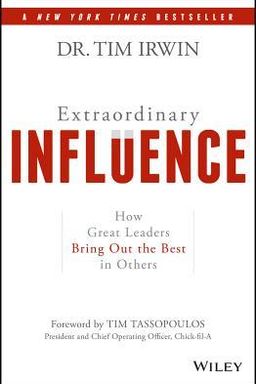
Extraordinary Influence cover

Extraordinary Influence

by Tim Irwin

Extraordinary Influence uncovers the neuroscientific basis of effective leadership through affirmation. Discover how strategic communication not only motivates but also propels individuals to excel. Tim Irwin provides actionable insights to transform leaders into catalysts for personal and team growth.

The Science and Practice of Extraordinary Influence

How do you bring out the absolute best in the people you lead, teach, or love? In Extraordinary Influence, Dr. Tim Irwin argues that great leadership is not about authority, charisma, or skill—it’s about extraordinary influence, the ability to shape others through affirmation rather than criticism. Drawing on neuroscience, real-world leadership examples, and personal stories, Irwin contends that words literally rewire people’s brains. Positive, affirming feedback activates creativity and resilience, while harsh criticism shuts down higher-order thinking and breeds fear.

Irwin was moved by experiences both personal and professional—from his son’s transformation through the affirming mentorship of “Saint Ted” to his own encounters with CEOs and coaches whose words build up or tear down. His central premise is simple but radical: affirmation ignites human potential, while criticism kills it. When we speak what he calls Words of Life—messages that affirm another person’s core character—we awaken their best self. Conversely, Words of Death, such as shaming or demeaning criticism, permanently lodge negativity in the brain and deter growth. Irwin marshals brain research showing that affirmation activates neural circuits related to trust, well-being, and openness to change.

Why This Matters

Nearly every field suffers from the same misunderstanding—leaders, teachers, and parents think criticism drives improvement. Yet neuroscience proves the opposite. Harsh feedback triggers the amygdala’s fight-or-flight reaction, causing stress hormones and cognitive shutdown. Affirmation, on the other hand, lights up the brain’s parasympathetic networks, increasing creativity, persistence, and self-control. The implications are massive: whether you run a Fortune 500 company, coach a sports team, or raise kids, how you speak determines how people think, feel, and act.

Irwin uses the “Blue Suitcase” metaphor to illustrate this contrast. Many organizations, he says, eat out of the “blue suitcase of mediocrity”—they survive rather than thrive—because leaders motivate through fear instead of inspiration. They could be dining in the beautiful restaurant of excellence if they learned how to unlock intrinsic motivation. This book’s mission is to give readers the tools to do just that.

The Framework of Influence

Irwin’s approach unfolds in three layers of affirmation: style, competence, and core. Tactical affirmation focuses on style and competence—affirming how people act and what they achieve day to day. Strategic affirmation reaches deeper, into the moral and emotional “core” where identity and beliefs reside. When a leader speaks Words of Life about integrity, courage, or humility, those beliefs translate into durable actions. Irwin demonstrates this in vivid scenarios—from CEOs rebuilding trust after scandal (like Tyco) to teachers affirming a child’s creativity instead of shaming it.

A Science-Based Revolution in Leadership

The book weaves neuroscience into real stories: affirmation stimulates oxytocin and serotonin, increases self-worth, and even strengthens the immune system. By contrast, criticism fuels cortisol and anxiety. This insight flips conventional management on its head—so-called “macho management,” with its threats and forced accountability, actually stifles productivity. Irwin urges leaders to replace “constructive criticism” (a phrase he calls an oxymoron) with Alliance Feedback—a coaching practice that connects needed change to a person’s own goals and values.

The Book’s Journey

Across twelve chapters, Irwin shows how extraordinary influence operates in workplaces, teams, families, and classrooms. You’ll learn how affirmation fuels resilience, how feedback linked to aspirations drives growth, and how courage and empathy protect leaders from arrogance or derailment. Later chapters explore how to transform high potentials (HiPos), coach underperformers, and even reinvent performance reviews around positive psychology. He closes with an appeal to society: imagine if governments, schools, and families traded criticism for affirmation—our culture itself could heal.

Ultimately, Irwin’s claim is timeless and universal: great leadership builds character through words. By affirming people’s style, skills, and core, by speaking Words of Life instead of Words of Death, we not only improve performance—we transform lives. Extraordinary Influence is both science and soul, a call to lead with grace and precision in an era hungry for encouragement.


Words of Life: The Language That Transforms

Irwin introduces the phrase Words of Life to describe how affirmation can literally change a person’s brain and destiny. These words speak directly to the core—the inner person that holds beliefs, feelings, and moral compass. When we hear Words of Life, they plant positive beliefs about who we are and what we can become.

The Coach’s Lesson

One of Irwin’s most moving examples comes from his son William’s high-school football loss. Amid the heartbreak, the opposing team’s coach approached William with unexpected kindness: “You played an outstanding game; you displayed great character and courage.” That brief moment shaped William’s future—from the Naval Academy to submariner service—by reinforcing beliefs of courage and integrity in his core. The science later confirmed it: such affirmations activate regions of the prefrontal cortex associated with reward and trust.

How Words of Life Work

Affirmation works on three levels:

  • Style: Affirming the observable patterns in a person’s interactions—calmness, curiosity, warmth.
  • Competence: Affirming their skills and achievements, such as problem-solving or teamwork.
  • Core: Affirming their character—integrity, courage, humility, authenticity, and wisdom.

According to Irwin, affirming someone’s core produces transformations, not just temporary boosts. It turns external praise into internalized belief: “I am honest,” “I am resilient,” “I am wise.” These beliefs then govern future actions.

Scientific Proof of Affirmation’s Power

Studies cited by Irwin show that affirmation boosts stress resilience, heightens cognitive flexibility, and triggers hormones of attachment like oxytocin. It’s linked to lower blood pressure and improved problem-solving under stress (a connection also echoed in Shawn Achor’s The Happiness Advantage). Conversely, criticism activates stress pathways, drains working memory, and leads to defensive behavior. Our brains are literally wired to thrive on encouragement.

Affirmation Is Not Flattery

Irwin cautions against confusing genuine affirmation with superficial compliments. True Words of Life are intentional, truthful, and focused on character. When he affirmed a leader named Sally for courage and integrity after tough reforms, her tears revealed how deeply those words resonated. They became structural beliefs that guided her future leadership choices.

Affirmation is free but priceless. It is the “apples of gold in settings of silver” that Proverbs describes—carefully spoken, authentic, and life-giving. As Irwin reminds us, when given from an intact core, Words of Life can awaken greatness in others beyond what we imagine.


Words of Death: How Criticism Destroys Potential

Most of us believe that constructive criticism helps people grow. Irwin counters that it does the opposite—it disconnects people from creativity and confidence. Words of Death, even when well-intentioned, activate the brain’s threat centers and diminish self-worth.

Anne’s First Grade Lesson

In one of the book’s painful anecdotes, Irwin recalls how his wife Anne, a budding artist at age six, was shamed by her elderly teacher for splattering paint. That humiliation extinguished her creative spark for years. Neuroscience explains this enduring pain: criticism stores itself in the brain like trauma, engaging the amygdala’s fear circuitry and overriding higher cognitive functions.

The ‘Dirty Dozen’ Effects of Criticism

Irwin collects twelve scientific findings on how criticism harms people:

  • Triggers fight-or-flight responses
  • Disrupts higher-order thinking
  • Transfers negative emotions from critic to recipient
  • Reduces creativity and persistence
  • Invites depression, anxiety, and burnout
  • Breeds conformity and loss of innovation

Critical feedback, in short, makes people defensive rather than developmental. It teaches them to fear thinking differently—what psychologists call learned helplessness. Over time, organizations dominated by negative leadership become toxic cultures of blame.

The Worst Legacy

Negativity perpetuates itself through modeling. Irwin compares this to the famous “Bobo Doll” experiment: children who witnessed aggression imitated it. Leaders who rule by fear train others to lead the same way, creating generations of abusive management. He challenges companies to adopt a “no tolerance” policy for abusive supervisors. Culture is contagious—affirmation breeds affirmation; criticism breeds decay.

Irwin’s final plea is memorable: ban the phrase ‘constructive criticism’ from your vocabulary. Criticism might correct errors, but it never transforms hearts or minds. To truly build competence, the next chapter introduces a better alternative: Alliance Feedback.


Alliance Feedback: A New Way to Help People Grow

If criticism crushes, how can you correct someone who’s off track? Irwin’s answer is Alliance Feedback, a method that links performance improvement to a person’s own aspirations or shared mission. Instead of saying “you failed my expectations,” you say, “let’s align what you want with what we want.”

A Story of Wisdom from the Cafeteria

Irwin learned this lesson early. As a college dishwasher, he mocked two farmers who hauled cafeteria waste for their hogs. When his boss, Mr. Benson, found out, he didn’t scold or shame him. He spoke with calm respect, explaining how the farmers were vital partners in the cafeteria’s mission and asked Irwin to apologize. That conversation became transformational—it helped Irwin internalize the value of respect and alignment between words and values. Mr. Benson embodied Alliance Feedback: correction delivered through care.

Two Types of Alliance Feedback

  • Aspirational: Ties feedback to someone’s hopes and goals. “You want to be a VP? Collaborating better with peers will help you get there.”
  • Missional: Connects feedback to the organization’s shared purpose. “Improving client response times supports our mission to serve customers with excellence.”

Eight Conditions for Effective Alliance Feedback

Irwin explains that the recipient must feel safe, respected, and genuinely cared for. The leader must avoid triggering the amygdala, attribute positive motives, and show deep preparation and focus. Feedback should raise contradictions gently—“you say you value teamwork, yet struggle to listen”—not attack character. And it must originate from a mentor’s own mature core; hypocrisy ruins authenticity.

Why Alliance Feedback Works

Brain research supports its power: aspirational feedback activates circuits of trust, openness, and positive emotion, increasing cooperation and efficiency. It transforms critique into encouragement, creating ownership instead of compliance. As one CEO said, “If feedback comes from someone who’s for me, I can hear anything.”

Ultimately, Alliance Feedback costs emotional energy, but the investment builds transformation instead of resistance. It replaces fear with partnership, aligning heart, head, and mission—the true anatomy of extraordinary influence.


The Four Transformations for Motivating High Potentials

Exceptional talent—those “HiPos” who can leap two levels ahead—need more than training; they need nourishment for their moral and emotional core. Irwin identifies four transformational actions that help leaders exert extraordinary influence on high potentials.

1. Affirm Their Style, Competence, and Core

Affirmation fuels development more than any incentive. Irwin lists twenty-two brain-based benefits, from psychological well-being to trust hormones. He recommends frequent “Words of Life” that connect feedback to people’s dreams: ask, “What did you feel went well?” Encouraging self-affirmation prevents burnout and builds confidence.

2. Help Them Guard Their Core

Gifted leaders often derail through internal compromise. Irwin profiles five predictable stages of derailment—from lack of self-awareness to arrogance, ignored warning signals, rationalization, and eventual collapse. CEOs fired for breaches of integrity didn’t fail in skill but in core strength. Journaling, feedback, and humility are safeguards. “Arrogance is the mother of all derailers,” he warns; humility the mother of all safeguards.

3. Teach Influence Over Position Power

Authority without trust corrodes teams. Irwin tells how his son, after commanding sailors, was placed in a corporate role with no direct authority. Forced to lead via influence, he learned collaboration and persuasion. The lesson: real leadership flows from values, not hierarchy—a truth echoed by Robert Greenleaf’s concept of servant leadership.

4. Develop Courage

Courage is the missing link between wisdom and action. Irwin recounts a board member who regretted failing to stand up to a dishonest CEO—fear of being ostracized silenced him. Leaders must “encourage”—literally, put courage into—others. Words of Life infuse heart and bravery, helping HiPos risk integrity over convenience.

Together, these four practices—affirmation, guarding the core, leading by influence, and courage—form a holistic blueprint for developing future leaders who can soar without self-destructing.


Extraordinary Influence for Teams: Balancing I, We, and It

Irwin broadens his theory from individuals to groups. Teams thrive when leaders balance three levers: I (the individual), We (the group dynamic), and It (the mission or purpose). Too much focus on one ruins the others.

The Landscaping Parable

In a vivid story, an employee accidentally drops a boulder onto a freshly paved sidewalk—an expensive mistake. Yet his boss’s forgiving response (“You’re an excellent employee. Just don’t pull that red lever again.”) restores morale. The grace given to one team member reaffirmed trust for all. Words of Life lifted the entire “We.”

The Three Levers Explained

  • I: Individual identity, aspirations, and development. Leaders must affirm individuals rather than erase them behind slogans like “there’s no I in team.”
  • We: The collective trust, empathy, and collaboration. Leaders nurture a team’s shared core—its respect, openness, and emotional presence.
  • It: The mission that provides meaning. Transformation occurs when work becomes a quest, not just a task.

Healing Organizational Trauma

Irwin illustrates this through Tyco’s scandal recovery under Eric Pillmore. After the CEO’s arrest, leaders held hundreds of town halls, spoke transparently about corruption, and renewed values of integrity, excellence, and accountability. By affirming the I, rebuilding the We, and redefining the It, Tyco regained trust and profitability. Their transformation mirrors psychological healing—affirmation at scale.

For leaders, the lesson is clear: balance empathy with purpose. When individuals feel valued (I), teams grow cohesive (We), and missions inspire (It). Extraordinary influence makes teams not only perform but flourish.


Transforming Families and Youth Through Affirmation

Parents, teachers, and coaches wield extraordinary influence on developing minds. Irwin advises applying Words of Life and Alliance Feedback to raise resilient, self-directed children. His “space shuttle” analogy captures a parent’s mission—to propel kids into orbit and then drop away.

Words of Life in Families

Irwin’s family tradition of birthday affirmations embodies this principle: every member shares what they admire in the celebrant. These rituals deepen confidence and belonging. The same applies to classrooms and sports—praise character, not performance. When teachers and coaches affirm competence and core character (“You’re better than this,” said Mrs. Chapman to a struggling math student), they plant beliefs of resilience and excellence.

Alliance Feedback with Children

Correct behavior by connecting it to aspirations: “You dream of being an engineer—how will skipping homework align with that?” This method avoids guilt and links responsibility to purpose. When Irwin’s son Jim’s principal warned that poor grades could cancel his college acceptance, it restored alignment without criticism—a perfect example of Alliance Feedback for youth.

The Role of Adversity

Irwin warns against “helicopter parenting.” Children grow wings only by pushing against resistance, like butterflies breaking their chrysalis. Guided adversity builds resilience—the paired attribute with affirmation. His story of Jim’s rock-climbing fear and eventual triumph illustrates how supported struggle leads to transformation.

For educators and parents, Irwin’s counsel is stirring: affirm often, correct through alignment, and allow growth through hardship. Words of Life are the oxygen that lifts young lives toward their highest orbit.


A Call to Action: Building a Culture of Affirmation

Irwin ends with a sweeping call—for leaders, families, and nations—to replace divisive criticism with affirmation. After 9/11, Americans briefly rediscovered kindness. He believes we can sustain that civility by practicing extraordinary influence daily.

Ban ‘Constructive Criticism’

His call to arms is humorous but serious: sign his petition to “eradicate the term constructive criticism.” Feedback must become collaborative and supportive, not punitive. Leaders should speak Words of Life freely—there’s no shortage of affirmation in the world.

Affirmation as Cultural Reform

Irwin imagines workplaces, schools, and homes flooded with affirming words, replacing fear with hope. He proposes flipping our communication ratio—affirm ten times for every critique. The result: healthier individuals, innovative teams, and societies grounded in respect. This principle echoes positive psychology’s core insight: flourishing begins with gratitude, encouragement, and meaning.

Extraordinary influence is not a corporate technique; it’s a human revolution. Irwin closes inviting readers to join on his website discussion, to spread the contagion of affirmation. In a world thirsty for dignity, our words remain the most powerful catalyst for change.

Dig Deeper

Get personalized prompts to apply these lessons to your life and deepen your understanding.

Go Deeper

Get the Full Experience

Download Insight Books for AI-powered reflections, quizzes, and more.