
Idea 1
Lucid Dreaming as a Gateway to Awareness and Growth
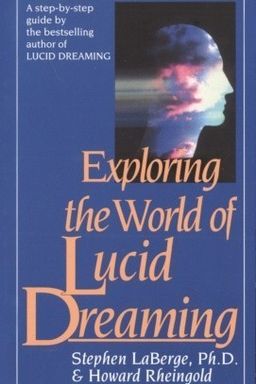
Why does lucid dreaming matter? For Stephen LaBerge and Howard Rheingold, it’s because becoming conscious in your dreams gives you direct experience of how the mind creates reality. In a lucid dream, you know you’re dreaming while the dream is still happening. That awareness lets you observe the creative power of consciousness itself—and use it for play, healing, learning, and transformation. The authors argue that lucidity is not just a curiosity but a profound training in awareness. The book’s arc moves from teaching practical induction tools to exploring psychological and spiritual uses that reach toward human wholeness.
From Discovery to Practice
Lucid dreaming began as anecdote and mystery. LaBerge’s Stanford research transformed it into a measurable phenomenon using a technique in which lucid dreamers signal from inside their dreams with prearranged eye movements recorded during REM sleep. Proof that conscious awareness can occur in REM validated decades of reports by explorers like Alan Worsley, leading to a new science of lucid dreaming. The book walks you through what those findings mean in practice: lucidity is natural, teachable, and can become a powerful extension of waking consciousness.
Why Learn to Be Lucid
You might begin for fun—to fly, explore, or savor luminous soundscapes like A.F. from Bay City, who rose into bright light and music with joy that lasted for days. Yet LaBerge emphasizes deeper uses: overcoming nightmares, rehearsing skills, solving creative problems, and integrating the psyche’s disowned parts. Tibetan dream yogis view lucidity as mindfulness extended into sleep; Western science now confirms benefits for self-regulation, creativity, and confidence. The promise: with consistent practice, you can use every night as a field for growth, not just rest.
The Architecture of Dreaming
To lucidly navigate sleep you must first understand its structure. Sleep cycles through non-REM and REM stages roughly every ninety minutes, with REM periods lengthening toward morning—the richest times for lucidity. Dreams arise because the brain keeps modeling reality even when cut off from external input; it builds scenes from memory, emotion, and expectation. Knowing this helps you realize that what you see at night is your own mind in motion. Expectation and motivation shape content, which is why what you bring to the pillow—your worries, goals, or joy—determines much of what you experience.
A Progression of Skills
LaBerge presents a stepwise curriculum. You begin with recall—keeping a detailed dream journal until you can record at least one dream nightly. Then you identify dreamsigns, the recurring anomalies that mark the difference between dream logic and waking life (talking animals, wrong houses, impossible devices). The next stage trains reflection—habitually asking “Am I dreaming?” by day so the reflex continues into dreams. This kind of critical awareness primes you for techniques like MILD (Mnemonic Induction of Lucid Dreams) and WILD (Wake-Initiated Lucid Dream), which turn intention and imagery into reliable gateways to lucidity.
Learning Through Experience
Once you begin having lucid dreams, the next challenge is staying inside them. The sensation of excitement can wake you, so LaBerge teaches stabilization through spinning, rubbing hands, and refocusing on perception. Gradually you learn to experiment consciously in the dream world: testing physics by flying, solving emotional conflicts by dialogue rather than escape, and discovering how confidently your expectation molds the environment. These experiments provide laboratory-style insight into how perception and belief interact, insight that transfers directly into waking behavior.
The Deeper Continuum
By the book’s final chapters, lucid dreaming becomes more than a skill—it’s portrayed as a continuum of awareness. The same attentional faculty that catches you dreaming can catch you daydreaming or reacting unconsciously while awake. Thus dream practice becomes life practice. Along the way, you learn lucid joy and therapeutic confrontation, creativity and heroism, reconciliation and transcendence. Whether your aim is flying over mountains, healing trauma, or exploring ultimate reality, the principle is the same: awareness liberates. You wake up in dreams to realize you are the dreamer—and from that realization you begin to wake more fully in life.