
Idea 1
Making Choices with Data and Values
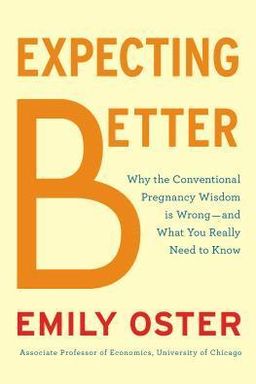
How should you make decisions about pregnancy when authority figures give conflicting advice? Economist Emily Oster argues that pregnancy is best approached the same way she approaches any complex question in economics: first gather reliable data, then weigh that against your own values and preferences. In her book, she shows how to replace anxiety and blanket rules with clarity by asking two simple questions: What are the numbers, and how do they matter to me?
The two-step framework
Oster’s central idea is elegantly simple: separate information from choice. Doctors often convey rules—“no alcohol,” “only test if you’re over 35”—because rules are easy to communicate and protect against extreme interpretations. But rules hide personal nuance. What’s safe or advisable depends on your risk profile, tolerance, and lifestyle. Once you have credible data—like the actual odds of miscarriage from an amniocentesis—you can make a deliberate trade-off that fits your goals.
Evidence over tradition
Across topics from caffeine to prenatal testing, Oster examines how medical cautions often come from old or misinterpreted studies. She dissects observational biases (for example, how women who feel nauseated during pregnancy are both less likely to miscarry and less likely to drink coffee, distorting caffeine studies). Her economic lens helps separate correlation from causation—she compares this to flawed reasoning in studies of children’s TV watching, where observational data implied harm but causal experiments did not. This approach—focusing on empirical design—becomes the backbone of all subsequent chapters.
From fertility to birth
The book moves through every phase of pregnancy: trying to conceive, testing and screening, nutrition and lifestyle risks, and finally labor and delivery. Each section applies Oster’s decision formula. Fertility is about timing and probabilities, not mystical cycles. Screening is about comparing risk magnitudes. Diet rules are reframed in terms of bacterial, chemical, or nutritional trade-offs. Labor choices—epidural, induction, home birth—are assessed using comparative outcomes from large randomized or observational studies.
Numbers humanized
While Oster’s tone is data-driven, her stories make the numbers emotionally useful. She recounts deciding on amniocentesis after learning modern miscarriage rates were far lower than the traditional 1-in-200 figure; she interprets miscarriage probabilities (dropping from roughly 10% after a normal 6-week scan to below 2% by 11 weeks) to calm panic. With every figure she adds practical perspective: what data mean for daily life. Numbers give boundaries; values give meaning.
Empowerment through rationality
Above all, Oster’s book is about reclaiming autonomy in pregnancy decisions. Not every recommendation should become a universal rule—because not everyone values risk or comfort equally. The goal isn’t to rebel against medical authority but to participate actively in decisions, informed by sound probability and evidence. In her words, the same study can lead two people to different choices, and both can be right. Using data as a lens for values turns pregnancy from a maze of mysteries into a series of manageable trade-offs.
Core message
Pregnancy doesn’t require surrendering judgment; it demands using judgment wisely. Collect solid evidence. Understand how that evidence was obtained. Then weigh what the outcomes mean to you personally. That combination—information plus individuality—is how you make the best decision for your body, your baby, and your peace of mind.