
Idea 1
How Migration Is Changing Our World
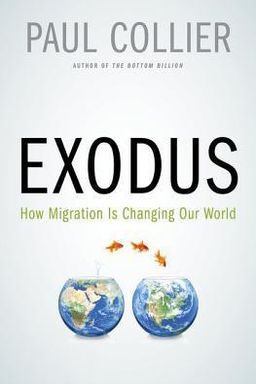
Have you ever wondered what really happens when people move from poor countries to rich ones—and how those movements reshape both who we are and what we value? In Exodus: How Migration Is Changing Our World, Paul Collier, one of the world's leading development economists, digs deep into one of the most emotive and divisive issues of our time: migration. His argument is simple but unsettling. Migration brings undeniable economic rewards, yet it also generates social costs that can quietly undermine the very societies that make migration desirable.
Collier claims that migration is accelerating—not because governments encourage it, but because diaspora networks fuel it in a self-reinforcing cycle. As more people move abroad, migration becomes easier, cheaper, and more attractive to those left behind. Left unchecked, he warns, this dynamic could lead to a modern-day exodus capable of depopulating poor nations and transforming rich ones beyond recognition.
Migration’s Emotional and Ethical Complexity
Collier begins by confronting the moral lenses through which we view migration. On one hand, migration is celebrated as heroic—a triumph of courage and ingenuity in search of better lives. On the other, it’s condemned as selfish, even exploitative, draining talent from countries that can least afford to lose it. His goal is to replace polarized moral shouting matches with evidence-based reasoning. He insists that before we can decide what’s right, we must first understand what’s true.
He stresses the role of taboos in blocking rational public debate. In liberal circles, Collier says, migration became untouchable for decades because to question it risked accusations of racism. He wants to break that taboo. Drawing on thinkers like Jonathan Haidt and Daniel Kahneman, he explains that our moral intuitions shape how we reason about migration long before any data enter the picture. Real understanding requires stepping beyond emotional reactions into effortful, slow thinking.
The Accelerating Tide of Migration
Collier uses economic modeling and historical evidence to show that migration is not static—it accelerates unless controlled. The key driver, he explains, is a massive and persistent income gap between rich and poor nations. As diasporas grow, they lower the barriers for others to follow. Distinguished data from the World Bank revealed that between 1960 and 2000, global migration from poor to rich countries tripled, and the pace kept increasing. The process feeds on itself: larger diasporas make migration easier, which expands diasporas further—a feedback loop with no natural equilibrium.
This acceleration matters because countries aren't equal players. Rich nations face rising diversity and social strain; poor nations lose talent and leadership. Migration becomes a global issue with uneven consequences—one that requires wise management rather than moral panic.
The Three Sides of Migration
Collier structures his book around three perspectives: the host societies that absorb migrants, the migrants themselves, and the people left behind in poor countries. For host countries, moderate immigration can bring gains—economic dynamism and cultural variety—yet excessive migration can erode mutual regard, trust, and cooperation. For migrants, the short-term economic benefits are huge: most earn ten times more abroad than they could at home. But Collier asks whether these financial gains translate to happiness, revealing striking findings that the psychological costs of migration—loneliness, dislocation, loss of identity—often outweigh the material benefits. For those who remain, migration can either alleviate poverty through remittances or accelerate brain drain, bleeding societies of talent and leadership.
The Stakes of National Identity
Behind Collier’s analysis lurks a fundamental question: can nations survive unbounded migration? He argues that national identity is not tribalism—it’s a social technology enabling cooperation and justice within boundaries. Without a shared sense of belonging, societies lose their capacity for redistributive fairness and trust. Collier’s own family story illustrates this tension. His grandfather migrated from Germany to Britain; his father changed his name to escape anti-German prejudice. Migration, for him, is personal proof that belonging is fragile but vital.
Ultimately, Collier’s message is pragmatic and humanistic. He urges you to see migration as neither divine good nor sinister threat but as a process requiring balance and design. He calls for policies that combine compassion with realism—moderate migration, well-integrated diasporas, and support for the poor who remain. Only by rethinking national generosity alongside social resilience, he suggests, can we ensure that this global exodus leads not to fragmentation but to shared progress.